

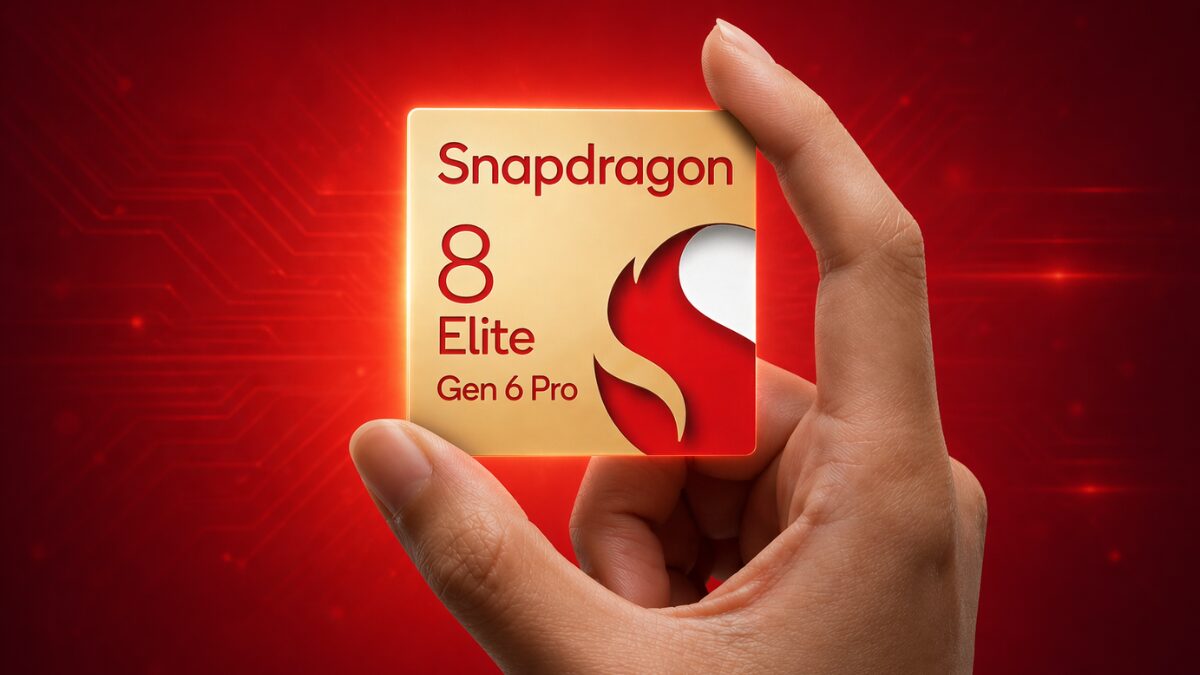
Qualcomm appears to be preparing an unusual split for its next Snapdragon flagship chip: a standard version with LPDDR5X memory and a pricier Pro variant with LPDDR6. The two are said to share the same core clock speeds, so the real divider is memory bandwidth, storage support, and the bill manufacturers have to swallow.
That matters because premium Android phones are already expensive enough without adding another few dollars of silicon drama. The Snapdragon 8 Elite Gen 6, expected to arrive in 2027, has to deliver enough performance to justify its place at the top, but it also has to fit into a market where handset makers are trying to protect margins, not just chase benchmark glory.
LPDDR5X for value, LPDDR6 for the full-fat version
The core idea is simple: give brands a choice. The LPDDR5X model would let phone makers build slightly cheaper flagships, while the Pro version is positioned for no-compromise devices with more memory bandwidth and better on-device AI performance. The top-tier model is also expected to add UFS 5.0 storage support, which fits the ”throw anything at it” brief nicely.
- Standard model: LPDDR5X memory
- Pro model: LPDDR6 memory and UFS 5.0 storage
- Shared trait: the same core clock speeds
TSMC’s 2nm process and the cost problem
Both versions are expected to be built on TSMC’s 2nm process, which should improve performance and battery efficiency compared with earlier generations. The catch is the price: the Pro version could cost manufacturers more than $300 per unit. That is the sort of number that makes product planners reach for a calculator and a strong drink.
Qualcomm is not the first chip maker to offer more than one elite option, and it probably will not be the last. The move mirrors the broader premium-phone squeeze, where vendors keep pushing specs upward while trying to avoid pricing themselves out of the room. In that sense, the split is less about generosity and more about survival.
Adreno 850, binned parts, and what comes later
Early block diagrams point to a familiar high-end layout, including a stronger GPU that is rumored to be the Adreno 850 in the Pro model. Qualcomm may also release binned versions later, including 7-core CPU setups for different price points. That kind of segmentation is classic silicon strategy: one design, many stickers, many invoices.
If the rumors hold up, the Snapdragon 8 Elite Gen 6 Pro will sit at the top of Qualcomm’s Android stack, with official details likely to surface later in 2026. The more interesting question is whether phone brands actually pay for the Pro tier in meaningful volume, or whether LPDDR5X becomes the safer choice for most ”almost-flagship” phones that still want to look expensive.