
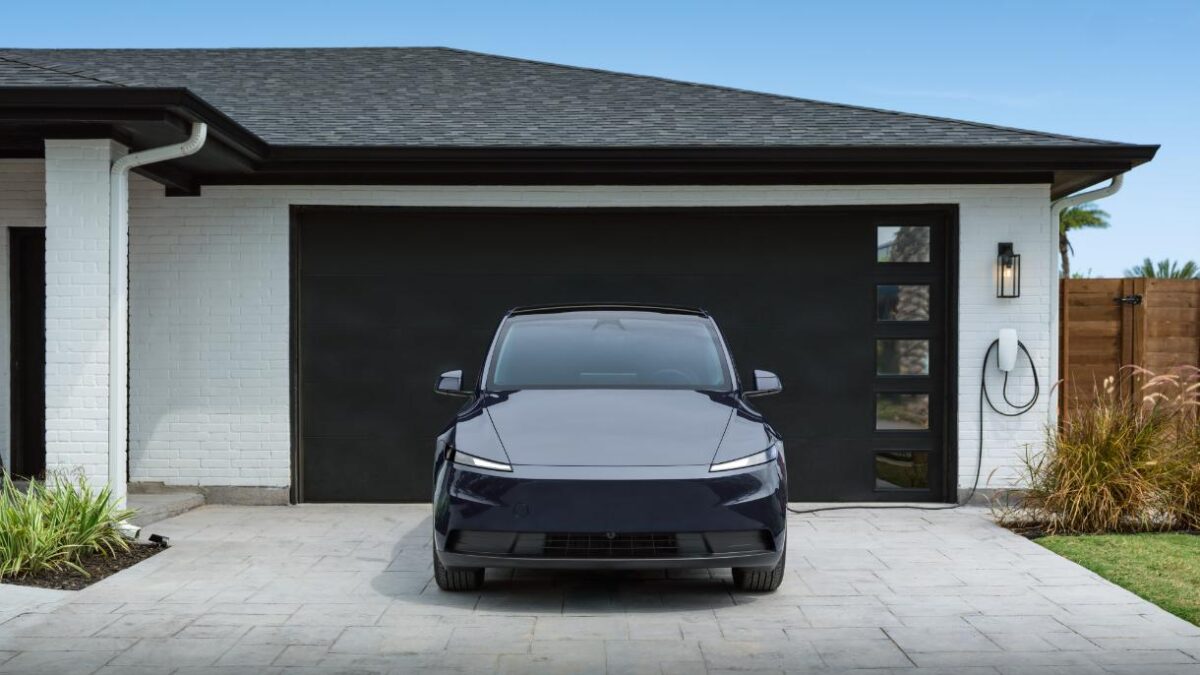
Tesla is preparing a small but very practical upgrade for its Full Self-Driving system: future versions of Tesla FSD will remember where you prefer to park. Instead of taking the first open space, the car will aim for the spot you usually choose at home, at work, at school, or elsewhere, which should cut down on those last-minute human interventions that still happen around parking.
That sounds modest, but it targets one of the most annoying weak points in automated driving. Highway-style autonomy tends to grab headlines; parking is where the software still has to deal with messy real-world habits, local quirks, and drivers who expect the car to read their minds. Tesla’s pitch is simple: let the system learn the pattern, and let the human stop babysitting the final 30 feet.
How Tesla FSD parking memory will work
According to Elon Musk, the car will use previous parking behavior to infer where you want to stop, rather than defaulting to whatever space is nearest. In practice, that could mean a Tesla that knows you always back into the same slot at home, or that your office parking preference is tucked away from the front entrance. It is a classic autonomy move: less randomness, more pattern recognition.
- FSD will remember parking preferences in future versions.
- The car will choose a familiar destination spot instead of the first available one.
- Parking at the destination is currently a common reason for driver intervention.
Why parking still trips up autonomous driving
Tesla is not alone here. Most advanced driver-assistance systems are strongest when the environment is predictable and weakest when humans expect social intelligence from software. A parking lot combines faded lines, pedestrians, carts, poor markings, and local habits that vary from one building to the next, which is why even polished systems can feel a little too eager to improvise.
Musk also said that critical safety interventions remain rare, which fits Tesla’s broader argument that FSD is already doing most of the driving work. The new parking feature is less about dramatic autonomy and more about shaving off the final friction point that reminds drivers they still need to supervise the machine.
What changes for Tesla owners next
If Tesla gets this right, the payoff is boring in the best possible way: fewer awkward manual overrides, smoother arrivals, and a system that feels more personal without becoming more complicated. The bigger question is whether the car can learn parking preferences cleanly enough to avoid guessing wrong, because nothing kills trust faster than a machine confidently choosing the wrong spot.