

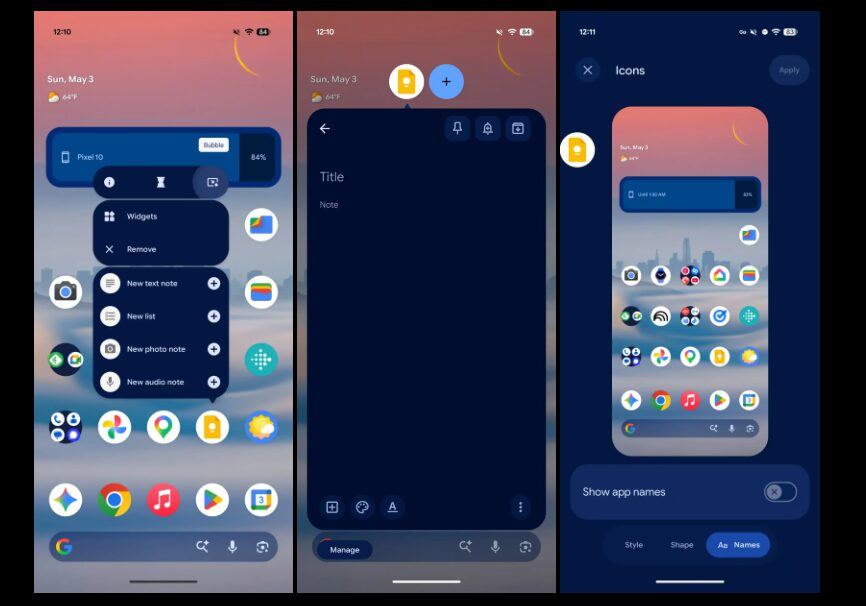
Google has started rolling out Android 17, and Pixel phones are first in line. The Android 17 update leans hard into multitasking, foldables, and AI, which is a polite way of saying Google knows exactly where the premium Android fight is headed: bigger screens, more split-screen behavior, and features that sound useful enough to survive beyond the launch week.
The headline feature is Bubbles, which can turn any app into a floating window. On foldable phones, Google adds a dedicated quick-switch panel for those floating apps, making the whole thing feel less like a demo and more like an actual workflow upgrade. That’s the kind of polish Samsung and others have been nudging toward for years, so Google is late – but not late enough to be ignored.
Android 17 floating windows and foldable gaming
Foldable owners also get a special gaming mode designed for phones such as the Samsung Galaxy Z Fold and Pixel Fold. It splits the screen 50:50, with the game on top and a virtual gamepad below, while Google says memory management has been improved to reduce lag and frame drops. That’s smart, because foldables have always had the hardware bragging rights; the software is what usually trips over its own shoelaces.
- Bubbles turns apps into floating windows
- Foldables get a quick-switch panel for those windows
- Gaming mode splits the display 50:50 on compatible foldables
- Memory handling has been tuned to cut delays and frame drops
Security, screen recording, and Gemini Intelligence
Android 17 also brings refreshed screen recording tools that can capture video from the front camera at the same time, plus updated privacy settings and a new system for protecting lost devices. Those are the kinds of features that rarely make splashy trailers, but they tend to matter more once people actually start using the phone in the wild.
Later this summer, some devices will get Gemini Intelligence, a new Google assistant built for multi-step tasks that use context. Pixel phones are also set for extra features, including live call translation, expanded photo editing tools, and file sharing with iPhone through Android Quick Share. Google is clearly trying to make Pixel feel less like ”Android, but made by Google” and more like the version that gets the good stuff first.
What Pixel users get first
As usual, Pixel owners are the early beneficiaries, while other manufacturers wait for their own software schedules to catch up. That rollout pattern is old news, but it still shapes Android’s reputation: Google uses Pixel as the showroom, then lets the rest of the ecosystem copy the furniture at its own pace. The open question is whether Android 17’s best tricks, especially the foldable-specific ones, will stay Google-first features long enough to keep Pixel looking special.