

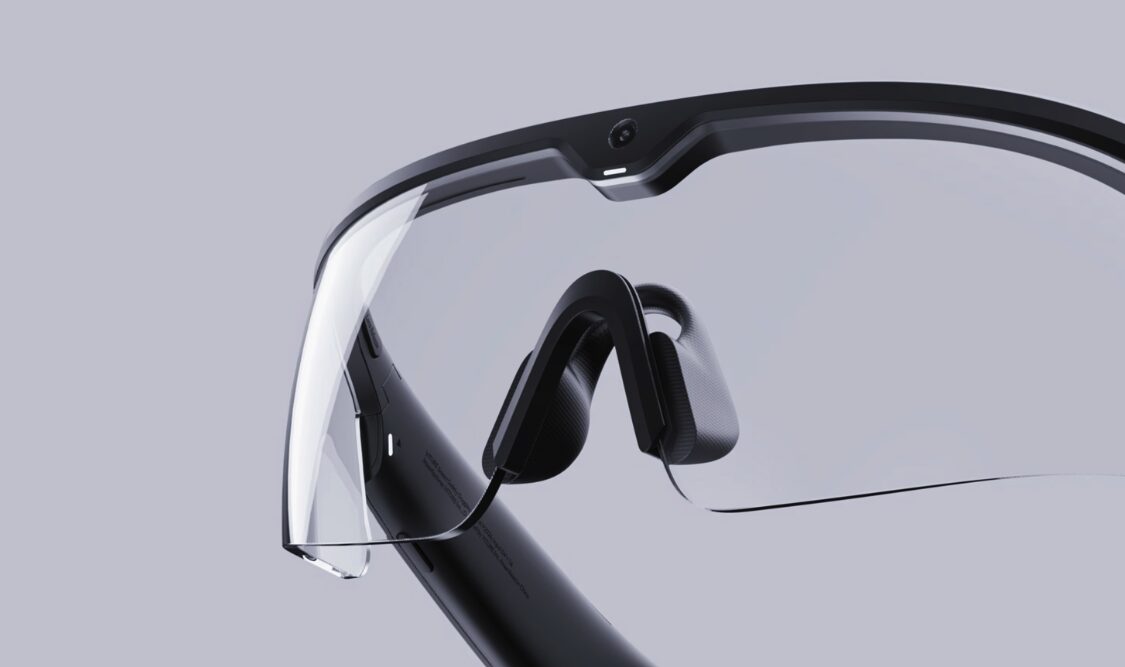
VITURE has pulled its XR glasses out of the consumer lane and into something much more serious: Helix, a safety eyewear platform built with NVIDIA for industrial, scientific, and clinical work. The pitch is simple enough – a transparent headset that can stream the wearer’s first-person view into a multimodal AI system in real time – but the target audience is far less forgiving than people buying a gadget for the couch. Pricing starts at $600, and initial production reservations are open now.
That shift matters because the wearables market has been crowded with headsets that promise productivity and then spend most of their time being used for demos. Helix is VITURE’s bet that the real money is in regulated environments, where hands-free video, voice capture, and AI assistance can justify enterprise pricing. NVIDIA, for its part, gets another showcase for its XR AI stack at a time when the company is pushing hard to be the default infrastructure layer for spatial computing.
Helix hardware and safety specs
VITURE says Helix runs on NVIDIA’s XR AI solution and does not need a companion smartphone. The frame is designed to ANSI Z87.1-2025 standards and includes a 12MP first-person camera, a quad-microphone array, stereo speakers, Wi-Fi, Bluetooth 5.3, and up to 60 minutes of battery life between charges.
- 12MP first-person camera
- Quad-microphone setup
- Stereo speakers
- Wi-Fi and Bluetooth 5.3
- Up to 60 minutes of battery life
The industrial-grade, fully transparent design is the giveaway here. This is not a consumer XR accessory wearing a hard hat for the keynote; it is being pitched as a tool for people who need to document what they see while keeping both hands on the job.
A year in the making with Stanford and Princeton labs
VITURE says Helix was developed over a year with NVIDIA, the Le Cong Lab at Stanford University, and the Mengdi Wang Lab at Princeton University. That academic triangle suggests the company wants credibility in multimodal AI and human-computer interaction, not just another glossy hardware reveal.
The timing also fits a broader pattern in wearable tech: hardware makers are moving from ”look what it can display” to ”look what it can understand.” Meta has spent years normalizing camera-equipped wearables, and enterprise AR vendors have long argued that workflow software matters more than display tricks. Helix is VITURE trying to cut straight into that second camp.
Pricing, shipping, and where Helix will be shown
Initial production reservations are open now on VITURE’s website, with pricing starting at $600. Commercial pilot allocations are invite-only, and the company expects shipments to begin in Q1 2027.
NVIDIA will feature Helix at AWE 2026, with live demonstrations in the NVIDIA/Dell meeting facilities. VITURE also says it is currently the top-shipping brand for AR/XR display glasses in the U.S. and Europe, and second overall in total AR/VR headset shipments behind Meta, according to Q1 2026 IDC data. The competitive question is whether that consumer momentum can translate into enterprise trust fast enough to matter before rivals crowd the same aisle.
If Helix works, expect more XR brands to stop pretending the future is just entertainment and start selling into operations, healthcare, and lab work. If it doesn’t, $600 buys a very polished reminder that industrial AI is much harder than putting a camera on a frame.