

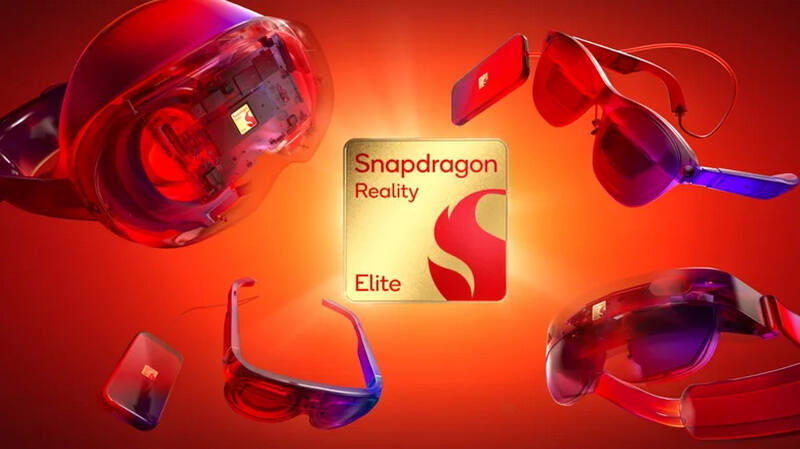
Qualcomm has a new flagship chip for mixed-reality gear, and the pitch is simple: make AR and XR devices smaller, cooler, and less annoying to wear. At Augmented World Expo, the company introduced Snapdragon Reality Elite, a successor to its Snapdragon XR2+ Gen 2 family that aims squarely at the next wave of smart glasses and headsets.
The timing makes sense. Headsets have spent years getting better at motion tracking and display quality, but they still tend to be bulky and power-hungry. Qualcomm’s answer is a chip that keeps pushing performance while trimming the hardware penalty, which is exactly what the category has been waiting for.
Snapdragon Reality Elite specs
On paper, Snapdragon Reality Elite is a modest step up in display specs and a much bigger one in efficiency. Qualcomm says the chip supports up to 4.4K per eye at 90 frames per second, while also improving image quality and reducing latency.
- Up to 4.4K per eye at 90 fps
- Up to 20% longer battery life
- Up to 12 degrees Celsius lower temperature than XR2+ Gen 2
- 60% higher graphics performance
- Up to 30% higher CPU performance
- Up to 160% higher NPU performance
That NPU jump is the more interesting part. Qualcomm is clearly betting that future wearables will do more on-device AI, from photorealistic avatars to agent-style assistants, instead of constantly leaning on the cloud. That is the practical path to glasses that feel responsive rather than tethered to a phone and a prayer.
From XR branding to Reality Elite
Qualcomm is also doing a bit of branding housekeeping. Its previous AR and VR chips carried the XR label, but Snapdragon Reality Elite is now the company’s most powerful chip for VR, AR, and XR devices. The rename signals a more ambitious push into transparent glasses as well as the better-known headset format.
Matthew DeHamer, Qualcomm’s product marketing director, described it as a new phase for the company’s mixed-reality lineup, with a stronger focus on transparent devices and generative AI features. That lines up with where the market is headed: Meta, Apple and others have already made it clear that wearables are moving toward lighter frames, richer AI, and less of the ski-goggle look.
START aims at smart glasses makers
Qualcomm did not stop at high-end XR silicon. It also unveiled START, a turnkey OEM platform for smart glasses built around the Qualcomm AR1+ chip and bundled software, including companion apps for iOS and Android. The idea is to give manufacturers a ready-made path into AI-enabled eyewear without starting from scratch.
START can be used for both audio-focused frames and glasses with built-in displays, and Qualcomm is working with component partners on several designs. The first partner is Inspecs, the UK eyewear company behind brands including O’Neill, Barbour and Superdry. That is a sensible move: the smart glasses race will not be won by chip specs alone, but by how quickly brands can ship something people might actually wear outside a demo booth.
What comes next for Qualcomm wearables
Reality Elite will show up first in Xreal Aura, an XR glasses product that uses a wired connection to an external compute module. That gives Qualcomm an early reference design, but it also hints at the transition the whole category is making: standalone devices are still the prize, yet lighter tethered systems may arrive faster and look more realistic to buyers.
If Qualcomm can turn these gains into slimmer hardware with better battery life, it could give Android-powered wearables a much stronger answer to Apple’s and Meta’s ambitions. The real test now is whether device makers use that head start to build products people want on their faces for more than a few minutes.