

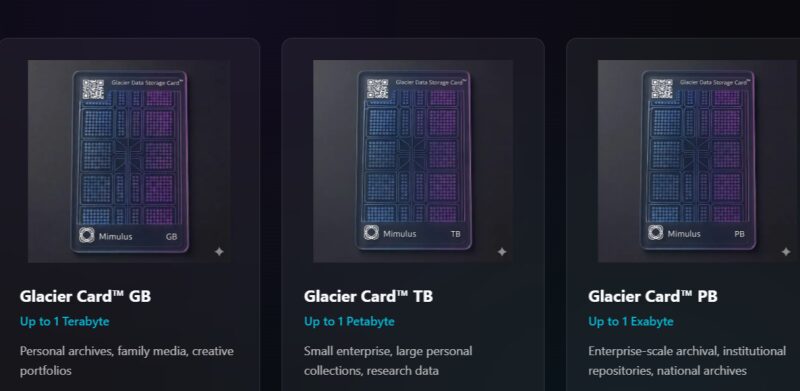
Mimulus has unveiled Glacier Storage Card, a bank-card-sized archive built on DNA encoding, and it is making a very bold promise: up to 1 EB of data stored for at least 10,000 years. That is not a typo-sized marketing flourish; it is the company’s pitch for molecular archiving, a field that keeps resurfacing because ordinary storage still has a nasty habit of wearing out, burning power, and occasionally being eaten by its own complexity.
The concept is simple enough to explain and absurd enough to still sound futuristic. Mimulus says it compresses binary data, converts it into DNA base sequences, synthesizes those strands, and seals them inside the Glacier Storage Card. On paper, the company claims the familiar DNA-storage perks: very high density, low energy use, chemical stability, air-gapped storage, and resistance to malware. That is a long list of virtues for a system that, for now, still depends on a very unglamorous round trip through a vendor portal and a lab.
How Mimulus stores and retrieves data
There is no conventional drive here. Customers upload files to Mimulus’ portal, wait for the card to be prepared, and then receive the packed Glacier Storage Card by mail. If they later need the data back, the card goes to Mimulus, where staff open the container, extract the DNA with a patented biological primer, sequence it, reconstruct the binary data, and return it within 48 hours of receiving the card. The company does not say whether customers get the same card back, or whether they can request only selected files instead of the full archive.
- Glacier Storage Card GB: up to 1 TB
- Glacier Storage Card TB: up to 1 PB
- Glacier Storage Card PB: up to 1 EB
GenScript partnership and storage capacity claims
Mimulus says it has partnered with GenScript Biotech to build what it calls the ”first in the world” molecular archiving storage system. GenScript brings a validated CMOS-based production platform that can synthesize 8 million oligonucleotides in parallel on a single chip, which helps explain why the company is involved: DNA storage lives or dies on whether synthesis can happen fast enough to be commercially useful. Competitors in the field have been chasing that same bottleneck for years, so the hardware claim matters more than the glossy card photos.
There is also a small but important credibility snag. Blocks & Files spotted a mismatch in Mimulus’ own material: one place says the PB card holds up to 1 EB, another says up to 2.4 EB. That kind of inconsistency is not fatal for an early-stage archive product, but it does remind you that DNA storage still sits somewhere between serious engineering and wildly optimistic brochure copy. The bigger question now is whether Mimulus can turn a laboratory-friendly medium into something customers would trust with cold archives that actually matter.