

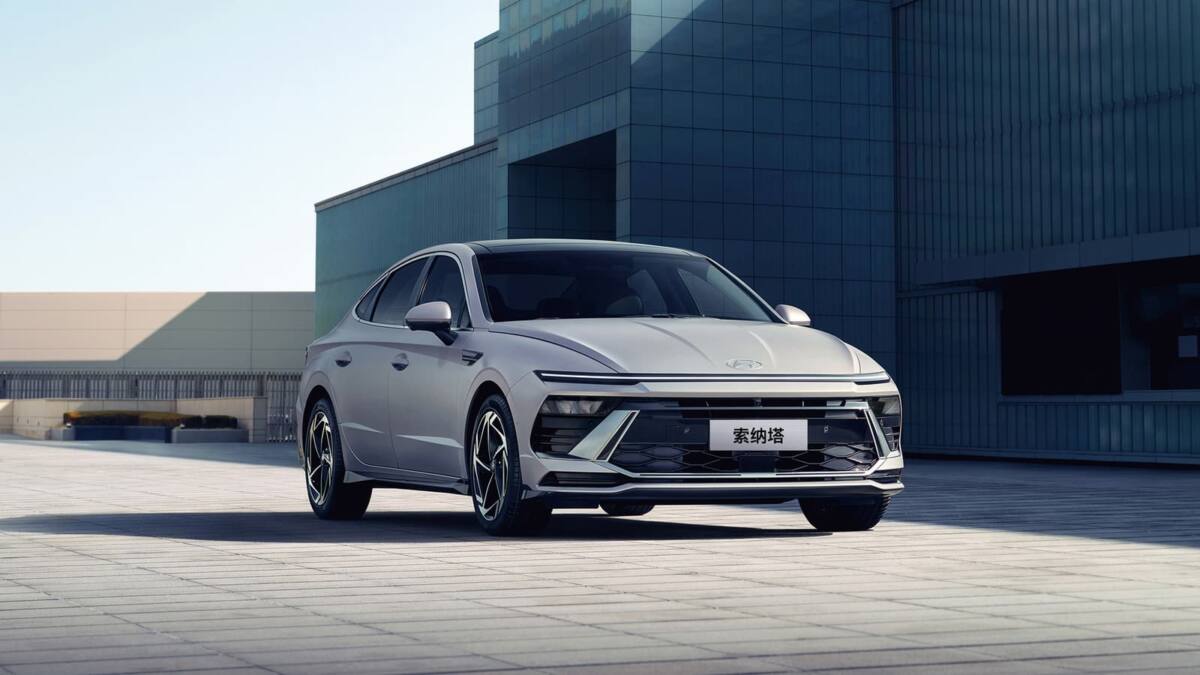
Hyundai has rolled out the Sonata 2026 model year in China, and the pricing is aggressive enough to make rival midsize sedans uncomfortable. Beijing Hyundai is offering the updated Hyundai Sonata 2026 in four trims at 140,000 to 174,000 yuan, which translates to about 1.5 million to 1.9 million rubles, with the punchier 2.0-liter version sitting at the top of the range.
The car itself is less of a redesign than a tidy refresh. That is not a complaint; in this class, keeping the shape familiar is often the point, especially when the design already leans on Hyundai’s split headlights and a rear light bar that still looks current rather than overworked.
Hyundai Sonata 2026 exterior and N Line version
Visually, the standard Sonata sticks to Hyundai’s modern family look. The more obvious play for buyers who want a little theatre is the N Line variant, which adds a sport body kit, four exhaust outlets, red brake calipers, and extra trim. It is the same old car dressed with sharper shoes, which is exactly how these trims are supposed to work.
The dimensions are unchanged in spirit too: 4945 x 1860 x 1445 mm, with a wheelbase of 2875 mm. That keeps it squarely in the roomy midsize-sedan bracket, where space and rear comfort still matter more than marketing slogans.
Interior tech and SmartSense equipment
Inside, Hyundai has gone for the now-familiar twin-screen setup: a single curved panel that combines the digital instrument cluster and the multimedia system, with both displays measuring 12.3 inches. Happily, the company has not gone full touchscreen purist and left some physical buttons in place, which will please anyone who likes changing climate settings without playing guesswork.
Driver assistance is handled by the updated Hyundai SmartSense package, covering collision warnings, lane-keeping assistance, and adaptive cruise control. In China, that sort of equipment is no longer a bonus feature so much as table stakes, because local rivals have spent the last few years turning assistance tech into a selling point rather than a brochure footnote.
Engine choices and chassis layout
Buyers get two turbocharged petrol engines:
- 1.5-liter unit with 170 hp
- 2.0-liter unit with 250 hp
- Eight-speed automatic transmission for both engines
The suspension follows the classic midsize-sedan recipe, with McPherson struts at the front and a multi-link rear arrangement. That is not glamorous, but it is the sort of hardware that usually keeps a family sedan competent on ordinary roads, which is still what most buyers actually need.
The interesting question is whether Hyundai’s combination of low entry pricing and a 250 hp top version is enough to pull attention from newer Chinese rivals that arrive with even more screen real estate and, increasingly, hybrid power. For now, Sonata’s answer is simple: keep the familiar shape, add the tech, and price it hard enough to tempt buyers who still want a sedan instead of another tall box on wheels.