

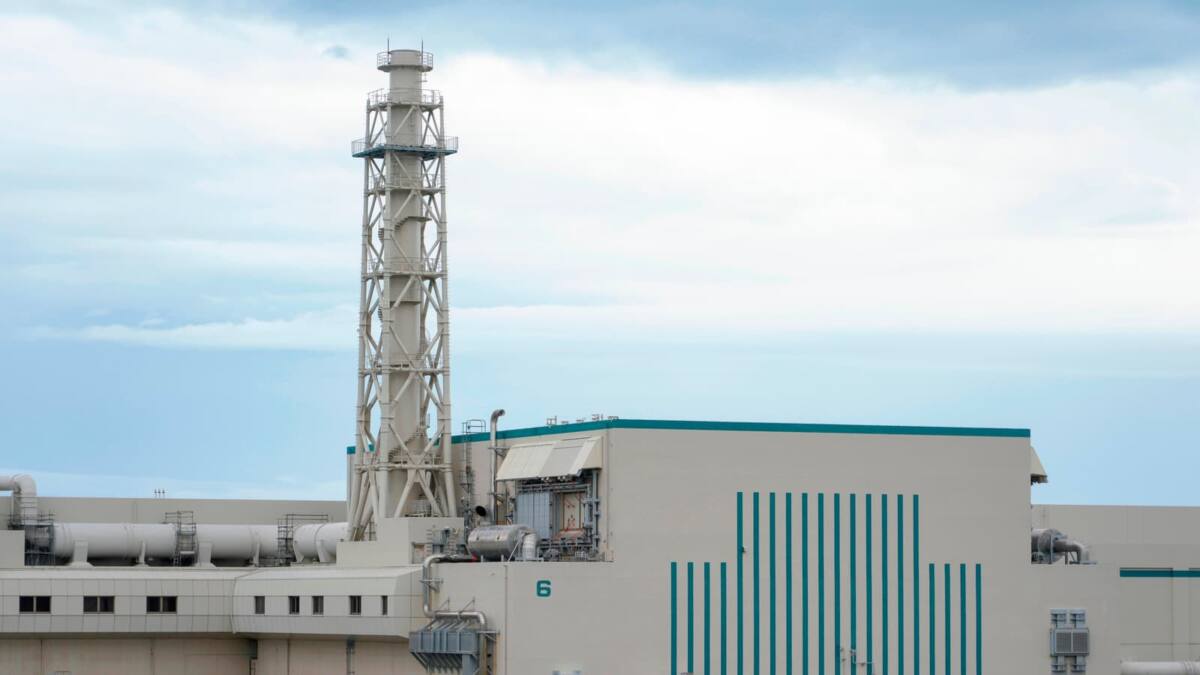
Japan has restarted reactor No. 6 at Kashiwazaki-Kariwa, the world’s largest nuclear power station, but the move has exposed a much less glamorous problem: the country is running short of places to store spent fuel. With fuel pools near capacity at several plants and no final disposal route for high-level waste, Japan’s nuclear comeback is colliding with the same old headache that never went away after Fukushima.
The restart fits Tokyo’s push to raise power output and cut reliance on imported energy, but the timing is awkward. Japan still has only 15 of its 54 reactors back online, and the industry’s revival is now being constrained not by engineering alone, but by logistics, politics, and public distrust. That is the sort of bottleneck that can quietly freeze a strategy from the inside out.
Kashiwazaki-Kariwa is back, but its fuel pool is 88% full
The No. 6 reactor at Kashiwazaki-Kariwa is now operating again after years of shutdowns and safety upgrades. The plant was among those taken offline after the Fukushima disaster in March 2011, when a magnitude 9.0 earthquake and tsunami triggered meltdowns in three reactors and forced about 160,000 people to evacuate.
After the restart, the site has additional safety systems, including exhaust filters and protection against hydrogen explosions, both introduced in response to Fukushima. But the bigger number is the one that makes operators nervous: the fuel pool for reactor No. 6 is already 88% full. According to Japan’s power companies, spent-fuel pools at at least three nuclear plants will be completely full within five years.
- World’s largest nuclear plant: Kashiwazaki-Kariwa
- Reactor restarted: No. 6
- Fuel pool fill level at the site: 88%
- Reactors back online in Japan: 15 of 54
Japan’s spent fuel problem is getting bigger fast
Japan officially prefers reprocessing spent fuel to recover plutonium and uranium for reuse, a policy shaped by limited domestic resources. In theory, that reduces waste. In practice, the system still has holes: one reactor meant to burn plutonium never entered service, and reprocessing capacity cannot handle everything the country produces.
That mismatch has left Japan with a large plutonium stockpile, enough by estimates for thousands of nuclear warheads. By December 2025, the storage pools at 17 nuclear stations held more than 17,000 tons of spent fuel, with around 80% of total capacity already used. If that sounds like a storage spreadsheet becoming a national security issue, that is because it is.
Minamitorishima enters the long-term waste debate
With no permanent disposal solution in place, Tokyo is also looking at a remote island called Minamitorishima, about 2,000 km south of Tokyo and without a permanent population. The island is seen as geologically stable, which makes it technically attractive for deep disposal of radioactive waste.
Still, the proposal has drawn criticism from experts and local officials, who say the choice looks politically convenient rather than scientifically settled. Moving a deeply unpopular problem to an isolated state-owned island may lower resistance, but it does not magically create a credible endgame for waste that must be monitored for up to 100 years in a facility intended to contain it for tens of thousands of years.
Japan can keep restarting reactors for now, and it probably will. The open question is whether the country can keep enough storage space ahead of generation growth, or whether the next constraint on nuclear power will come not from safety politics, but from a lack of room to put the fuel after it has already done its job.