

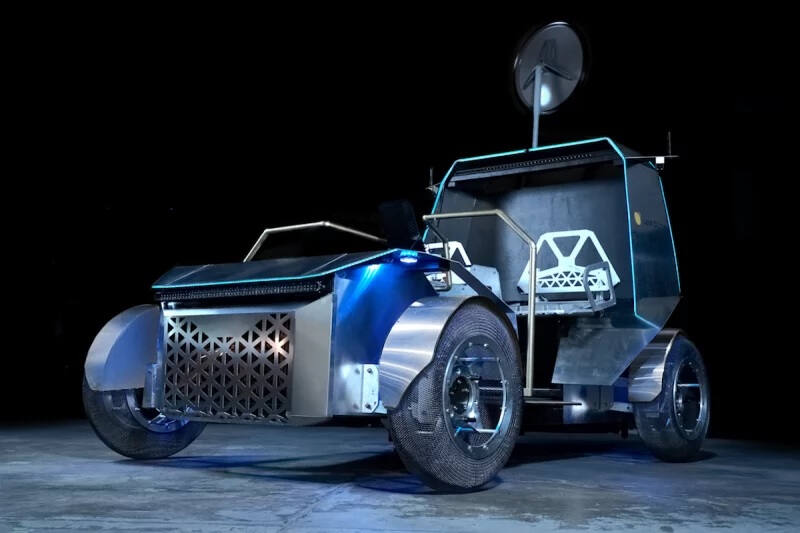
NASA has put a new lunar rover on the clock. Pegasus, built by Lunar Outpost, is one of two vehicles selected to help astronauts move around a future base near the Moon’s south pole, where the agency wants a settlement spread across ”hundreds of square miles.” That kind of ambition needs more than boots and optimism; it needs something that can survive the cold, the shadows, and the absurdly hostile terrain.
Pepegasus – sorry, Pegasus – is designed to run in three modes: autonomously, under astronaut control, or via commands from Earth. Lunar Outpost says the rover is meant to extend how far and how long humans can operate on the lunar surface, a big departure from Apollo-era mobility. That claim is not marketing fluff in a vacuum; on the Moon, every extra kilometre and every extra hour of battery life buys science, logistics, and safety.
How NASA is splitting the lunar rover contract
NASA picked two companies for the Lunar Terrain Vehicle work: Astrolab received $219 million for its Crewed Lunar Rover, while Lunar Outpost got $220 million for Pegasus. The agency also forced both teams to build simplified versions to speed up crewed lunar missions and keep costs down, which is a polite way of saying NASA wants Apollo-scale urgency without Apollo-scale waste.
Lunar Outpost says Pegasus is based on its larger Eagle rover, which helped the company move quickly after NASA tightened the requirements for the Lunar Terrain Vehicle programme. That sort of reuse is smart engineering, and it is also how aerospace schedules stop turning into science fiction.
Pegasus is built for ice, shadows and extremes
The rover’s real test is not speed, but survival. NASA wants machines that can handle icy patches, permanently shadowed crater floors, and the kind of temperature swings that would make most hardware beg for retirement: as low as -245 C in dark regions and as high as 120 C on sunlit ground. Pegasus’ thermal control system is designed to keep running on its own even when an astronaut is driving, which is exactly the sort of boring, essential detail that decides whether a lunar rover is useful or just expensive decoration.
- Operating modes: autonomous, astronaut-controlled, or Earth-commanded
- Planned service life: at least one year
- Range target: 100 times the distance covered by Apollo rovers
Lunar Outpost says Pegasus and Eagle are expected to work for at least a year and travel 100 times farther than the Apollo rovers, which covered 90.4 km across three missions. That comparison is doing a lot of heavy lifting, but it also shows how much the Moon’s mobility problem has changed: NASA is no longer asking whether humans can drive there, only how far they can go once they arrive.
The November 2027 deadline
NASA wants Lunar Outpost to deliver a flight-ready Pegasus by November 2027. If everything stays on schedule, Blue Origin’s Blue Moon Mark 1 lander is the vehicle slated to carry it down. The bigger question is whether the rover’s design, and the programme around it, can stay simple enough to meet that date without cutting away the very features that make a lunar rover worth sending in the first place.