

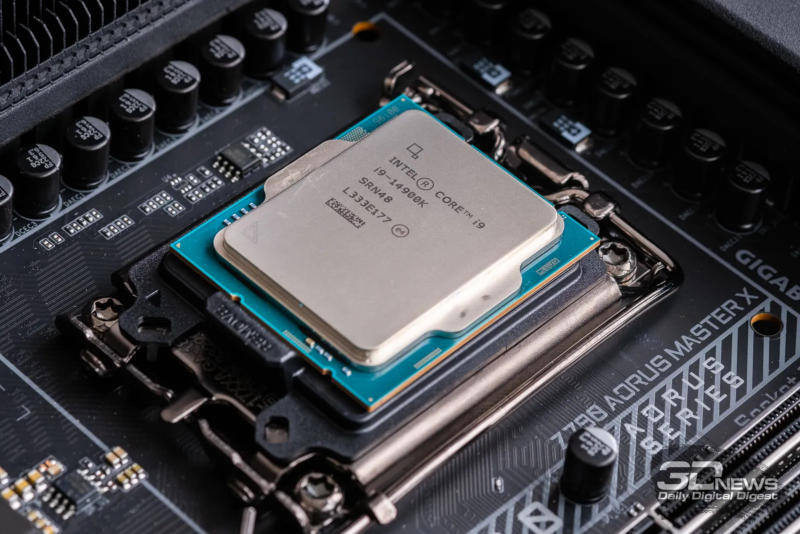
Intel may not be done with Raptor Lake after all. According to fresh rumors, the company is preparing a new wave of chips for the first half of 2027, with ”Raptor Lake Next” positioned to arrive a few months after Nova Lake and to keep serving the aging but still very much alive LGA 1700 ecosystem.
That sounds odd until you look at the memory market. DDR4 demand has picked up enough that at least two motherboard makers reportedly plan to raise production of AM4 and LGA 1700 boards, which is not exactly the behavior of an industry that thinks those platforms are dead. Intel may simply be trying to squeeze a little more value out of a socket that already has a huge installed base – and, frankly, that is smarter than pretending every buyer wants a full platform reset.
Raptor Lake Next could land after Nova Lake
The reported timing is the key detail: Nova Lake is expected at CES 2027, while Raptor Lake Next would show up later in the first half of 2027. The name suggests a third pass at the family that first appeared in the 13th generation, but Intel has not shared technical details yet, and there is no guarantee this will be a truly new architecture rather than a repackaged supply play.
- Platform: LGA 1700
- Memory: DDR4
- Expected window: first half of 2027
- Newer sibling: Nova Lake at CES 2027
Why Intel might revisit LGA 1700
There is precedent for this sort of thing. AMD recently went back to Ryzen 7 5800X3D amid memory shortages, which showed that ”old” can suddenly become very profitable when supply and pricing move the wrong way. Intel could do the same by framing Raptor Lake Next as a stock-filling move, or even as a way to stabilize pricing for buyers who do not want to pay for DDR5 and a new board just to upgrade a gaming PC.
The irony is that the existing Raptor Lake Refresh chips are still competitive in games, and even newer Intel parts have had a hard time unseating the Core i9-14900K in that specific battle. That makes a low-drama follow-up plausible, especially if Intel still wants to sell into a market that is clearly not ready to let DDR4 go quietly.
Bartlett Lake shows Intel is not done with Raptor Cove
Intel has already kept one foot on this path with Bartlett Lake, a line aimed at embedded and industrial systems that uses only P-cores and the LGA 1700 socket. Its top model, the Core 9 273PQE, has up to 12 P-cores, and the chips are hardware-compatible with Raptor Lake platforms even if software support is absent. Enthusiasts have already pushed industrial Bartlett Lake parts onto consumer 600- and 700-series boards, which says a lot about how much life is still left in this platform.
That does not mean Intel is guaranteed to ship Raptor Lake Next exactly as rumored. If DRAM prices fall sharply, the business case gets weaker fast. If they stay high, though, a ”new” Raptor Lake line for LGA 1700 would be a neat little reminder that the PC market still rewards the simplest answer: sell people more of what already works.