

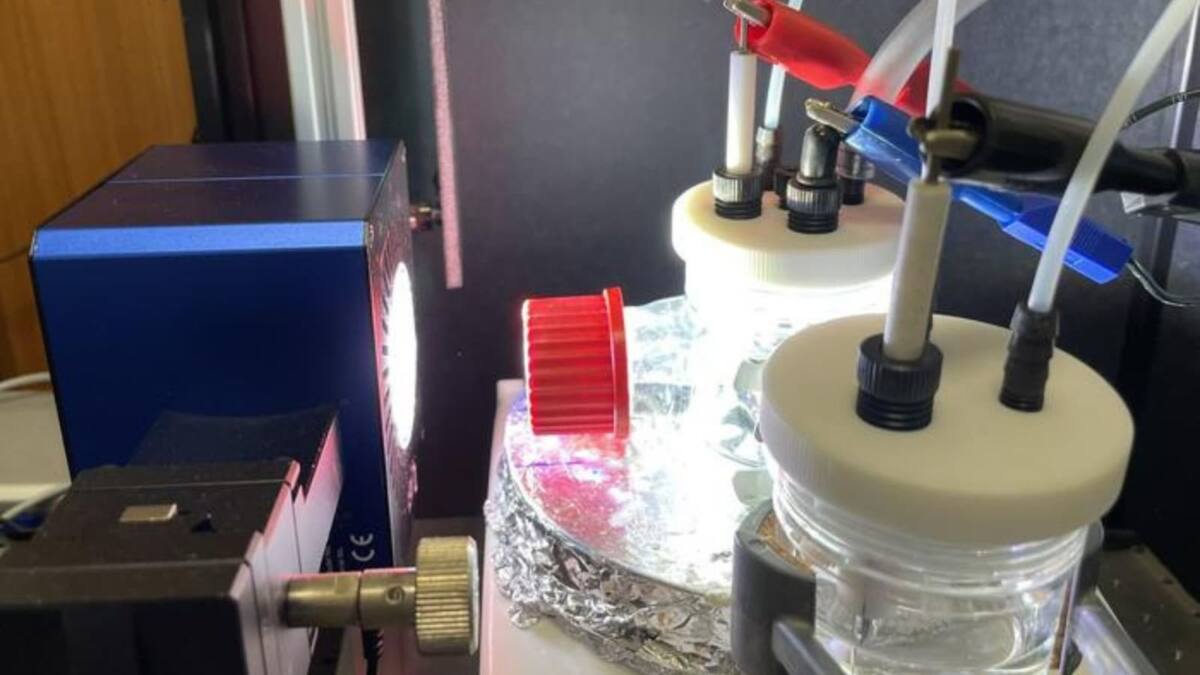
A team at the University of Nottingham has built a solar reactor that does two useful things at once: it converts carbon dioxide into formate and turns biomass waste from wood and agriculture into another industrial raw material. The solar reactor uses no grid connection or external power, just sunlight and a two-chamber system doing double duty.
The reactor uses a photoanode made from low-cost carbon nitride and tungsten oxide, a deliberate swipe at the expensive precious metals that haunt many lab-scale clean-tech systems. In other words, the researchers are trying to dodge the usual ”works in a paper, dies in a factory” trap.
How the solar reactor splits two reactions
The setup splits the chemistry across two chambers. In the anode chamber, a biomass breakdown product called HMFA is converted with about 95% efficiency into a valuable monomer that can be used for biodegradable plastics and other greener materials.
At the same time, electrons generated by the light-driven process travel to the other chamber, where they reduce carbon dioxide into formate, with an efficiency of 93%.
Formate is not some niche lab curiosity either. It is already used across chemical manufacturing, pharmaceuticals, textiles, and in coatings and paints. That gives the technology a better shot at commercial relevance than a lot of carbon-capture concepts that stop at the ”we trapped it” stage and never make anything people actually buy.
Why the material choice matters
One of the biggest obstacles in carbon dioxide conversion is energy use: CO2 is stubbornly stable, so many methods need high temperatures or lots of electricity. The Nottingham system is designed to run at room temperature on sunlight alone, and the team says its lifecycle assessment shows a near-zero carbon footprint. That does not guarantee industrial victory, but it does remove two of the usual excuses.
There is also a deployment angle here. If modular versions can be built at scale, they could sit beside factories or agricultural operations, pulling CO2 from exhaust streams while processing local biomass waste on site. That would turn two disposal headaches into saleable feedstock, which is a much more persuasive business model than simply asking industry to feel virtuous.
The real test is scale
The obvious question is whether the numbers survive outside the lab. Many solar-to-chemical systems look elegant until they meet dirt, weather, and real industrial volumes, and that is where the chemistry usually gets a reality check.
But if this reactor can keep its efficiency while scaling, it could join a small but growing class of technologies that make carbon reduction pay for itself instead of treating it as a permanent cost center.