

BYD’s fast-charging push is moving quickly
The new site also fits into a much larger rollout. BYD says it has already built more than 6400 fast-charging stations as part of its Flash Charge China strategy, and it expects 20,000 to be completed by the end of this year. That is the kind of scale that can turn a flashy spec sheet into something drivers actually notice, especially as Chinese EV makers keep chasing shorter charging stops and higher-voltage architectures.
Sinopec and BYD’s EV charging network in China
For Sinopec, a giant fuel retailer, the move is a sensible hedge against a future that is arriving faster than the old petrol playbook would like. For BYD, it is another way to lock in a charging ecosystem around its cars while also trying to set the pace for competitors such as Tesla, Nio, and Xpeng, all of which have spent years trying to make charging less of a waiting game.
The bigger question is not whether 1500 kW sounds impressive – it does – but how quickly this kind of hardware spreads beyond a single opening in Zhejiang. If BYD and Sinopec can replicate the model at the promised pace, the real winner will be the driver who gets to spend far less time staring at a progress bar.
BYD’s fast-charging push is moving quickly
The new site also fits into a much larger rollout. BYD says it has already built more than 6400 fast-charging stations as part of its Flash Charge China strategy, and it expects 20,000 to be completed by the end of this year. That is the kind of scale that can turn a flashy spec sheet into something drivers actually notice, especially as Chinese EV makers keep chasing shorter charging stops and higher-voltage architectures.
Sinopec and BYD’s EV charging network in China
For Sinopec, a giant fuel retailer, the move is a sensible hedge against a future that is arriving faster than the old petrol playbook would like. For BYD, it is another way to lock in a charging ecosystem around its cars while also trying to set the pace for competitors such as Tesla, Nio, and Xpeng, all of which have spent years trying to make charging less of a waiting game.
The bigger question is not whether 1500 kW sounds impressive – it does – but how quickly this kind of hardware spreads beyond a single opening in Zhejiang. If BYD and Sinopec can replicate the model at the promised pace, the real winner will be the driver who gets to spend far less time staring at a progress bar.
- Maximum output: 1500 kW
- Charging setup: two charging units, four parking spaces, four charging guns
- Compatibility: 200 V to 1000 V EVs
- Claimed full charge time: 9 minutes in normal temperatures
BYD’s fast-charging push is moving quickly
The new site also fits into a much larger rollout. BYD says it has already built more than 6400 fast-charging stations as part of its Flash Charge China strategy, and it expects 20,000 to be completed by the end of this year. That is the kind of scale that can turn a flashy spec sheet into something drivers actually notice, especially as Chinese EV makers keep chasing shorter charging stops and higher-voltage architectures.
Sinopec and BYD’s EV charging network in China
For Sinopec, a giant fuel retailer, the move is a sensible hedge against a future that is arriving faster than the old petrol playbook would like. For BYD, it is another way to lock in a charging ecosystem around its cars while also trying to set the pace for competitors such as Tesla, Nio, and Xpeng, all of which have spent years trying to make charging less of a waiting game.
The bigger question is not whether 1500 kW sounds impressive – it does – but how quickly this kind of hardware spreads beyond a single opening in Zhejiang. If BYD and Sinopec can replicate the model at the promised pace, the real winner will be the driver who gets to spend far less time staring at a progress bar.
BYD and Sinopec have switched on a new fast-charging station in Wenzhou, and the headline number is eye-watering: the Flash Charger 2.0 is rated at 1500 kW and is said to fully recharge a car in 9 minutes under normal temperatures. The site is the first public result of a fresh partnership between the two companies, and it arrives less than 10 days after they signed a cooperation agreement in Beijing to build a new energy services network.
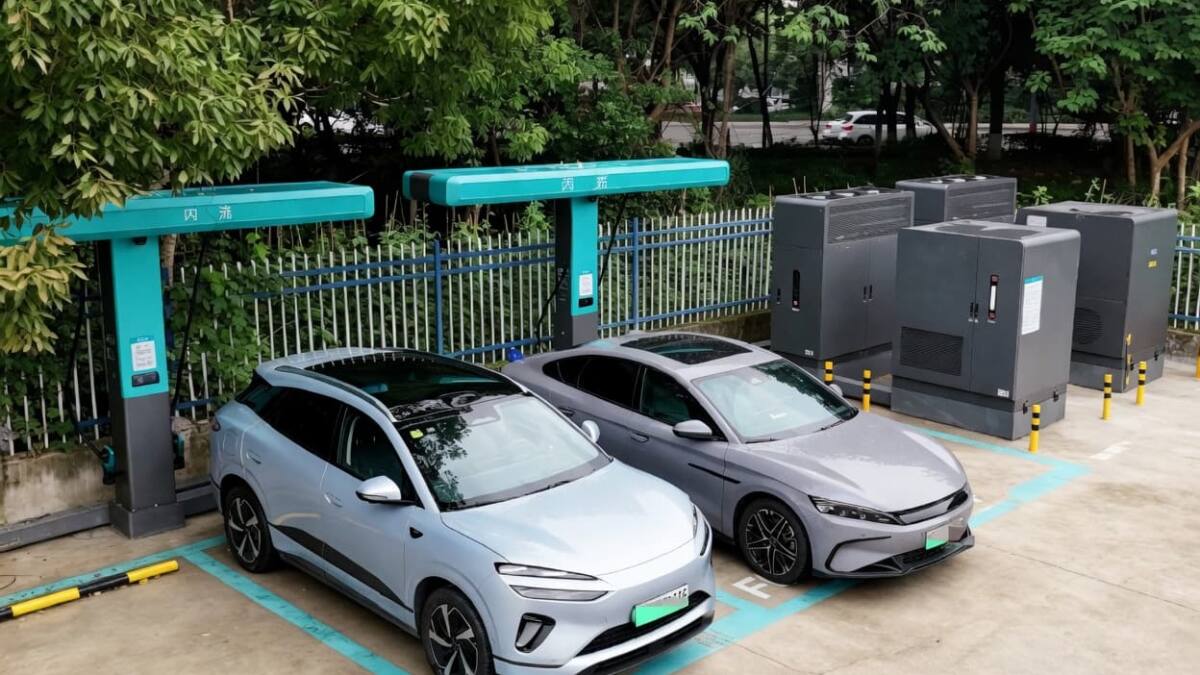
The station is not a tiny pilot tucked away in a lab. It uses two charging units, four parking spaces, and four charging guns, which suggests BYD and Sinopec want something more than a demonstration plaque. That matters because China’s charging race is no longer just about building more plugs; it is about building faster ones that can actually keep up with the next wave of high-voltage EVs.
1500 kW charging and 200V to 1000V support
BYD says the charger works with most electric cars on the market and supports vehicles with voltage ranges from 200 V to 1000 V. The system uses liquid cooling to manage heat, which is pretty much mandatory once you start pushing this much power through a cable without turning the hardware into an expensive toaster.
- Maximum output: 1500 kW
- Charging setup: two charging units, four parking spaces, four charging guns
- Compatibility: 200 V to 1000 V EVs
- Claimed full charge time: 9 minutes in normal temperatures
BYD’s fast-charging push is moving quickly
The new site also fits into a much larger rollout. BYD says it has already built more than 6400 fast-charging stations as part of its Flash Charge China strategy, and it expects 20,000 to be completed by the end of this year. That is the kind of scale that can turn a flashy spec sheet into something drivers actually notice, especially as Chinese EV makers keep chasing shorter charging stops and higher-voltage architectures.
Sinopec and BYD’s EV charging network in China
For Sinopec, a giant fuel retailer, the move is a sensible hedge against a future that is arriving faster than the old petrol playbook would like. For BYD, it is another way to lock in a charging ecosystem around its cars while also trying to set the pace for competitors such as Tesla, Nio, and Xpeng, all of which have spent years trying to make charging less of a waiting game.
The bigger question is not whether 1500 kW sounds impressive – it does – but how quickly this kind of hardware spreads beyond a single opening in Zhejiang. If BYD and Sinopec can replicate the model at the promised pace, the real winner will be the driver who gets to spend far less time staring at a progress bar.