

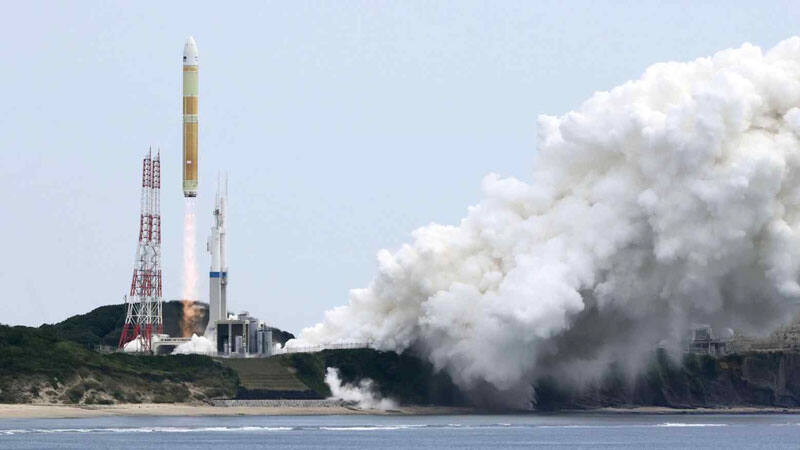
Japan’s H3 rocket has successfully flown from Tanegashima without a single solid-fuel booster, opening a lighter mode for sending small and medium payloads into orbit. The launch matters because H3 is meant to be Japan’s all-purpose workhorse, and a rocket that can scale from lean to heavy is far more useful than one stuck in a single weight class.
The launch also gave H3 a reset after December’s failure, when the rocket lost its satellite on the way up. This time, the vehicle climbed on three LE-9 liquid engines alone, marking its first all-liquid configuration. That kind of mission tailoring is exactly what launch providers chase now: fewer wasted kilograms, fewer unnecessary boosters, and a better fit for whatever is waiting in orbit.
H3 payload range now stretches from 8 t to 16 t
In its lightest setup, H3 can reportedly carry about 8 t to low Earth orbit. Add two side boosters and that rises to 12 t, while the maximum four-booster version reaches 16 t. There is also the option of fitting only two LE-9 engines instead of three on the first stage, which would cut capability further but also lower launch cost.
That sort of modular design is not glamorous, but it is smart. Europe’s Ariane 6 and SpaceX’s Falcon 9 have both shown that flexibility sells when customers want the cheapest viable ride, not a rocket with surplus muscle and a heavier bill.
Six small satellites rode on the mission
According to reports, the latest launch carried six small satellites, including Umitsubame from the Tokyo Institute of Science and Shiraito from the University of Shizuoka. Both are meant to test technology for bringing space debris down from orbit, a field that is getting more attention as low Earth orbit gets busier and messier.
Japan’s space program has had its share of expensive stumbles, but H3 is still early in its life. Eight launches in total, even with two failures, is enough to show a pattern forming: the rocket is starting to look less like an experiment and more like a platform. The next question is whether Mitsubishi and JAXA can keep the cadence up and make the light configuration attractive to commercial customers, not just national missions.