

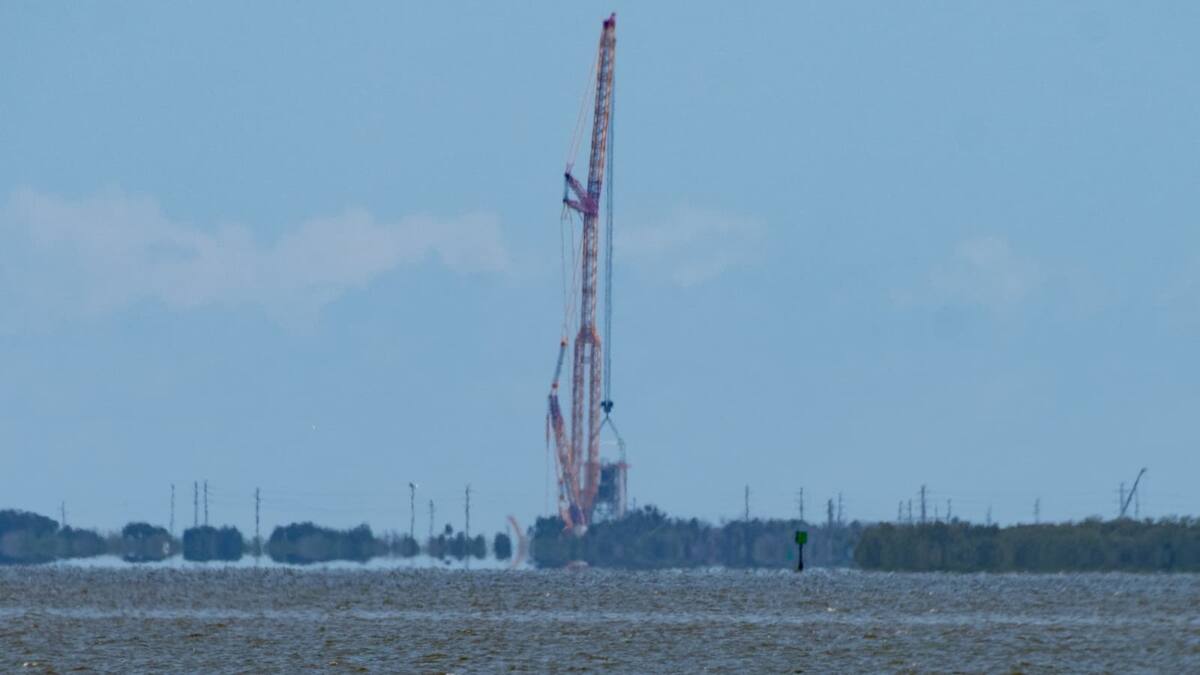
SpaceX has started assembling the first Mechazilla launch tower at Cape Canaveral for Starship, and the job is being handled by a crane with a frankly absurd résumé: the Liebherr LR 13000, the world’s most powerful crawler crane in a traditional lattice-boom layout. Its first lift placed one of nine modules that will make up the tower built for Starship, the largest rocket ever attempted.
The work is taking place at the historic SLC-37 complex in Florida, a site that once supported Saturn IB launches for Apollo and later Delta IV missions. That old hardware yard is being turned into a much busier Starship base, with two launch pads planned and up to 76 launches a year on the table for national security missions and NASA’s Artemis program.
The crane doing the heavy lifting
The LR 13000 can lift loads of up to 3000 tonnes, which explains why it gets the glamorous assignment here. SpaceX is using it to stack the first tower at Cape Canaveral while continuing to refine the Mechazilla system at Starbase, where the giant ”chopsticks” have become part of the company’s signature launch circus.
That dual-site buildout says a lot about where SpaceX is headed: more pads, faster turnaround, and less patience for one-off launch infrastructure. The company has already secured permission to use the SLC-37 complex, so this is not speculative steelwork. It is the beginning of a second Starship hub on the East Coast.
Why Cape Canaveral matters for Starship
Starship has been developing in Texas, but Florida gives SpaceX something more valuable than scenery: launch cadence and range access. A site built for up to 76 launches a year would put serious pressure on the rest of the launch industry, especially if Starship starts competing for government and NASA flights that have traditionally gone to more established rockets.
The timing is also telling. Just a few weeks after Starship’s 12th flight, SpaceX rolled the next Super Heavy booster, Booster 20, to Massey’s test area for trials. In other words, the company is not treating one successful flight as a finish line. It is building the machine and the factory floor at the same time.
What happens after the first tower segment
Mechazilla is still a work in progress, and that is probably the point. SpaceX has made a habit of changing launch infrastructure as fast as it changes rocket hardware, which is efficient until something has to be rebuilt because the rocket outgrew the pad. The next obvious question is whether Cape Canaveral can scale as fast as Starship itself.