

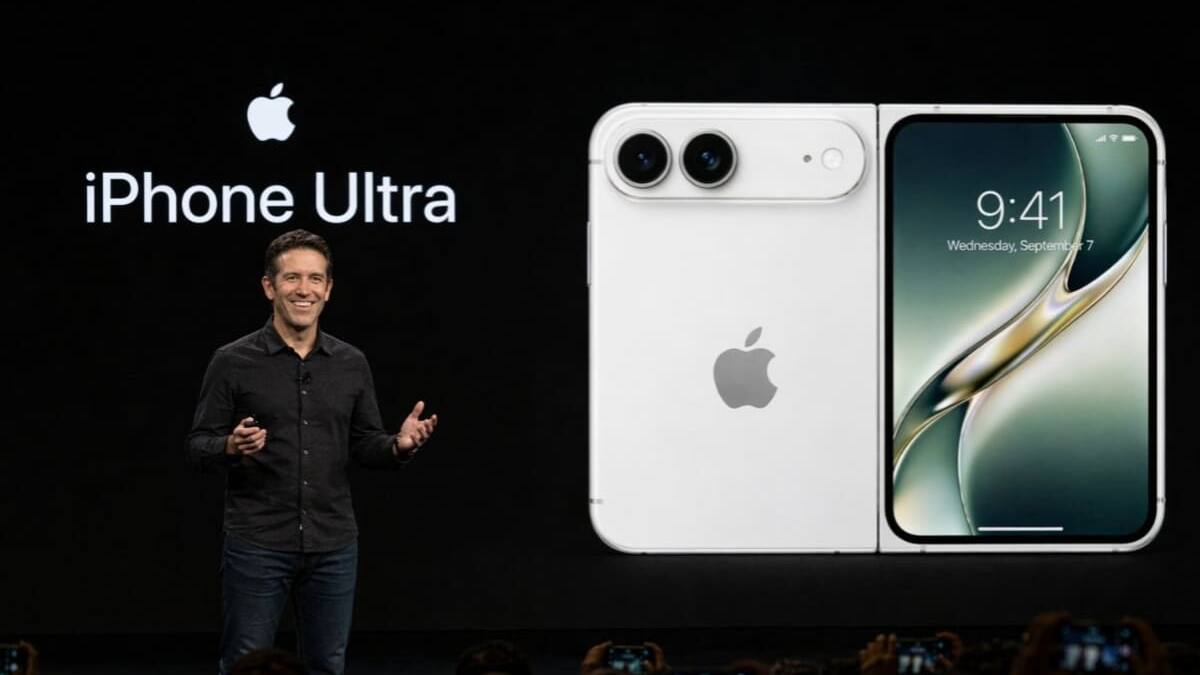
Apple’s foldable iPhone may not have a name on stage yet, but iOS 27 beta code is already doing the talking. Strings buried in the framework point to a device that can track how far it is opened, tell folded from unfolded states, and support software that adapts to a half-open form factor instead of pretending this is just a bigger iPhone.
That’s the real story here: the software is being built before the hardware is public, which is exactly how Apple likes to stage its entrance. Rival foldables have spent years proving that hinge-aware interfaces are the difference between a flashy demo and something people actually use, and Apple appears to be taking the same route with a more cautious, system-level approach.
What the iOS 27 beta code reveals
The code references ”foldState,” ”angleDegrees,” ”mechanicalAngleDegrees,” and ”isanglevalid.” Put plainly, that suggests iOS can read the physical position of the device and decide whether it is fully open, partially open, or folded shut. That kind of hinge awareness is the difference between a phone that merely folds and one that knows what to do while it is folding.
A partially open mode could let the device sit like a tiny laptop for hands-free video or typing, with content still visible on the other half of the screen. Samsung, Google, and other foldable makers have pushed similar ideas for years; Apple is late, but it usually prefers late with a polished software stack over first with a messy one.
Full-screen widgets and iPhone Mirroring updates
iOS 27 also appears to include features that are already useful on a foldable, even before Apple ships one. Full-screen widgets can reportedly occupy only half of a foldable display, while the updated iPhone Mirroring experience can now show up in an iPad-sized window. That’s a small clue, but it tells you where Apple is heading: toward software that scales across more awkward screen shapes without making users fight the interface.
- Fold-state detection for open and closed positions
- Angle tracking through strings such as ”angleDegrees” and ”mechanicalAngleDegrees”
- Half-screen widget layouts for foldable use
- iPhone Mirroring that can appear in an iPad-sized window
Apple’s foldable timeline and the iPhone 18 series
The source points to Apple’s long-awaited foldable arriving alongside the iPhone 18 series, which fits the company’s habit of tying a new hardware category to a broader annual launch cycle. The upside is obvious: Apple can make the foldable feel less like a science project and more like another standard iPhone option. The downside is equally obvious: every extra year of waiting gives competitors more time to normalize foldables and make Apple look late, which for Cupertino is practically a lifestyle choice.
For now, the beta code is the strongest hint yet that Apple is preparing the software groundwork first. The bigger question is whether the company wants a book-style foldable, a hybrid iPhone-iPad device, or something more conservative that borrows foldable tricks without leaning too hard into the gimmick. My money is on Apple keeping the hardware boring and letting the software do the bragging.