

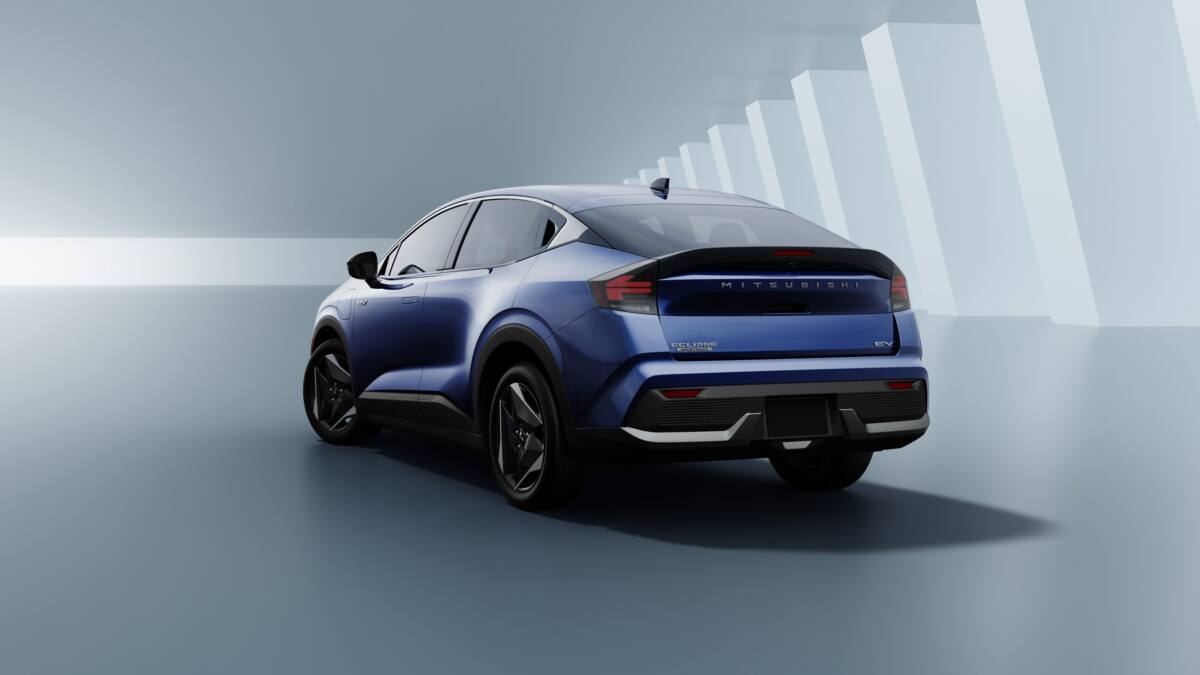
Mitsubishi is preparing to bring a new all-electric Eclipse Sportback EV to North America, pitching it as a mix of sporty design and everyday usability. The vehicle is being built with Nissan on an OEM basis, making this more than just another EV launch and a sign that carmakers are leaning harder on shared platforms to move faster and cheaper.
The move gives Mitsubishi a fresh electric entry with familiar branding cues, while Nissan gets a wider role in a cross-company parts-and-model exchange that already stretches across several regions. For buyers, that usually means fewer surprises under the skin and more attention paid to packaging, price, and badge identity – the practical stuff that decides whether an EV gets noticed or ignored.
Mitsubishi Eclipse Sportback EV styling cues
Mitsubishi says the Eclipse Sportback EV keeps the brand’s visual fingerprints, including accents on the front and rear bumpers, the front grille, specialized headlight and rear combination lamp designs, a redesigned rear gate, plus the wheels and D-pillars. That sounds like a long checklist, but it is really the company trying to make a shared vehicle look less borrowed and more Mitsubishi.
The Nissan partnership behind the Eclipse Sportback EV
The Sportback sits inside a broader product-sharing pact between Mitsubishi and Nissan. The companies are also working together on new pickup trucks for North America and kei-cars for the Japanese market, while other OEM swaps already cover models including the Rogue Plug-in Hybrid, the Navara, and the Livina in different regions.
That kind of arrangement is hardly new in the auto industry, but it is becoming more visible as manufacturers chase electrification without burning cash on entirely separate hardware for every market. The upside is speed; the downside is that brand differentiation can get thin fast if the styling work is doing all the heavy lifting.
What the North American rollout signals
By adding the Eclipse Sportback EV to North America, Mitsubishi is extending a pipeline that already depends on model swapping across global markets. The big question is whether shoppers will see that as smart efficiency or simply as badge engineering with a cleaner conscience. Either way, expect more automakers to lean on the same playbook if the economics keep lining up.