

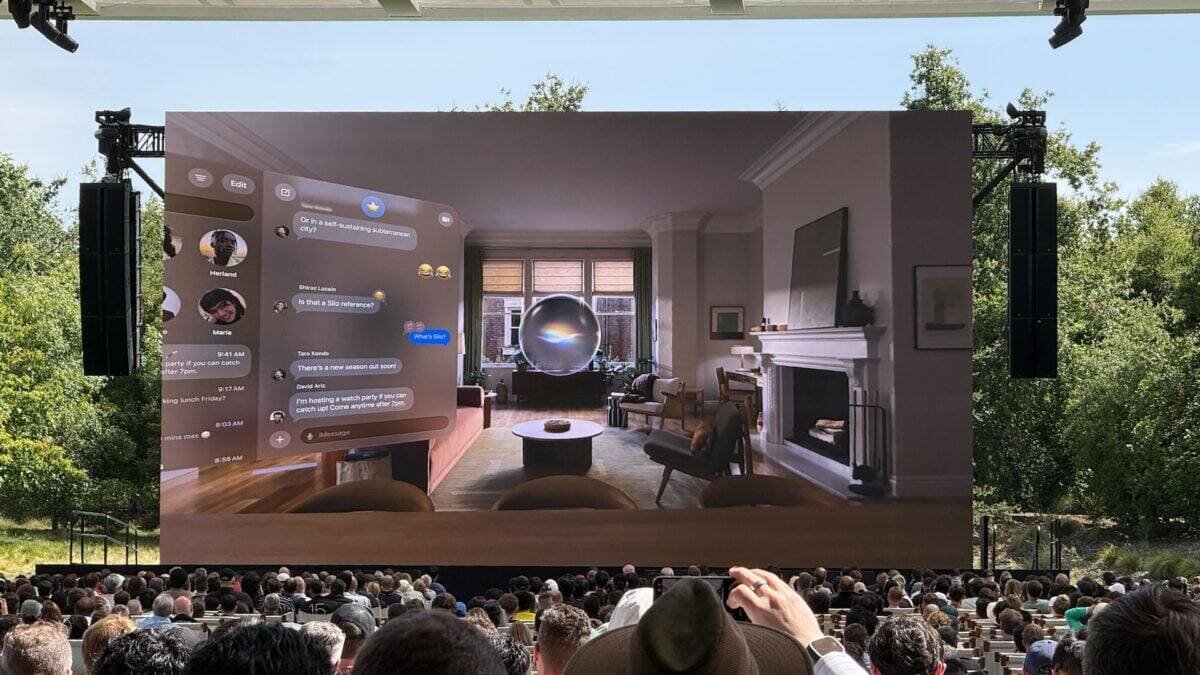
Apple is giving Vision Pro a rare bit of attention, and it comes with a very Apple twist: Siri is moving from a voice in your ear to a giant floating orb in front of your face. The company says the next version of visionOS will support its new agentic Siri features, bringing the assistant into the headset as a 3D visual presence that stays anchored wherever you place it.
That sounds equal parts futuristic and mildly absurd, which is usually a sign Apple is aiming at the right demo. Vision Pro is still a $3,500 product in search of a larger audience, so any update that makes the device feel more like a personal computer and less like a very expensive novelty is doing a lot of work.
Siri becomes a 3D presence in visionOS
On Vision Pro, users will be able to look at Siri in their field of view and ask it questions directly. Apple says the assistant will also be able to inspect what you can see around it, which puts it in the same broad category as camera-aware AI features already showing up on devices like Meta’s smart glasses. The difference, at least in Apple’s telling, is that this version is supposed to be tied more tightly to your files, messages, and apps rather than acting like a novelty tour guide.
The company also says the new Siri will handle agentic tasks across Macs, iPhones, and other Apple devices by pulling together information from emails, messages, and documents. That is the real prize here: if Apple can make Siri useful for searching and summarizing without turning it into a glorified suggestion machine, it finally gives the assistant a job description that matches the hype.
- Siri appears as a marble-like floating ball in Vision Pro
- Apple says users can change Siri’s voice
- The assistant can surface details from files, emails, and messages
- Public beta is due next month, with full release later this fall
Apple leans on Gemini for AI summaries
One quietly interesting detail: Apple says Gemini AI is being used for on-device and off-device summaries in these features. That is a telling choice, because Apple has spent years selling the idea that it can do everything itself, yet the practical route for better AI often means borrowing a stronger engine where needed. Competitors have been much more willing to say the quiet part out loud; Apple is just dressing it in spatial-computing clothes.
For visionOS 27, the bigger story may be what is not changing. Apple has already fixed the cartoonish Personas look in visionOS 26, and this next update sounds more like maintenance than reinvention. Macs are getting readability tweaks, other devices are getting stability and performance improvements, and Vision Pro is mostly getting a smarter Siri because Apple needs the headset to do something beyond impressing people in demos.
Apple’s glasses problem is still ahead
The awkward truth is that Vision Pro may be Apple’s only spatial device for a while. The company says the next step for visionOS is compatibility with some version of smart glasses or AR glasses, but those products may not arrive until 2027 at the earliest. Until then, Apple has to keep making Vision Pro feel relevant on its own, which means piling more intelligence into the headset and hoping people notice the software more than the price tag.
That makes this Siri update a bridge, not an endpoint. If Apple can deliver accurate AI summaries and genuinely useful visual search in public beta next month, it may give Vision Pro a much-needed second act. If the answers are fuzzy or the assistant feels like a shiny gimmick with better lighting, the headset will still be waiting for the hardware wave Apple clearly wants to arrive later.