

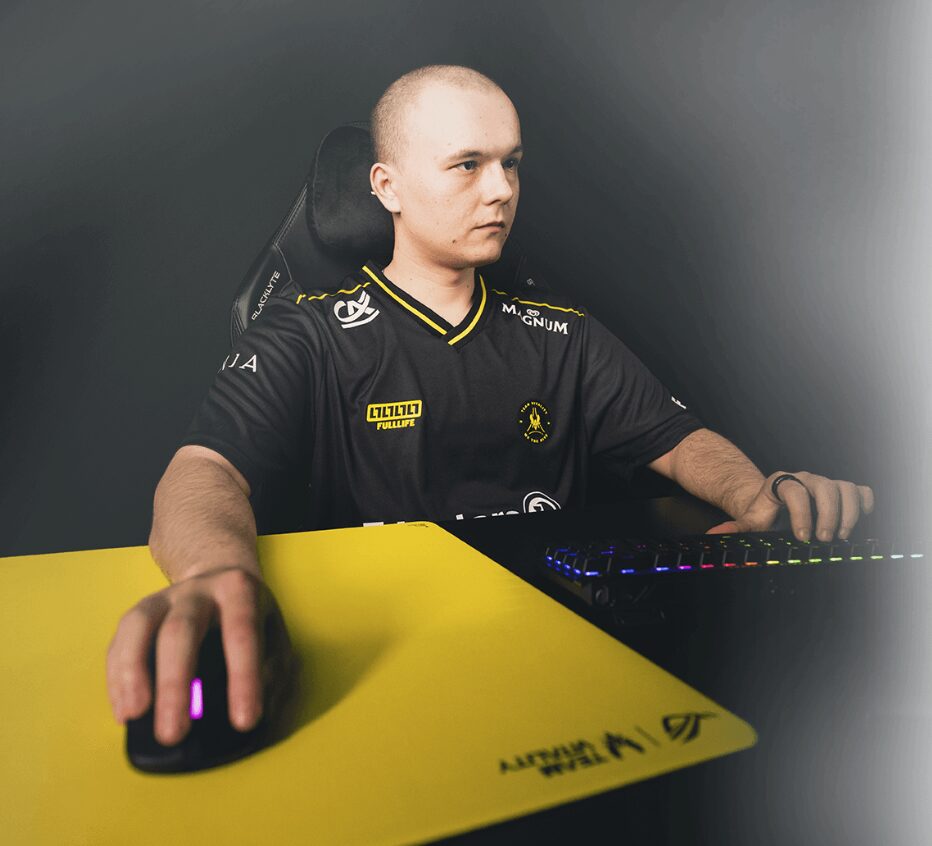
ASUS has used COMPUTEX 2026 in Taipei to launch something unusually specific: the ROG Hone Control Ace L Vitality Edition, a mouse pad co-developed with Team Vitality for competitive FPS players who care more about stopping power than glide. That makes it a control-focused ASUS ROG mouse pad for players who want consistency over speed, and it is the first control-oriented cloth mouse pad in the ROG lineup.
ASUS says it has already been tested and approved by Team Vitality’s Counter-Strike 2 and VALORANT players. In a market where mouse pads are often marketed like they were tiny car tires, this one is trying to win on predictability.
A control pad, not a speed pad
The selling point is the high-friction cloth surface. ASUS says it is designed to give players stronger stopping power for flick shots, aim corrections, and tight movement control, while keeping X-Y tracking consistent across the whole pad. Translation: it is meant for players who want their mouse to behave the same way every time, which is exactly what you want when a round is on the line and your crosshair placement is doing the talking.
- Product: ROG Hone Control Ace L Vitality Edition
- Surface: high-friction cloth
- Thickness: 4 mm
- Dimensions: 490 × 420 mm
- Base: high-density PU memory foam
The comfort tweaks are doing real work
ASUS also leaned into endurance. The 4 mm memory foam base is meant to soak up minor vibrations and support the wrist and arm during long sessions, while the stitchless curved edge design cuts down on abrasion during wide arm movements. That may sound like small stuff, but peripheral brands have spent years learning that a mouse pad can be the difference between ”fine” and ”why does my wrist hate me?”
The pad is water-resistant too, which is less glamorous than esports branding but far more useful after the inevitable desk-side spill. The bright yellow Team Vitality look does the rest, turning a practical accessory into a bit of fan hardware for players who want their setup to match their team of choice.
Why ASUS is betting on a control mouse pad
At 490 × 420 mm, the pad is large enough for both low-DPI and high-DPI players, so ASUS is not trying to lock this into one sensitivity camp. That broadens the appeal, but the bigger story is the partnership model itself: gaming brands are increasingly outsourcing credibility to pro teams because ”we built it with players” hits harder than a shiny product sheet. Logitech, SteelSeries, and other peripheral makers have been playing the same game for years; ASUS is just making its pitch in brighter yellow.
The open question is whether control pads keep gaining ground as aim training culture spreads and more players obsess over consistency. If they do, expect more co-branded accessories like this one, and fewer mice and mats pretending that speed alone wins matches.