

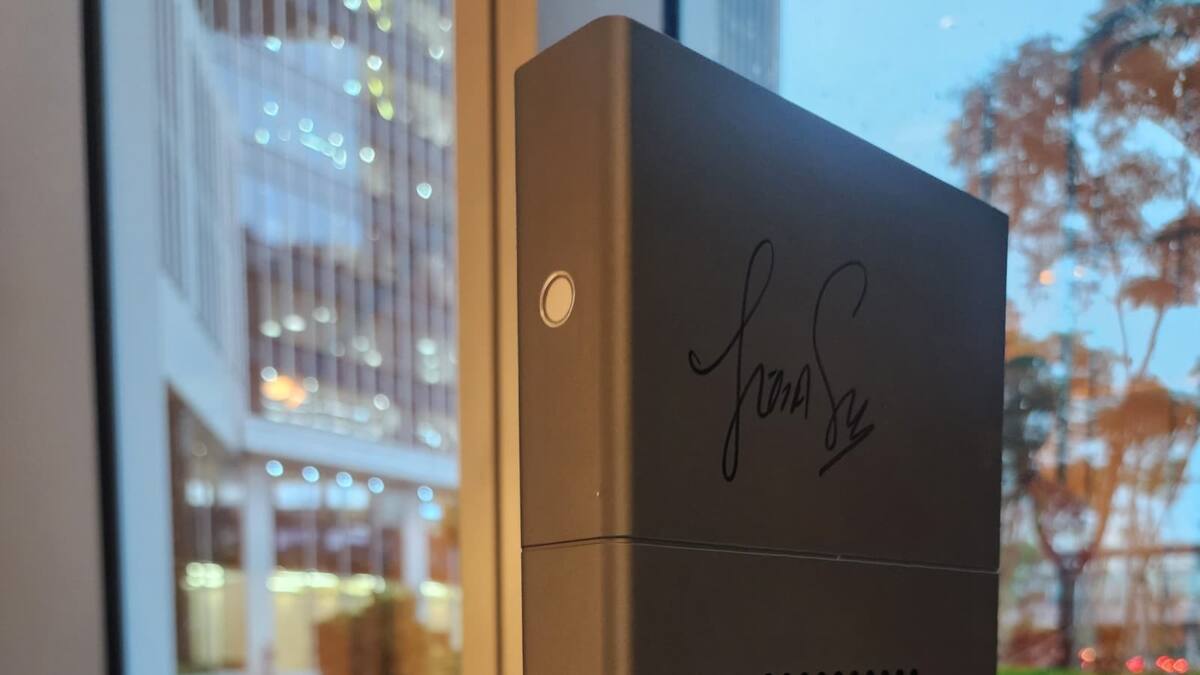
GMKtec is lining up a new mini PC that sounds more like a dare than a desktop: the EVO-X3 will arrive first with Ryzen AI Max+ 395, then with Ryzen AI Max+ PRO 495 and up to 192 GB of LPDDR5X memory. The pitch is simple enough – pack serious AI and graphics muscle into a thin, ultra-compact chassis – but the hardware mix is what makes it interesting.
The GMKtec EVO-X3 is an evolution of the EVO-X2, not a clean-sheet redesign. That means the real story is continuity with a twist: GMKtec is keeping the tiny form factor while adding features that make the machine much less cramped on the connectivity side, including OCuLink for external GPUs, Wi-Fi 7, USB4, and two PCIe 4.0 SSD slots. For a category that often treats ports like an afterthought, that is unusually practical.
Ryzen AI Max+ PRO 495 specifications
Ryzen AI Max+ PRO 495 belongs to the Ryzen AI Max PRO 400 family, so this is not a new architecture story. It still uses Zen 5 and RDNA 3.5 graphics, but the updated version raises frequencies, pushes AI performance to 55 TOPS, and can allocate up to 160 GB of VRAM from the shared 192 GB unified LPDDR5X pool. That kind of memory headroom is the sort of spec sheet flex that looks absurd until you remember how fast AI workloads can eat RAM for breakfast.
- Processor family: Ryzen AI Max PRO 400
- Architecture: Zen 5
- Graphics: RDNA 3.5
- AI performance: 55 TOPS
- Memory: up to 192 GB LPDDR5X
- VRAM allocation: up to 160 GB
Ryzen AI Max+ 395 and PRO 495 variants
The staggered launch is a sensible move. A Ryzen AI Max+ 395 model gives GMKtec a lower entry point, while the PRO 495 version serves the spec-hungry crowd that wants maximum memory and AI throughput in a machine that still fits on a desk without demanding a structural engineer. In this segment, performance alone is no longer enough; the winners are the systems that can also live with modern peripherals and external expansion without turning into port-deprived shoeboxes.
If GMKtec ships the EVO-X3 with the promised mix of speed, memory, and I/O, it will be targeting a growing class of users who want workstation-style flexibility in mini-PC form. The price has not been disclosed yet, and that will decide whether this becomes a serious alternative to bulkier small-form-factor PCs or just another impressive spec sheet collecting dust in launch slides.