

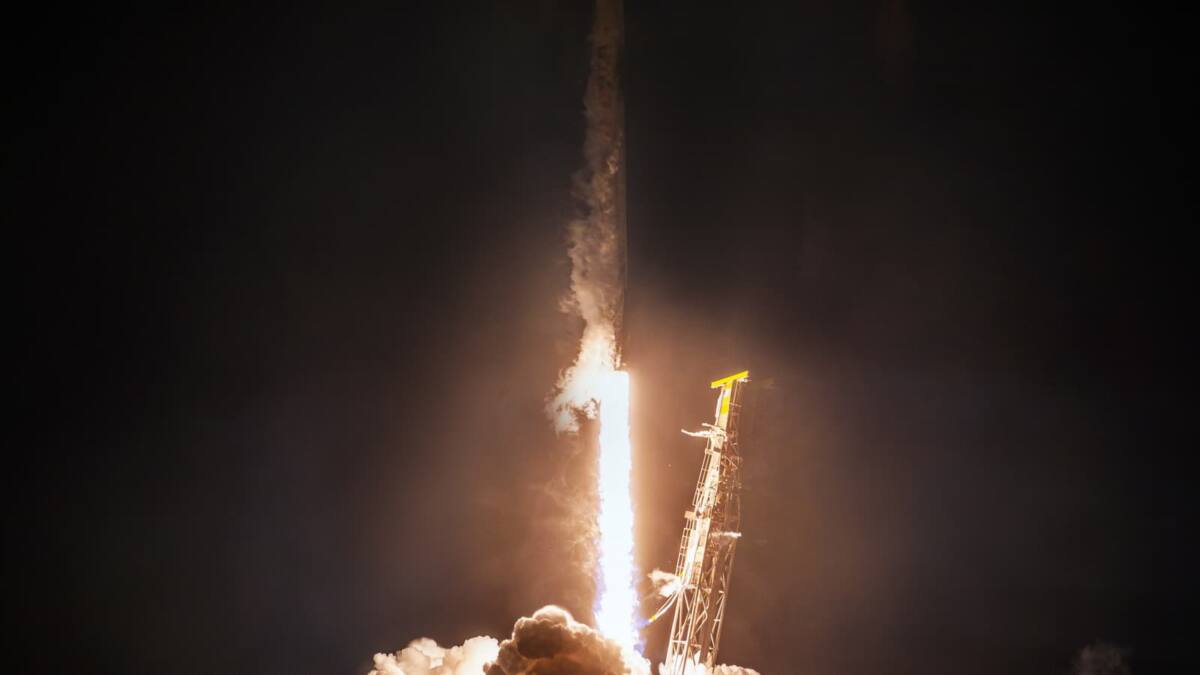
SpaceX has pulled off another of those ”bad day, still a good landing” moments: on 4 June, a Falcon 9 launched 29 Starlink satellites to low Earth orbit, then brought its first stage back to a floating drone ship after one of its four grid fins jammed just seconds before touchdown. The booster, B1090, still made it onto A Shortfall of Gravitas thanks to the other three fins and Merlin engine thrust vectoring.
The launch used SpaceX’s SLC-40 pad at Cape Canaveral, Florida, and the mission itself was straightforward enough. The drama came on the way home, when the fin stuck in a fixed position about 13 seconds before landing. That’s the sort of failure that can turn a routine Falcon 9 reuse flight into a messy recovery, which makes the successful touchdown more impressive than the clean lift-off would suggest.
What happened during the Falcon 9 landing
Grid fins are the booster’s steering surfaces during descent, and Falcon 9 relies on four of them to keep the rocket pointed where it needs to be. In this case, one fin locked up, but SpaceX’s control system compensated in real time. That kind of redundancy is exactly why the company can keep flying reused hardware at such a punishing pace.
- Launch date: 4 June
- Payload: 29 Starlink satellites
- Launch site: SLC-40 at Cape Canaveral, Florida
- Booster: B1090
- Landing target: A Shortfall of Gravitas
Why the booster returned with the fins deployed
After the booster got back to Port Canaveral, observers noticed that the grid fins were still unfolded. That is not the normal transport posture, so it strongly suggests the hardware is being kept ready for a closer inspection or fault investigation. SpaceX reuses boosters aggressively, but a stubborn fin is the kind of issue the company will want to understand before sending B1090 back out again.
It was also the 12th flight for B1090, which underlines the real story here: SpaceX Falcon 9 reuse has become routine, but routine does not mean boring. The numbers keep climbing, and so does the pressure to make every small mechanical failure survivable.
What this says about Falcon 9 reuse
SpaceX has built its reputation on forgiving hardware, aggressive automation, and enough margin to absorb problems that would end a less battle-hardened rocket. That is now part of the Falcon 9 playbook, and it is also why the company can treat a jammed fin as a recoverable event rather than a mission-ending crisis. The next question is whether the inspection turns up a one-off snag or a reminder that even the workhorse of commercial launch still has sharp edges.