

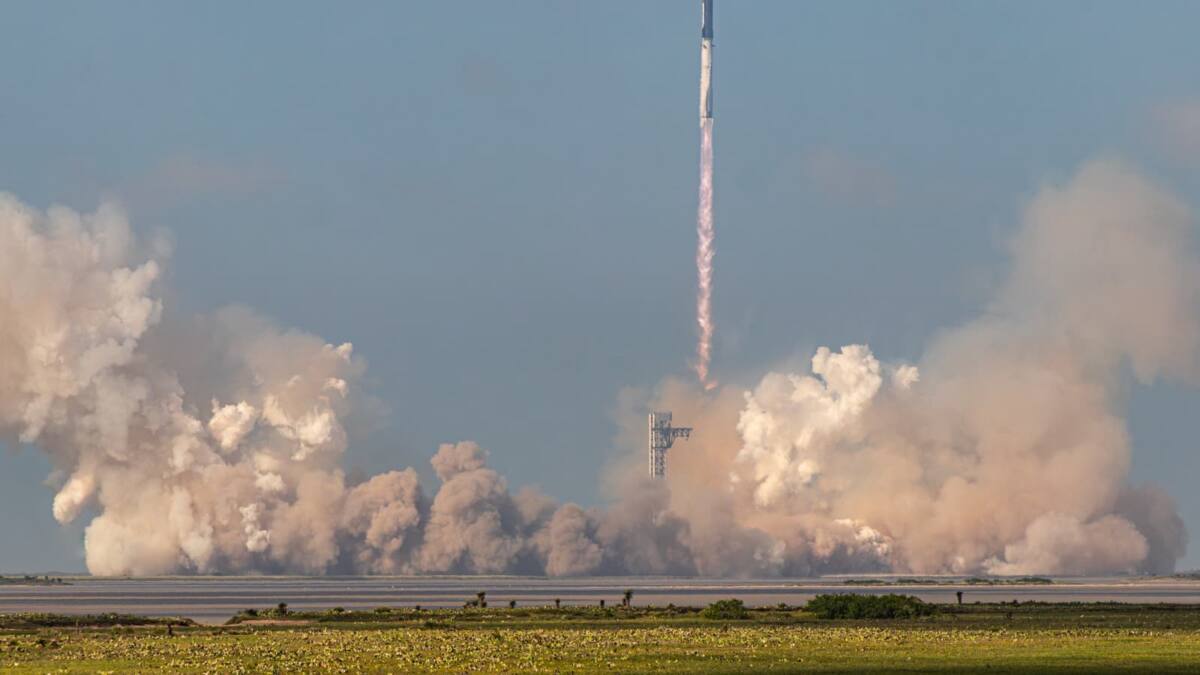
SpaceX’s latest Starbase imagery makes the engineering upgrade impossible to miss: Starship now lifts off with far less mess. A side-by-side comparison of launches from the company’s two Texas pads shows the difference between the old ”blast a crater into the ground” era and the newer approach built around water deluge systems, stronger infrastructure, and fewer chunks of concrete flying around.
That is more than a prettier photo. Cleaner Starship launches usually mean less pad damage, faster turnaround, and fewer repairs between launches, which is exactly what SpaceX needs if it wants Starship to fly frequently rather than spend half its life under construction equipment.
Pad 1 versus Pad 2
The older Pad 1 launch still looks like a physics experiment gone feral: a dark column of dust and debris surges upward as the booster’s thrust tears into the surface. The newer Pad 2 image is almost the opposite, with white steam dominating the scene and the concrete platform remaining largely intact.
That cleaner result lines up with what SpaceX has been doing across Starbase. The company has strengthened the launch table, refined the water flow, and added better channels to absorb heat and suppress the shock from Super Heavy’s engines. It is the kind of unglamorous infrastructure work that decides whether a rocket program becomes routine or stays theatrical.
Why SpaceX cares about the pad
A launch pad that survives repeated abuse is a strategic asset, not just a piece of concrete. Every repair avoided means more time for testing, and Starship’s schedule depends on that. NASA and rival heavy-lift programs have spent decades learning the same lesson: the rocket gets headlines, but the pad often decides the cadence.
SpaceX is now rebuilding the original Starbase pad so it matches the newer setup, a quiet sign that the company is standardizing around the more durable design rather than treating it as a one-off fix. The current hardware push also includes Booster B20, which has already been shown in cryogenic testing from the air.
The next Starship tests
- The 13th Starship launch is expected in the coming months.
- By the end of the year, Starship is supposed to prove full reusability.
- SpaceX is still aiming to cut cargo transport costs to below air freight levels.
That last target is the boldest, which is usually how you know SpaceX means it. If the cleaner pad design really does help Starship launch more often with less downtime, the company will have solved one of the least photogenic but most important problems in rocketry: making the ground stop fighting back.