

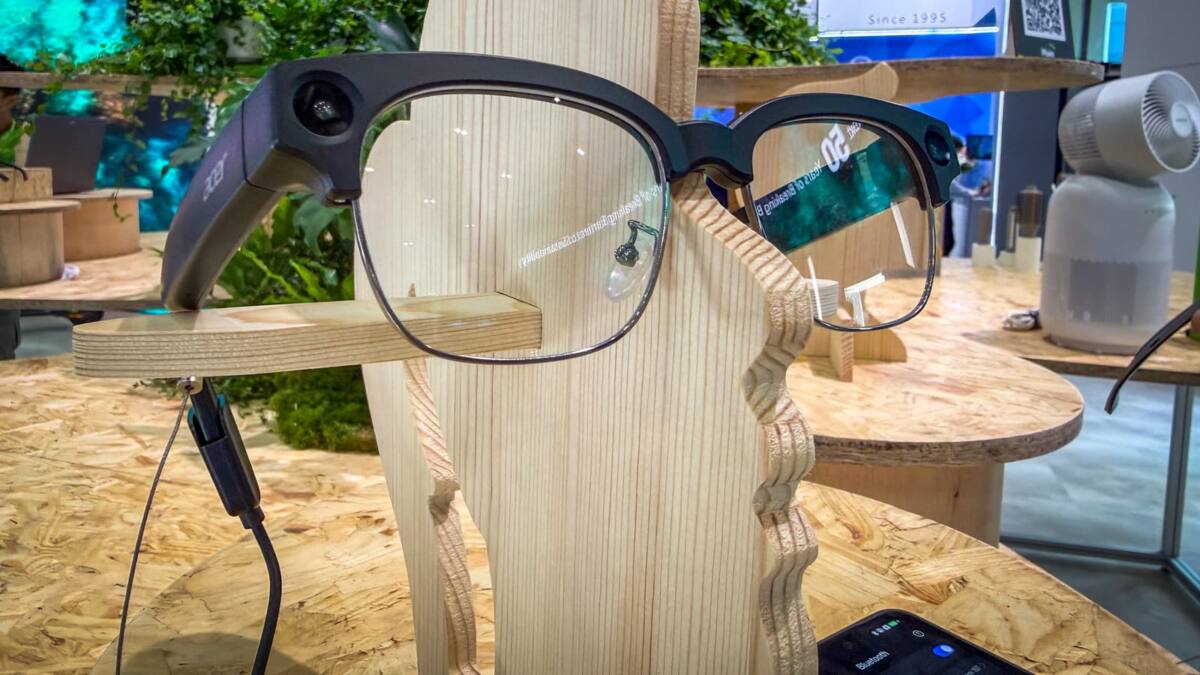
Acer has joined the smart-glasses race with the AI Glasses GI0, a wireless pair built around Google Gemini, a 12 MP camera and a 46-gram frame. The Acer GI0 smart glasses pitch is familiar – hands-free capture, voice control and on-the-go translation – but the company is betting that a lighter build and a lower price than many full-featured wearables will make people tolerate one more gadget on their face.
The GI0, also listed as model GI100, connects to a smartphone over Bluetooth and Wi-Fi and requires the Acer AspireSync app. That puts Acer in the same broad category as Meta’s Ray-Ban glasses, where the real product is less the frame itself and more the cloud services behind it. The difference, of course, is that Acer is trying to sell the idea as a practical accessory rather than a social toy.
Acer GI0 camera, audio and Gemini features
The glasses use Google Gemini for voice commands, real-time image analysis and instant translation. The 12 MP camera shoots 4032×3024 photos and records 1080p video at 30 frames per second, while the built-in recording function is aimed at conversations and meeting notes. A recording indicator LED is there to warn people nearby, which is the sort of tiny detail that matters a lot once cameras start hiding in everyday eyewear.
On the hardware side, Acer says the frame includes 32 GB of eMMC storage, three microphones, stereo sound with a speaker on each side, Wi-Fi 5 and Bluetooth 5.0. Power comes from a 217 mAh battery. None of that sounds outrageous on paper, but smart glasses rarely lose on specs alone; they lose when they feel heavy, clunky or awkward enough to make people stop wearing them after the first week.
Acer GI0 price and release date
Acer plans to price the GI0 at $300 in the US and 400 euros in Europe, with launch set for the fourth quarter of 2026. That puts the glasses in a tempting middle ground: expensive enough to need a real use case, cheap enough to undercut the kind of premium wearable that tries to be your next phone replacement. The bigger question is whether consumers want AI on their face badly enough to buy in before the category stops being a demo and starts being a habit.