

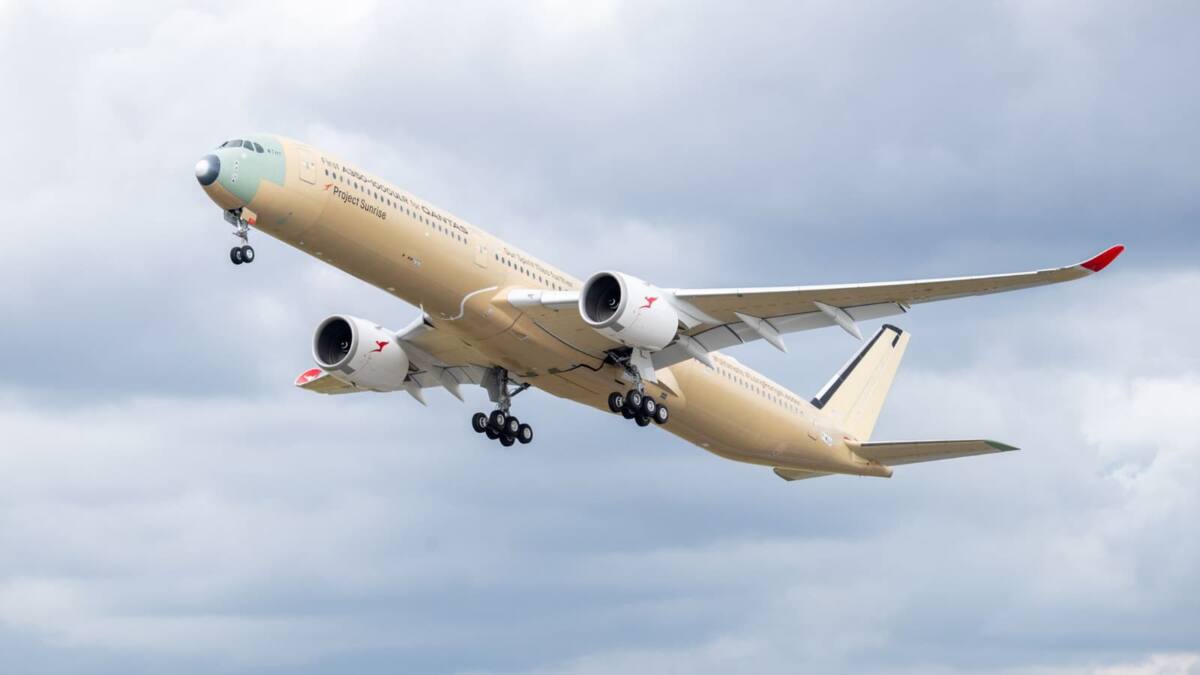
Airbus has flown the A350-1000ULR for the first time, kicking off the long certification run for a jet built to make ultra-long-haul routes less theatrical and more routine. The Airbus A350-1000ULR is being developed for Qantas’ Project Sunrise and is designed to stay airborne for up to 22 hours, with enough range to link Sydney and London without a refueling stop.
The test flight took place in Toulouse and lasted 3 hours 43 minutes, with the aircraft climbing to more than 12.5 km. Airbus says the modified fuel system and an additional rear center tank add about 1,850 km of range versus the standard A350-1000, which is the difference between a headline and a schedule.
What Airbus changed on the A350-1000ULR
The new variant is aimed at roughly 400 passengers and carries the hardware needed for marathon sectors that most airlines still avoid. Beyond the fuel changes, Airbus is also testing a lighter cooling system plus updated cabin ventilation and climate control, because a near-day-long flight is as much about the cabin as it is about the engines.
- Range gain: about 1,850 km over the standard A350-1000
- Estimated endurance: up to 22 hours in the air
- Target route: Sydney to London, about 18,500 km
- Capacity: around 400 passengers
Project Sunrise is moving from concept to hardware
Airbus has now started a two-month certification campaign, and that’s the real bottleneck: ultra-long-haul aircraft can look impressive in renderings for years, but regulators care about fuel systems, handling, and comfort under punishing conditions. At the same time, a second A350-1000ULR is already being assembled and is expected to become the first aircraft of this type handed over to Qantas after painting and engine installation.
Qantas plans to receive that aircraft in April 2027. If the schedule holds, the airline will finally have a purpose-built answer to a market that has long been obsessed with non-stop Australia-to-Europe flying, even if the economics of flying nearly a full day still make accountants sweat.
What happens after the test campaign
The next question is whether the aircraft can clear certification without delays and whether passengers will tolerate flights that push the limits of human patience as much as aircraft performance. If Airbus gets both right, Project Sunrise stops being a slogan and starts looking like a new category of long-haul service.