

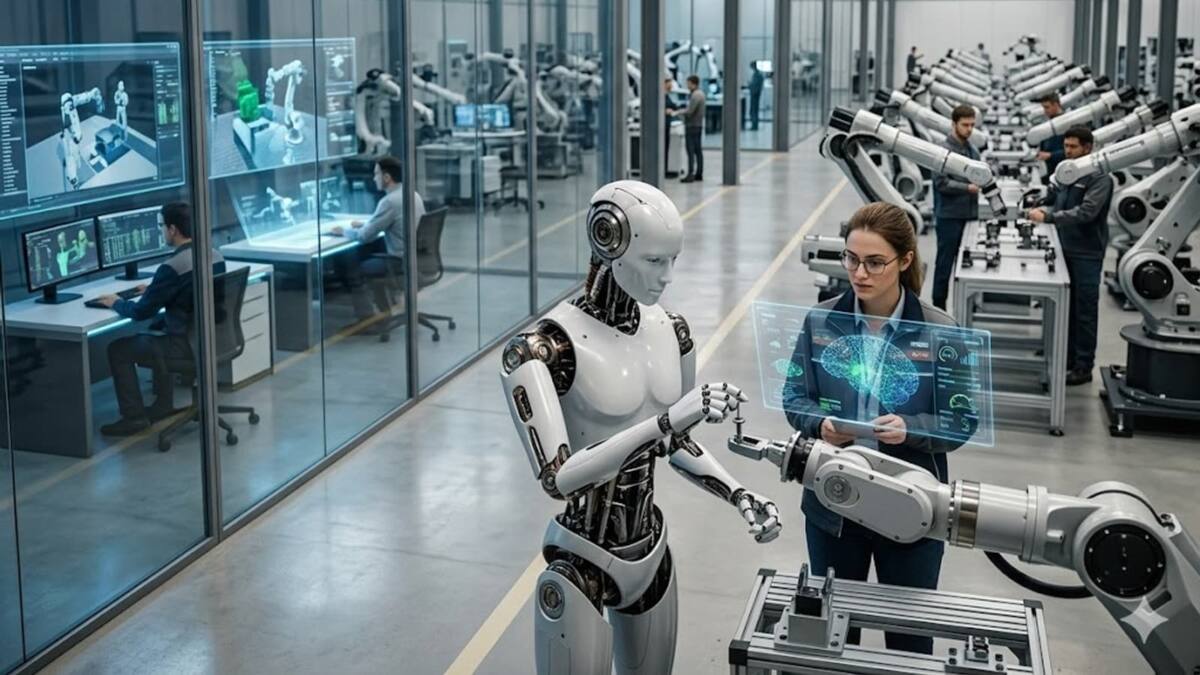
OpenAI has launched a new robotics division, OpenAI Robotics, and is hiring engineers to build AI systems that can operate in the physical world. The company says the effort is a move beyond software-only models and toward machines that can help in construction, infrastructure work, and, eventually, as personal robots for everyday tasks.
The move is also a clear signal of where the AI race is headed: not just better chatbots, but systems that can sense, plan, and act outside a browser tab. OpenAI is late to the hardware race compared with companies already pushing embodied AI, but that also means it can borrow a hard lesson from the field – simulation alone is not enough if the robot falls over in the real world.
From world simulation to robot hardware
The new team grew out of OpenAI’s world simulation research, led by Aditya Ramesh. According to the company, that work evolved over the past year into a standalone unit built around joint development of robot hardware and machine-learning models, rather than the old-school handoff where engineers build the machine first and the AI team tries to make it clever later.
That matters because robotics is still littered with demos that look impressive in a lab and then become expensive furniture in the wild. By designing the body and the brain together, OpenAI is betting it can get to reliable behavior faster, which is exactly the kind of stubborn problem that has kept humanoids and autonomous machines from escaping PowerPoint for years.
Who OpenAI wants to hire
OpenAI is recruiting for hardware, systems engineering, operations, and machine learning roles. Candidates are being asked to send a résumé and a short description of their achievements to robotics-recruiting@openai.com, which is about as direct as hiring gets in a field where talent is scarce and everyone wants to say they are building the future.
- Short-term target: robots that assist skilled workers in construction and infrastructure.
- Long-term target: personal robots that can handle a wide range of tasks for users.
- Technical approach: joint design of hardware and AI models from the start.
Why OpenAI is moving into robotics now
The timing is no accident. AI labs are under pressure to show that their models can do more than generate text and images, and robotics is becoming the obvious next battleground because it turns abstract intelligence into something measurable: pick up the object, move it, do not smash it. OpenAI’s entrance raises the heat for rivals in industrial automation and autonomous devices, where progress is slower, messier, and far more expensive than software, but potentially much bigger if the machines actually work.
The open question is whether OpenAI can turn its research muscle into rugged hardware fast enough to matter. Plenty of companies can demo a robot; fewer can ship one that survives dust, torque, bad lighting, and human impatience without becoming a very costly science project.