

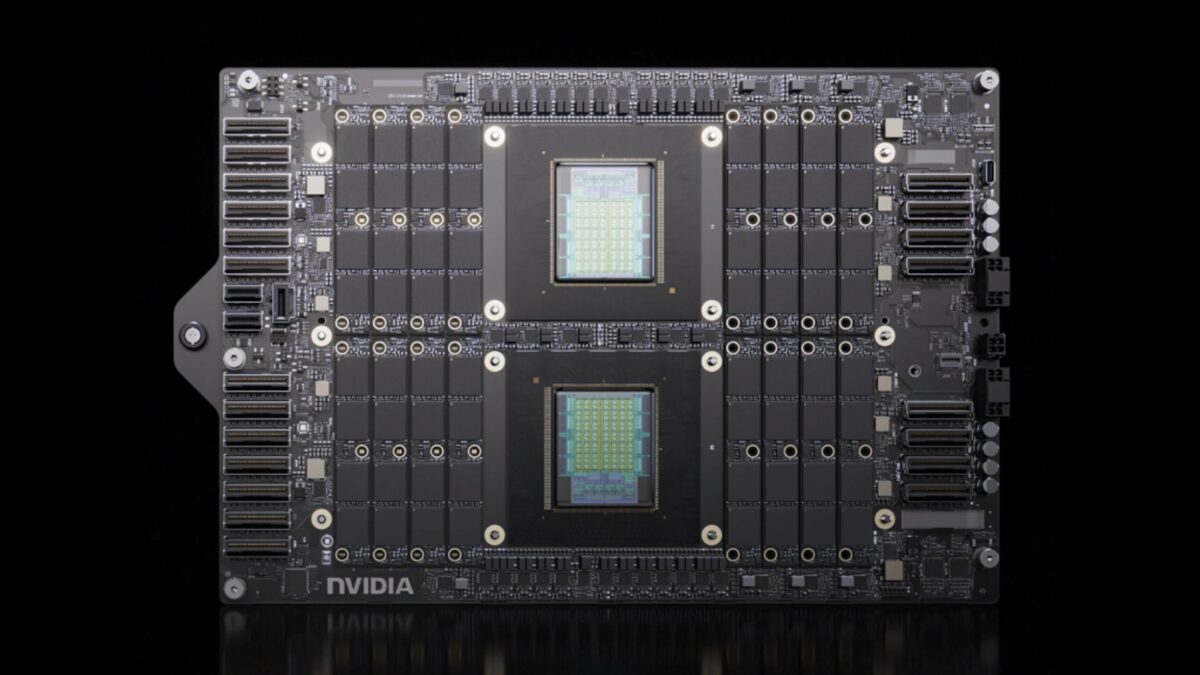
Nvidia is already thinking beyond the graphics processor that made it famous. Jensen Huang says Vera, the company’s new CPU for AI agents, could become more popular than Nvidia’s GPUs and emerge as a major growth driver because it sits at the center of how these systems process information.
That is a pretty bold line from a company that still prints money on accelerators, but it also tracks with where AI hardware is headed. The biggest customers are no longer just training models; they are building agentic systems that need orchestration, memory handling, and longer-running inference, which pushes more value into the CPU side of the stack.
Vera’s specs and AI-agent role
Nvidia has already unveiled Vera as its first processor built specifically for next-generation AI agents, and it is now in full-scale production. The chip uses 88 Olympus cores designed by Nvidia, offers 1.2 TB/s of memory bandwidth, and delivers a 50% improvement in single-core performance versus its predecessor.
- 88 Olympus cores
- 1.2 TB/s memory bandwidth
- 50% higher single-core performance than the previous chip
Those numbers matter because AI agents are not just doing one neat task and going home. They need orchestration, reinforcement learning, and long-context management, all of which are easier to sell when the hardware story includes more than a faster GPU.
How Vera fits with Rubin and BlueField 4
Vera is designed to work alongside Nvidia’s Rubin GPU and BlueField 4 processor, and that pairing hints at the company’s larger play: make the CPU, GPU, and networking stack feel like one tightly controlled platform. Unified memory architecture is the selling point, with Nvidia saying data-transfer energy efficiency is twice as high as in traditional systems.
That is smart strategy, and not subtle. If customers buy the whole stack, Nvidia captures more of the bill and makes it harder for rivals to cherry-pick pieces of the system.
Why AI agents are changing the hardware mix
The shift also reflects a broader industry pattern: as AI deployments move from training to real-world agent workloads, the bottleneck is spreading beyond raw compute. AMD and Intel have both spent years trying to sell themselves as the practical choice for general-purpose AI infrastructure, but Nvidia is trying to short-circuit that debate by owning the whole path from memory to networking.
If Huang is right, Vera will not just be another supporting chip. It could become the piece that keeps Nvidia’s AI machines busy, efficient, and more expensive than ever.