

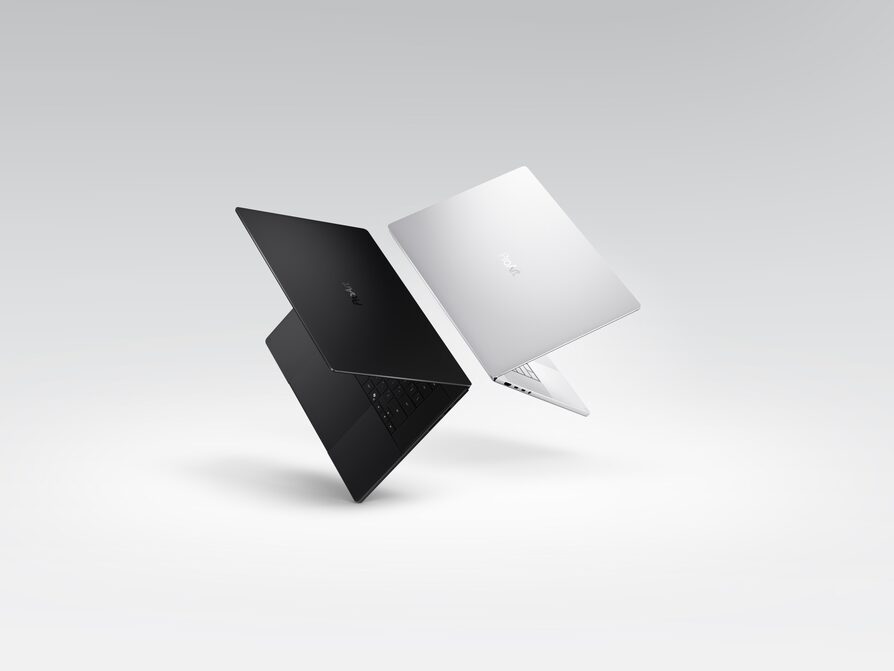
Asus has used Computex 2026 to push its ProArt lineup into a very specific corner of the PC world: creator laptops built to run serious AI work locally, not just edit video and ship files to the cloud. The new ProArt P16 and ProArt P14 are among the first Windows laptops powered by Nvidia’s RTX Spark superchip, and the headline feature is less about thin bezels than about the memory and compute needed for big models.
That matters because most ”AI PC” talk has so far run into the same wall: not enough unified memory, not enough muscle, or both. Asus is betting that RTX Spark can sidestep that compromise with a 20-core Nvidia Grace CPU, a Blackwell-architecture RTX GPU, and up to 128GB of unified memory tied together through NVLink-C2C. In plain English, these are the kinds of specs that let a laptop pretend it has no business being a laptop.
RTX Spark specs and local AI support
Asus says the new ProArt machines can run 120-billion-parameter LLMs with up to a 1 million token context window. The company also claims support for 12K video editing, 90GB 3D scenes, and on-device 4K AI video generation. That puts Asus in direct territory with the broader wave of local AI hardware from rivals chasing the same promise: less dependence on the cloud, more work done where the files already live.
- 20-core Nvidia Grace CPU
- Blackwell RTX GPU with 6,144 CUDA cores and FP4 Tensor Cores
- Up to 128GB unified memory via NVLink-C2C
- Support for 120-billion-parameter LLMs and a 1 million token context window
ProArt P16 and P14 design updates
The laptop designs are getting a gentler refresh, which is probably the sensible move. The 16-inch ProArt P16 and 14-inch ProArt P14 are CNC-milled, come in black or a new Neo White finish, and the P16 is now 13% thinner and 16% lighter than before. Asus has also added haptic trackpads and squeezed in a 99.9 Wh battery, which is the kind of spec sheet item that tells you the company is still trying to make these machines usable off the desk, not just impressive in a keynote slide.
Display hardware is similarly ambitious. Both laptops use Asus’ Lumina Pro OLED panels with anti-reflective coating and peak brightness of 1,600 nits. The P16 gets a 4K panel with a 120Hz variable refresh rate and Nvidia G-Sync support, while the P14 uses a 3K display. For creators, that is the rare combination of resolution, speed, and brightness that should look good in a studio and survive a bright café, if you insist on editing where the espresso machines are loud.
Asus ProArt P16 and P14 pricing and availability
Asus has not announced pricing yet, which is usually a polite way of saying ”please admire the engineering before you faint.” With 128GB of unified memory and Nvidia’s new silicon inside, these laptops are likely to land at the premium end of the market when they arrive this fall. Adobe is reportedly rewriting Photoshop and Premiere Pro around RTX Spark, and if that software support turns into real gains, Asus may have one of the first serious Windows answers to the MacBook Pro’s creator-friendly AI pitch.
The real question now is whether buyers will pay laptop prices for workstation behavior, or whether most people will still decide that their cloud subscription is cheaper than carrying around a miniature AI lab.