

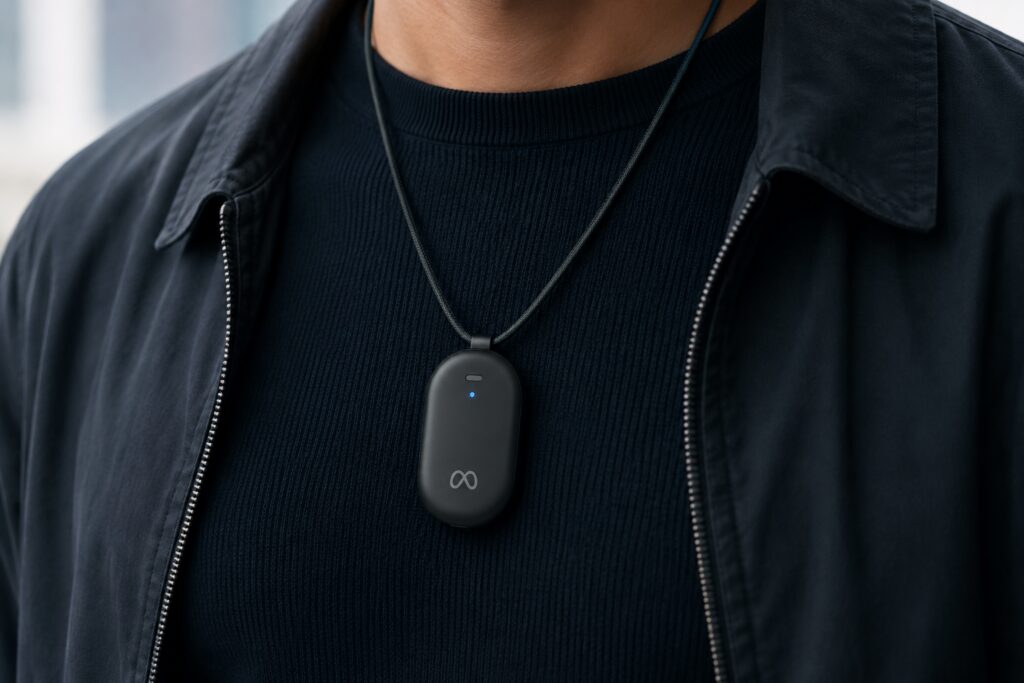
Meta is pushing further into AI wearables, with a pendant that could capture conversations and turn them into summaries, while new smart glasses and even a workplace-focused subscription are also reportedly on the table. If the plan holds, the company is no longer treating smart glasses as the whole story; it is building a broader hardware stack for people who want AI close at hand, and perhaps close to their collars.
According to The Information, the Meta AI pendant could enter testing within the next year and build on technology Meta picked up through its purchase of Limitless, a startup that made a recording pendant with summary features. That puts Meta in a familiar race: not just to make AI smaller and wearable, but to make it useful enough that people tolerate the trade-offs.
Meta AI pendant, smart glasses and a work subscription
The memo reportedly points to several new smart glasses models arriving by the end of 2026, extending the company’s push beyond its Ray-Ban line. Meta is also said to be exploring ”Wearables for Work,” a subscription aimed at business users, with features such as meeting transcription, note-taking help, and links to workplace software.
That is a smart angle. Consumer wearables are nice, but enterprise software tends to pay more reliably, and transcription plus note-taking is where AI hardware starts looking less like a toy and more like a tool. Google, Apple and a swarm of smaller hardware firms are all circling the same idea: if the device is always with you, the assistant should be too.
Why Meta is betting on AI wearables
Meta already has smart glasses and virtual reality gear in its portfolio, so a pendant is not a random side quest. It is a way to widen the company’s wearable footprint without waiting for glasses alone to become the perfect mainstream device, which they clearly are not yet.
- Pendant: expected to be tested within the next year
- Smart glasses: several new models reportedly due by the end of 2026
- Work subscription: meeting transcription, note-taking assistance and workplace integration
The catch is obvious. AI pendants have already had a hard time winning mainstream buyers, and always-on audio raises the same privacy concerns that have dogged the category from the start. Meta can package it as productivity, but people will still ask the awkward question: who else is listening, and what happens to everything the pendant hears?
The real test is trust, not hardware
Meta may be able to ship another wearable. The harder job is convincing people that a device designed to remember everything you say is a good idea. If the company wants this category to move beyond early adopters, it will have to make privacy controls feel as compelling as the AI features themselves.