

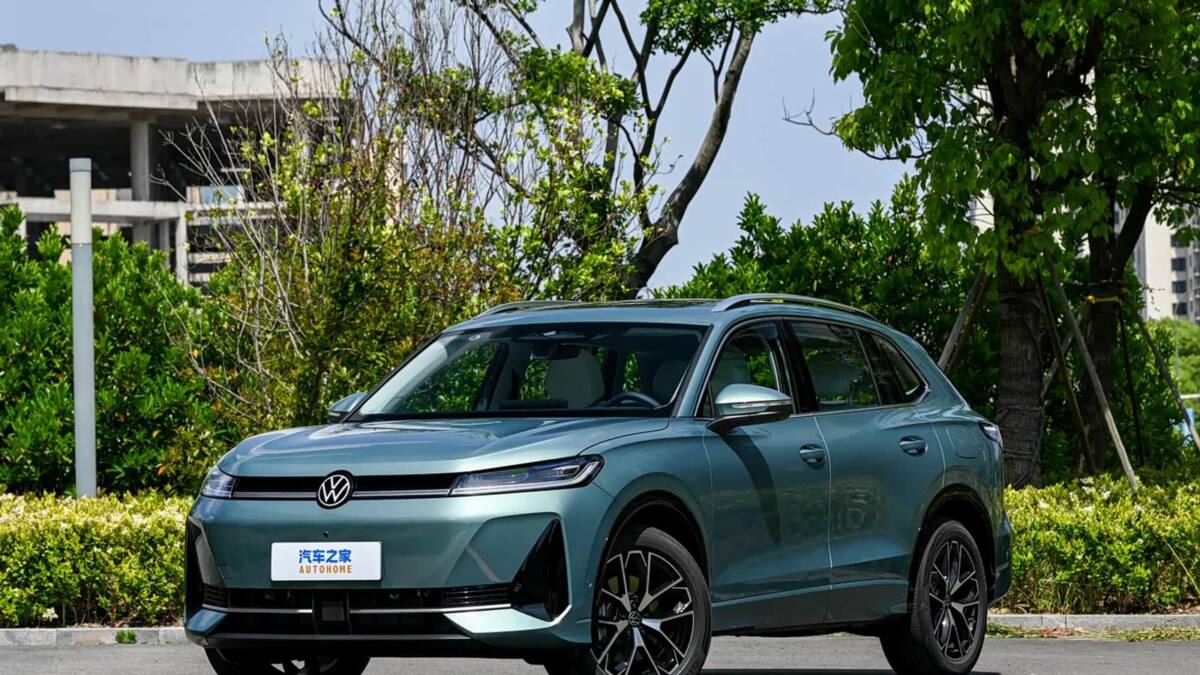
SAIC Volkswagen has pulled the wraps off two plug-in hybrids built for buyers who want long legs and a familiar badge: the Passat ePro and the Tiguan L ePro. The headline figure belongs to the Volkswagen Tiguan L ePro, which pairs 197 hp from its electric motor with a claimed total driving range of 1,423 km, while the Passat ePro stretches that to 1,468 km.
The pricing is aimed squarely at the mainstream Chinese market, where plug-in hybrids have become a practical answer to range anxiety without forcing buyers into a full EV commitment. That also puts Volkswagen in direct fight mode with a crowded field of local rivals, many of which have been using bigger batteries and more aggressive software tricks to win attention.
Volkswagen Tiguan L ePro price and range
The Volkswagen Tiguan L ePro is offered in two versions priced from 191,900 to 207,900 yuan, or 2.00 million to 2.17 million rubles. For that money, buyers get a plug-in hybrid SUV with updated lighting, a light bar across the front, and an illuminated badge that seems to be mandatory equipment in 2026.
- Electric motor output: 197 hp
- Gasoline engine: 1.5-liter EA211, 95 kW (129 hp)
- Battery: 22 kWh
- Electric range: 143 km
- Total range: 1,423 km
Those numbers are the real story. A 22 kWh battery is not giant by battery-EV standards, but it is enough to make the Tiguan L ePro useful for daily commuting while keeping the gasoline engine around for the long haul. That is exactly why plug-in hybrids keep hanging on: they avoid the charging anxiety that still matters to many buyers, especially outside the most developed urban charging networks.
Passat ePro gets a sharper cabin
The Passat ePro is the slightly cheaper sibling, priced from 169,900 to 203,900 yuan, or about 1.77 million to 2.12 million rubles. It arrives with a heavily revised exterior, including new LED headlights, a full-width light strip, and a backlit emblem, plus dimensions of 5017 × 1850 × 1489 mm and a 2871 mm wheelbase.
Inside, Volkswagen has gone hard on screens: a 15-inch central display, a 10.3-inch digital instrument cluster, and an 11.6-inch screen for the front passenger. The top trim also adds IQ.Drive and semi-automatic driving functions with support for highway on-ramps, off-ramps, and lane changes. In other words, the usual attempt to make a family sedan sound like a junior chauffeur.
Why Volkswagen is betting on plug-in hybrids
The strategy makes sense because the market is no longer rewarding vague eco promises. Buyers want a number they can trust, and these cars offer exactly that: electric-only range for short trips, gasoline backup for everything else, and enough total range to make road trips boring in the best possible way. The Tiguan L ePro and Passat ePro are also a reminder that Volkswagen is still leaning on its China-specific joint-venture playbook, rather than trying to force global products into local tastes.
Whether that formula is enough against homegrown brands is the open question. Chinese rivals have pushed plug-in hybrids hard, often pairing them with lower prices and flashier software, so Volkswagen’s edge will need to come from build quality, dealer reach, and the one thing it still has in its favor: buyers already know exactly what a Tiguan or Passat is supposed to be.