

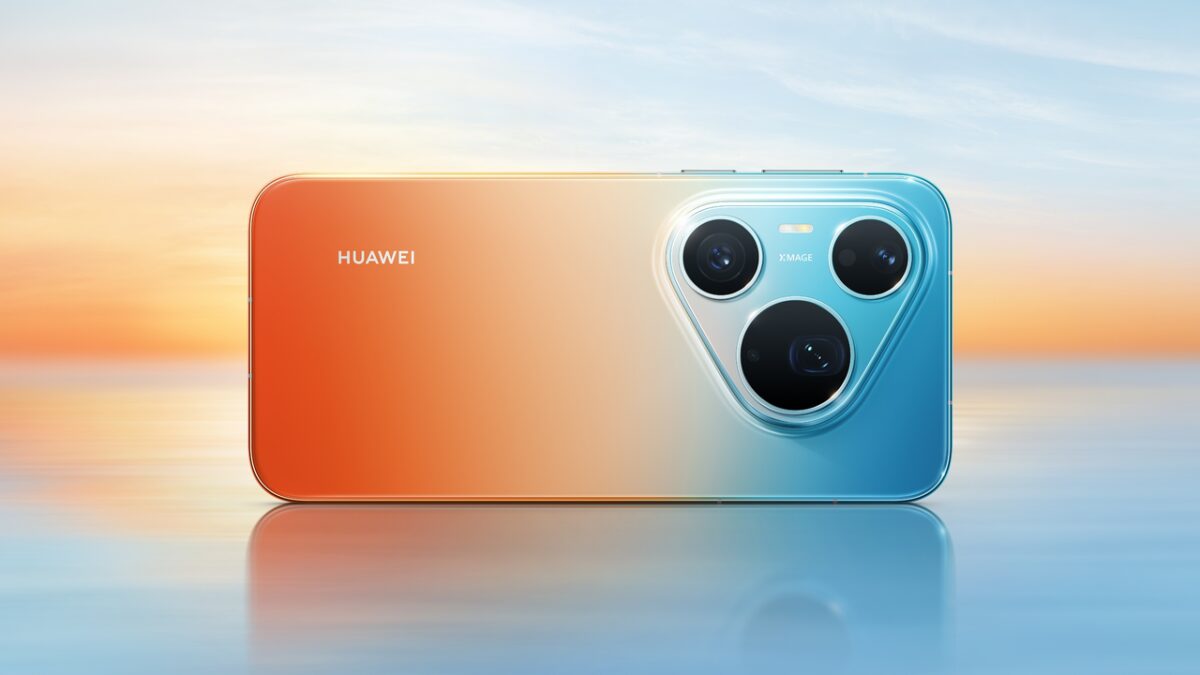
Huawei may be moving beyond the usual ”bigger sensor, better zoom” playbook for its next Pura flagship. A fresh leak says the company is testing a ”Multi-Camera Fusion” system for a future Pura 100 series phone, where the main, ultrawide, and telephoto cameras would all contribute to a single shot at the same time.
If that sounds familiar, it should. Phone makers have played with multi-camera processing before, especially for zoom, but the twist here is the claim that Huawei is also folding in multispectral data. That could give the phone more stable color and detail across focal lengths, which is exactly where most smartphone camera systems still get a bit messy.
How Huawei’s Multi-Camera Fusion could work
According to the leak, the idea is not to hand off imaging work from one lens to another, but to combine data from several sensors into one image pipeline. In plain English: the phone would try to ”see” the scene with multiple eyes at once instead of pretending only one camera matters at a time.
- Main camera, ultrawide, and telephoto data would be processed together
- Multispectral sensors could feed additional color and scene information
- Zoom transitions may become smoother, with fewer shifts in color and exposure
That last part is the bit to watch. Even expensive phones still struggle with small but obvious jumps when moving between lenses, and that’s before you get into low light, skin tones, or the kind of scene where the ultrawide lens suddenly remembers it lives in a different universe.
Why Huawei’s Pura 100 camera fusion would matter
Huawei already uses multispectral sensors in some of its flagships, mainly to improve color accuracy and scene recognition. If the company is really feeding that data into the image processor alongside the usual camera inputs, it could reduce the odd mismatches that crop up when a phone switches focal length mid-shot.
There is also a broader reason this leak sounds plausible: smartphone camera hardware has been improving more slowly than smartphone camera software. Samsung, Apple, and others have leaned heavily on computational photography, but Huawei has often tried to differentiate through imaging hardware and proprietary tuning. A deeper fusion pipeline would fit that pattern nicely, even if the final implementation ends up being less dramatic than the leak makes it sound.
The Pura 100 camera feature is still in testing
The catch is simple: this is reportedly still in testing. Features at that stage can be cut, delayed, renamed into something less exciting, or quietly watered down before a phone ever reaches buyers. So while the Pura 100 series may end up with a genuinely smarter camera system, nobody should confuse a leak with a finished product.
Even so, Huawei’s imaging team appears to be chasing a sensible goal: fewer lens handoffs, better consistency, and more usable zoom. If the company gets this right, the Pura 100 series could be one of the more interesting camera phones to watch – not because it promises the biggest sensor, but because it may try to make every sensor work together for once.