

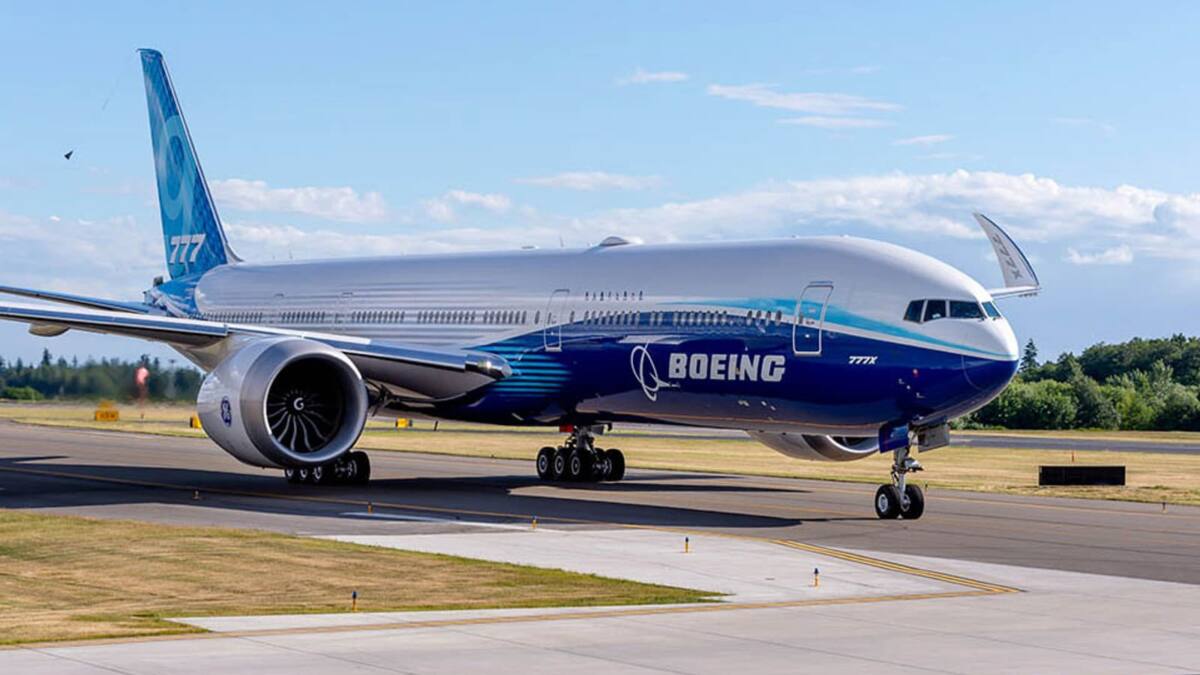
Boeing’s 777X faces a storage problem after more than 13 years of development and over $15 billion in costs. More than 30 jets have already been built, but airlines are in no hurry to take delivery of aircraft assembled years ago and left sitting in storage while certification dragged on.
The awkward part is that this is not just a paperwork delay. The 777X fleet has been through repeated design changes, late fixes, and a long testing cycle, which means some customers see the early aircraft as effectively outdated before they ever enter service. That is a nasty problem for any manufacturer, and Boeing has seen a version of it before with the 787 Dreamliner, whose early production run also needed heavy rework.
Airlines do not want stored Boeing 777X jets
At least one high-profile customer is making its stance public. Emirates chief Tim Clark has said the carrier is not interested in ”aircraft from storage,” a polite way of saying that brand-new does not necessarily mean delivery-ready. Industry sources say another airline shares the same view, which suggests Boeing may have a broader customer-relations problem, not just a single difficult buyer.
That hesitation is understandable. Airlines do not want to accept first-built jets if they suspect more fixes, software updates, or cabin changes are still coming. For a fleet that is supposed to fly for decades, taking a near-finished prototype is a risky bargain.
Boeing 777X certification keeps slipping
Boeing originally planned to bring the 777X to market in 2020, but by the middle of 2026 the 777-9 is only now wrapping up testing. Getting certification from the Federal Aviation Administration by the end of the year is still being treated as an optimistic scenario, which is not exactly the phrase you want attached to a flagship aircraft program.
- Program cost: more than $15 billion
- Development time: 13 years
- Aircraft already built: more than 30
- Original market target: 2020
Why the 777X risks a Dreamliner-style headache
The comparison with the early 787 is uncomfortable for Boeing because it points to a familiar corporate weakness: getting aircraft out the door before every detail is fully settled. That can work if airlines are desperate for capacity and ready to swallow the pain. It works a lot less well when the plane has spent years parked before its first paying passenger boards.
The next test is simple enough. If certification lands soon and Boeing can convince airlines that the stored jets are worth taking, the company gets a chance to stop the bleeding. If not, it may end up discounting early 777X deliveries the way it did with some 787s, which would make an already expensive program even harder to defend.