

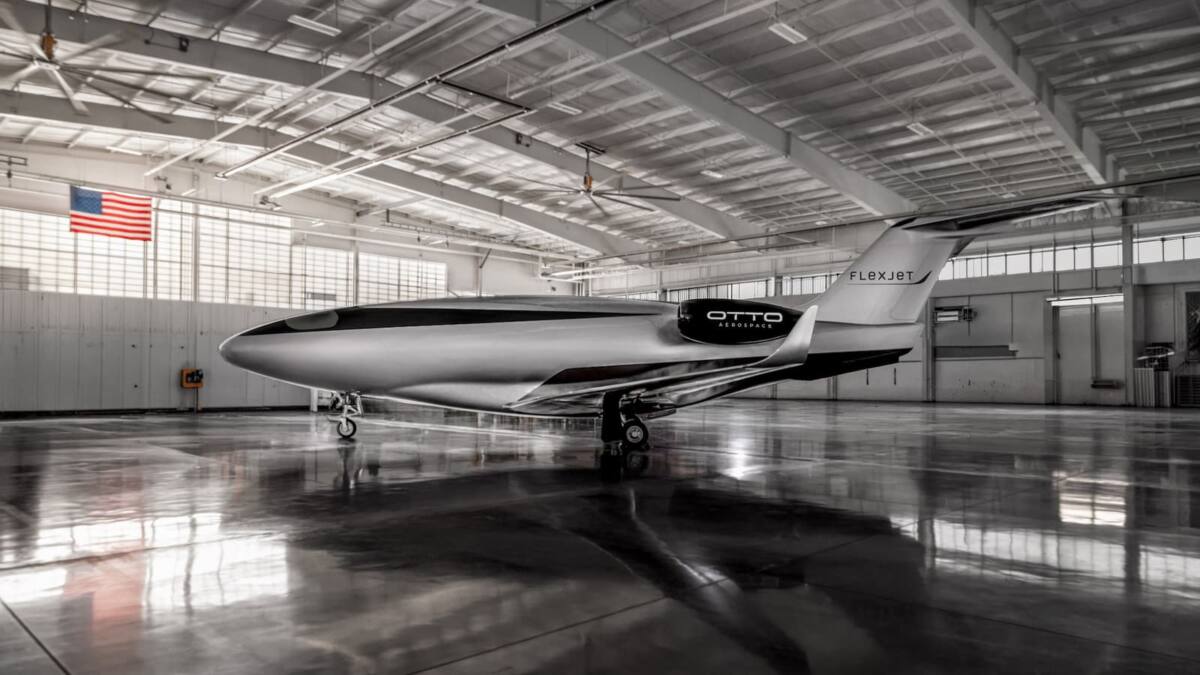
Otto Aerospace says its Phantom 3500 has cleared a major design checkpoint, moving the windowless business jet from concept art territory into detailed engineering, production planning, and flight-test prep. The pitch is simple and ambitious: use a smoother fuselage, digital cabin displays instead of glass, and laminar airflow to squeeze more range and less fuel burn out of a jet that is supposed to challenge the Bombardier Challenger and Embraer Praetor families.
That is the sort of promise aerospace companies love to make and regulators love to inspect. But Otto’s approach is not pure moonshot theater; it builds on the Celera 500L test program, which logged more than 50 flights, and it arrives at a time when business aviation is under pressure to justify its carbon footprint without making passengers feel like they are flying inside a server rack.
Phantom 3500 design details
The headline gimmick is also the engineering trick: no windows. Instead, the cabin would use panoramic high-resolution digital screens fed by external cameras, allowing the fuselage to stay uninterrupted and more aerodynamically clean. Otto says that shape supports sustained laminar flow, which the company and NASA have long treated as one of aviation’s more elusive prizes.
- Two Williams FJ44 turbofan engines
- Maximum range of about 6,850 km
- Up to 15.5 km cruising altitude
- Cabin height of almost 2 meters with a flat floor
- Short-field takeoff capability from runways of about 1 kilometer
If Otto’s numbers hold up, the payoff is sizable: roughly 35% lower drag and fuel consumption down by 50-60%, with emissions cut by as much as 90% versus traditional business jets. That would put serious pressure on the industry’s usual trade-off between speed, comfort, and guilt.
Flexjet’s big bet on an unfinished jet
The biggest vote of confidence comes from Flexjet, which has already signed a preliminary contract for 300 aircraft. At an estimated $19.5 million each, the deal is worth about $5.85 billion, a number that looks even more impressive when you remember the plane still has not flown. That is not unusual in private aviation, where operators often buy the story before the metal; Airbus and Dassault have both spent years proving that cabin economics matter almost as much as raw performance.
Otto plans to use Leonardo for composite components, with final assembly expected at Cecil Airport in Jacksonville, Florida. The aircraft is also designed to run on SAF, which is the least surprising and most necessary checkbox on the entire spec sheet.
The real test comes after PDR
Passing preliminary design review does not guarantee the plane will become a certified reality, but it does mean the project has moved beyond speculation. The next hurdles are brutal and familiar: proving the aerodynamics in the real world, keeping the digital cabin experience from feeling like a gimmick, and demonstrating that the promised efficiency survives contact with manufacturing tolerances and flight-test data.
If Phantom 3500 works, it could force the business aviation market to take a harder look at windows, drag, and what passengers will tolerate for a cleaner flight. If it stumbles, it will join a long line of elegant aerospace ideas that looked brilliant on a render and less convincing once gravity got involved.