

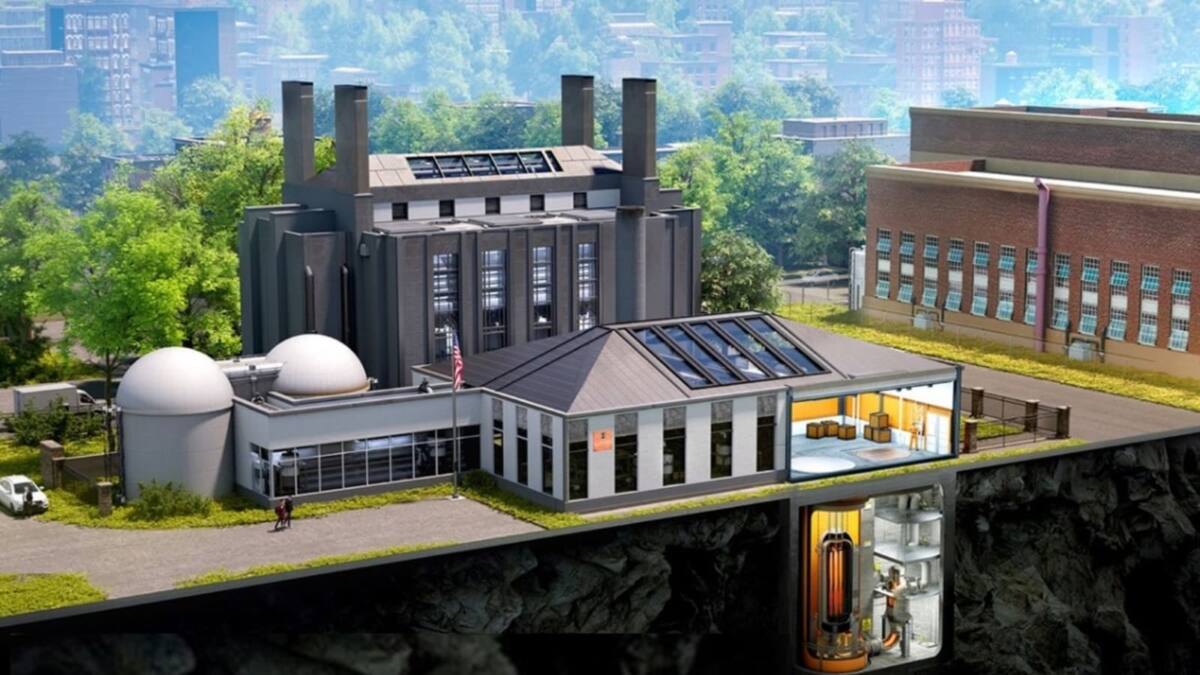
The US Nuclear Regulatory Commission has agreed to review a construction application for Kronos, a fourth-generation microreactor from NANO Nuclear Energy that could supply heat and electricity in a compact, modular package. The filing, submitted through the University of Illinois Urbana-Champaign, now moves from concept to the slow, expensive business of technical, environmental, and regulatory scrutiny.
The NRC review is a meaningful step for NANO Nuclear’s Kronos microreactor and for a sector that has spent years promising small reactors will help meet the energy needs of data centers, remote industry, and the AI boom. Regulators are still nowhere near a green light, but acceptance for review is the kind of milestone that separates serious projects from glossy investor decks.
What the Kronos microreactor is designed to do
Kronos MMR is pitched as a stationary power system capable of generating up to 45 MW per module. NANO Nuclear says the design can be bundled into clusters to reach gigawatt-scale output, which is exactly the sort of modular math nuclear developers love and utilities usually interrogate with a raised eyebrow.
The company is also leaning hard on transportability. Its components are meant to fit standard road transport and be assembled at the deployment site, a practical detail that matters more than marketing slogans when you are trying to sell nuclear hardware to a skeptical market.
The timeline runs through 2027
NANO Nuclear’s stated schedule has the regulator finishing its review by the end of 2027, with construction on the University of Illinois campus expected to start in the second half of 2027. That is a long runway, but not unusual for nuclear projects, where paperwork tends to move at the speed of caution and caution tends to win.
The company is already trying to make that wait look productive. It has started pre-contract talks for long-lead components and is building a smaller non-nuclear demonstration model at its technical center in Oak Brook, Illinois, to validate the design before anyone pours concrete.
Why data centers are watching
The obvious target customers are data centers, AI infrastructure, chemical plants, and remote mining sites. That mix tells you where the pressure is coming from: electricity-hungry operators that want firm power without waiting around for transmission upgrades, gas turbines, or a new substation to appear out of thin air.
- Reactor type: fourth-generation microreactor
- Output: up to 45 MW per module
- Deployment model: modules can be clustered for larger capacity
- Transport: designed for standard road shipping
- Current status: accepted for NRC review, not approved for construction
The bigger question is whether Kronos becomes a template or just another promising nuclear prototype with a long regulatory tail. If the review proceeds cleanly, expect other advanced reactor developers to use this as proof that the paperwork gate can finally open; if it drags, the industry gets another reminder that small nuclear still has to clear very large hurdles.