

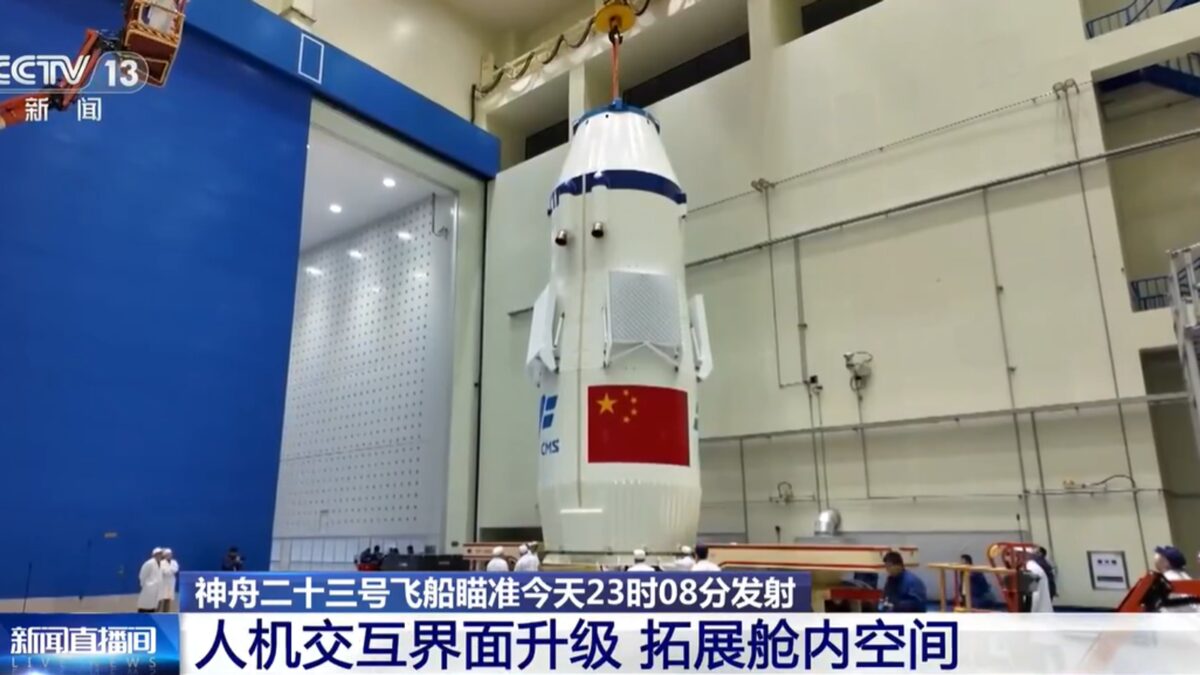
China is set to launch Shenzhou 23 from the Jiuquan Satellite Launch Center on 24 May 2026, carrying Li Jiaing, the first Hong Kong taikonaut, to the Tiangong space station for a new round of scientific experiments. The Shenzhou 23 mission arrives with a set of practical upgrades rather than flashy reinvention: better windows, a refreshed cockpit layout, and a faster rendezvous system that cuts docking to 3.5 hours.
That is a sensible evolution for crew transport. Space agencies rarely gamble with the basics unless the basics are already working; China is clearly squeezing more capability out of an established Shenzhou design while keeping the risk profile familiar.
What changed inside Shenzhou 23
According to the mission team, the return capsule’s instrument system has been upgraded, the human-machine interface has been improved, and the control panel has been miniaturized to free up more room for payloads. In plain English: the crew gets a cleaner cabin, and the mission gets more useful space for hardware. That is the sort of unglamorous engineering that makes long-running space programs look effortless from the outside.
- Launch site: Jiuquan Satellite Launch Center
- Rocket: Long March 2F
- Destination: Tiangong space station
- Docking and rendezvous: 3.5 hours
Faster docking and a sturdier capsule
The docking system has also been tuned for faster approach and rendezvous, with improvements to the buffer system in the docking mechanism to raise adaptability and reliability. The windows have been strengthened as well, which is exactly the kind of upgrade crews hope never becomes relevant. But in space, ”hope” is not much of a strategy.
Shenzhou 23 is also built with flexibility in mind: the mission can be switched to a cargo role, and its reserved interfaces are meant for use with other stations. That kind of design reuse is how a space program keeps moving without rebuilding every vehicle from scratch.
Tiangong keeps getting busier
Preparations at Jiuquan are said to be moving ahead on schedule. With Tiangong operating as a regular destination for crewed flights, each new Shenzhou mission is less about spectacle and more about keeping the station supplied with people, experiments, and options. The next question is how far China can keep stretching this architecture before the program asks for a deeper redesign.