

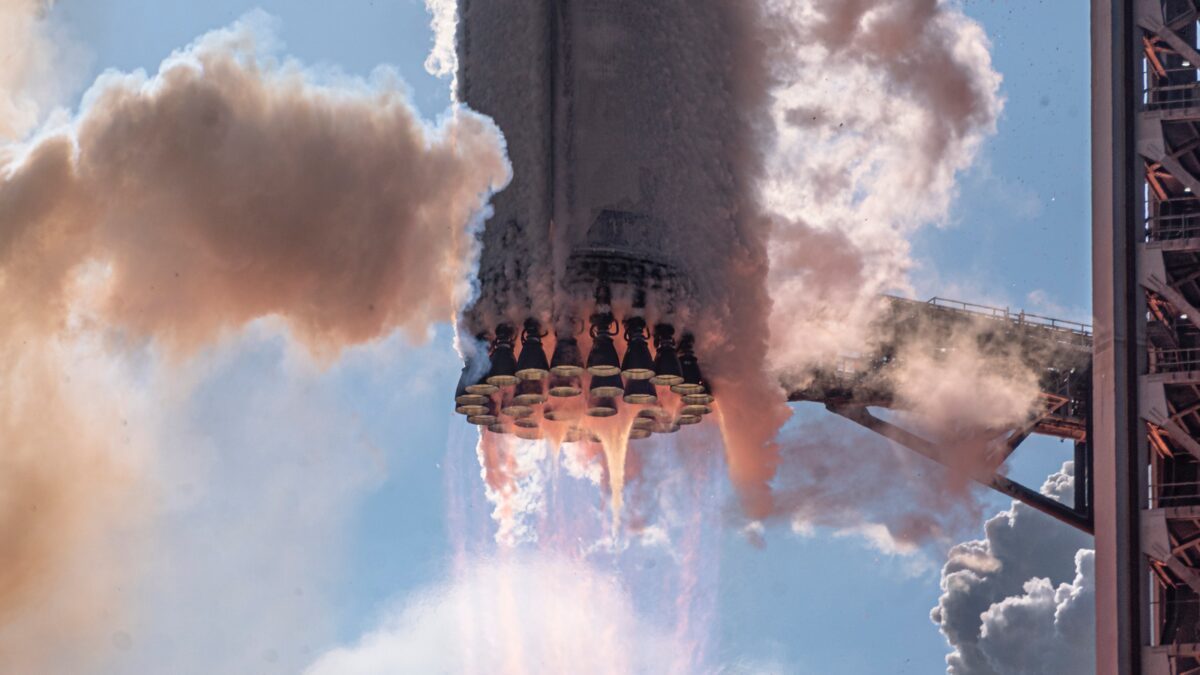
Starship’s latest version got off the pad much faster, and Elon Musk says that is exactly the point: in fully reusable rockets, raw engine power can matter more than squeezing every last drop of fuel efficiency. The logic is simple enough to annoy purists – if the booster comes back and flies again, the economics shift away from throwing away hardware and toward minimizing what it costs to reach orbit in the first place.
That is a very SpaceX way to think about rocket design. For a vehicle like Starship, a higher thrust-to-mass ratio helps the rocket clear the pad sooner, fight gravity more aggressively, and, in the end, reduce the cost of hauling payloads to orbit. Musk also pointed out that even Falcon 9, which is roughly 80% reusable, still benefits from accepting some inefficiency if that lowers the price per ton delivered to orbit.
Why thrust matters more in reusable rockets
The old rocket playbook was built around expendability: save fuel, spend hardware, repeat. Reusability flips that script. Once the booster is coming home, the expensive thing is no longer the propellant – it is everything attached to the rocket that you do not want to lose.
That is why the ”more powerful even if less efficient” argument is not a contradiction at all. In a reusable system, a harder push off the launch pad can be a better trade than a thriftier engine that leaves the rocket hanging around in the gravity well. It is a blunt answer to a very old problem.
Starship’s latest flight and what SpaceX is testing
The faster liftoff came during a Starship test flight that also served as a workout for the rocket’s heat shield. Musk said the new thermal protection system did its job, which is exactly the kind of line a company wants to be able to say after launching the biggest rocket it has ever built.
SpaceX has also been using Starship to test payload handling, including deployment of 20 Starlink simulators and two modified Starlink satellites built specifically for imaging. Earlier reports said the company set a record during the 12th Starship launch by placing about 45 tons of Starlink mass simulators into orbit, a reminder that the ship is being pushed as both a spectacle and a data machine.
- Fully reusable rockets shift the cost focus toward fuel and turnaround, not discarded hardware.
- Higher thrust-to-mass ratio helps a rocket accelerate faster and fight gravity more efficiently.
- SpaceX is still using Starship’s flights to validate thermal protection, payload deployment, and mission cadence.
What SpaceX’s thrust-first strategy could change
The interesting question is whether this approach scales cleanly beyond Starship theater. If SpaceX keeps proving that more thrust and faster ascent translate into better economics, rivals will have to decide whether to chase the same philosophy or keep optimizing around efficiency in a world that is increasingly punishing for expendable rockets.
For now, FAA scrutiny around the latest launch still hangs in the background, as it does with most ambitious Starship tests. But the engineering message is already loud enough: in the reusable era, the best rocket may be the one that wastes less time getting moving.