

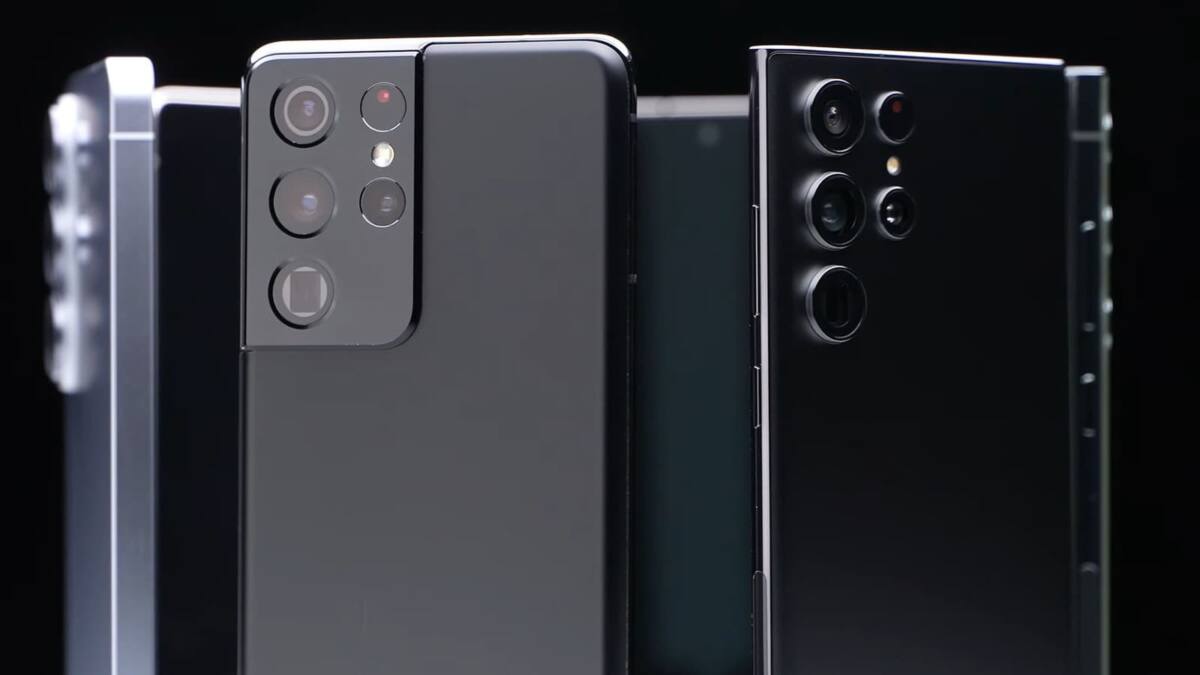
Samsung’s latest Ultra may not look like a giant leap on paper, but a side-by-side PhoneBuff speed test says the Galaxy S26 Ultra still finishes first. In a six-generation race from the Galaxy S21 Ultra to the Galaxy S26 Ultra, the newest model came out on top, while the biggest gap showed up between the older phones and the more recent trio.
The headline result is almost annoyingly familiar for anyone hoping every annual refresh delivers drama: the Galaxy S24 Ultra, Galaxy S25 Ultra, and Galaxy S26 Ultra are close enough that most people would struggle to feel the difference day to day. The older three, though, are clearly slower, dragged down by aging chipsets and weaker cooling rather than just time doing its usual job.
PhoneBuff’s six-way Galaxy Ultra speed test
The YouTube channel ran a full performance test across Samsung’s Ultra flagships from the Galaxy S21 Ultra through the Galaxy S26 Ultra. The idea was simple: see how hardware upgrades translate into actual speed, not just benchmark bragging rights. That matters more than ever, because premium phones now tend to improve in smaller, steadier steps rather than dramatic generational jumps.
- Galaxy S21 Ultra: 6 min 53 sec
- Galaxy S22 Ultra: 6 min 56 sec
- Galaxy S23 Ultra: 6 min 28 sec
- Galaxy S24 Ultra: 5 min 01 sec
- Galaxy S25 Ultra: 4 min 52 sec
- Galaxy S26 Ultra: 4 min 42 sec
Where Samsung’s older Ultras start to fall behind
The S21 Ultra and S22 Ultra are the most clearly outclassed, and the S23 Ultra also trails the newer models by a meaningful margin. That fits a familiar pattern in flagship phones: once the chip, memory, and thermal design age together, performance drops off faster than the spec sheet would suggest.
There is one small wrinkle in the numbers that makes the newer models feel more interesting than the raw spread alone suggests: the S23 Ultra used 8 GB of RAM, while the other phones in the test had 12 GB. That alone does not explain everything, but it helps show why memory capacity can still matter once phones start juggling heavier apps and background tasks.
Galaxy S26 Ultra and AI workloads
The S26 Ultra’s advantage becomes more visible in demanding workloads, especially AI-heavy tasks. Samsung’s latest platform and software tuning appear to squeeze more out of the hardware, which is exactly where modern flagships are now trying to differentiate themselves: not in launching a browser, but in chewing through things the average user barely thinks about until the phone stutters.
PhoneBuff’s test also points to a broader trend across the Android flagship market. Qualcomm and Samsung’s rivals have been pushing more aggressive efficiency and sustained-performance gains for years, so the real race is no longer just peak speed. It is how long that speed lasts before heat, memory pressure, and software overhead start to bite.
What the Galaxy S27 Ultra could change
If Samsung’s next Ultra really does get 16 GB of RAM, paired with Snapdragon 8 Elite Gen 6 Pro, the company could widen the gap again. That would not just help with multitasking; it would give future AI features more room to breathe, and that is where the next meaningful jump in phone speed is likely to show up.
For now, the more boring answer is also the most honest one: if you already own a Galaxy S24 Ultra, upgrading for raw speed alone looks hard to justify. If you are still on an S23 Ultra or older, though, this test makes the case that Samsung has already moved the bar enough to notice.