

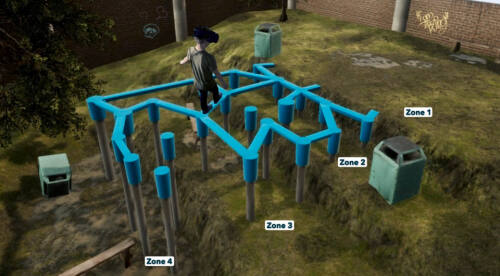
Children who were bolder on a virtual playground turned out to be better at judging danger on a virtual road. In a study led by Mariana Brussoni at the University of British Columbia, researchers found that risk-taking in play did not translate into reckless road-crossing; instead, it was linked to sharper risk assessment in traffic, a neat reminder that ”risky” is not the same as ”careless.”
The virtual reality study used VR because real-life playgrounds and roads are harder to standardize without, you know, actual danger. That makes the setup useful beyond the classroom: it tests whether children can sort out fun risks from traffic risks, a distinction that matters as cities keep pushing for walkable streets and active travel for kids.
How the VR study worked
The study included 424 children from Canada and Norway, aged 7-11 years, with an average age of 8.9 years; 216 were girls. Sitting in a gym and wearing VR headsets, they completed two back-to-back immersive tasks. The first took place on a virtual playground with elevated structures of different heights and was used to measure willingness to take risks and the number of falls.
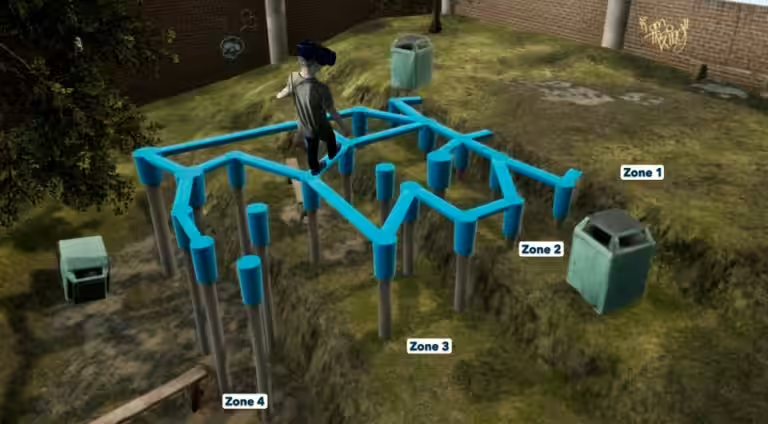
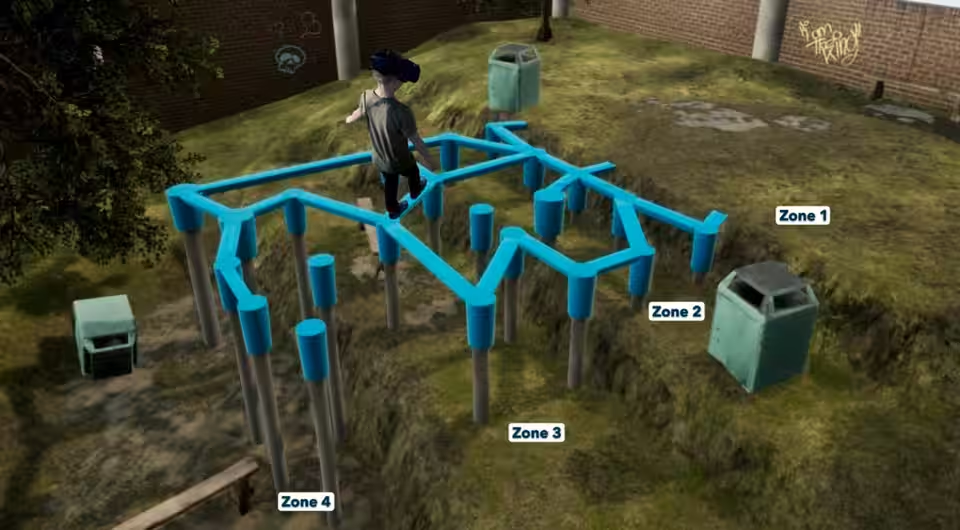
The second task simulated crossing a bike lane and a roadway, letting researchers score how long children took to judge the scene, how often they made dangerous crossings, and whether they collided with traffic. Eighty-five percent of the participants said the VR environment felt realistic, which is high enough to make the results more than a glorified videogame exercise.
Risk on the playground, caution on the road
Norwegian children were significantly more risk-seeking than Canadian children, with β = -0.54 and p < 0.001. More risk-taking on the playground predicted more falls there, with an odds ratio of 1.78 and p < 0.001, but it also lined up with better risk evaluation in traffic, where the association was β = -11.4 and p = 0.002.
Just as important, that stronger playground appetite for risk did not increase the frequency of dangerous crossings between the bike lane and the road. That is the part adults often miss when they panic about climbing frames: practice with manageable risk may help children calibrate danger instead of blurting ”fun” at everything with wheels.
What urban planners and parents should take from it
- Play risk and traffic risk are not the same skill.
- Children who tolerate a bit more danger in play may also be better at reading roads.
- Virtual reality can separate the two without putting anyone in actual harm’s way.
The broader message is awkward for the safety-at-all-costs crowd: removing every playground challenge may not build better judgment. The next question is whether similar patterns show up in even younger children, or in settings where street traffic is mixed with bikes, scooters, and far less forgiving real-world distractions.