

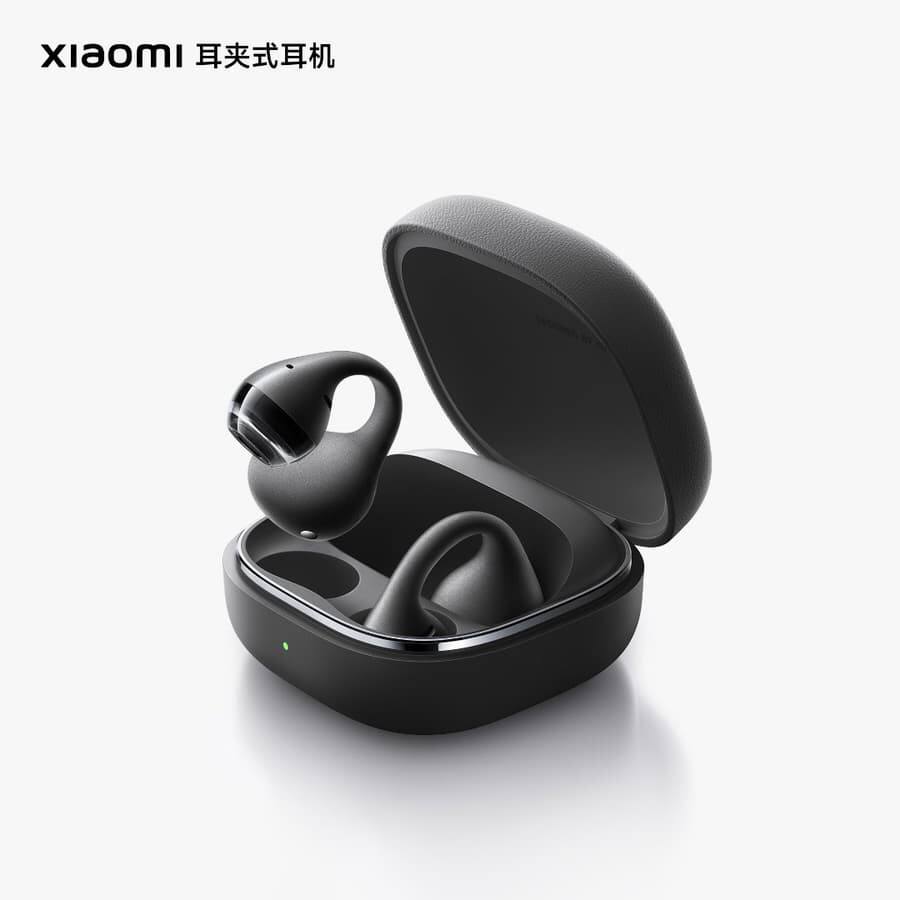
Xiaomi is getting ready to turn clip-on earbuds into something more ambitious than a fashion-forward audio accessory. President Lu Weibing has shown the company’s first Open-Ear Clip-on headphones in ”Basalt Black”, and the pitch is unusually broad: open-ear design, a matte finish, real-time translation in 21 languages, and AI tools that can summarize conversations at the tap of a button.
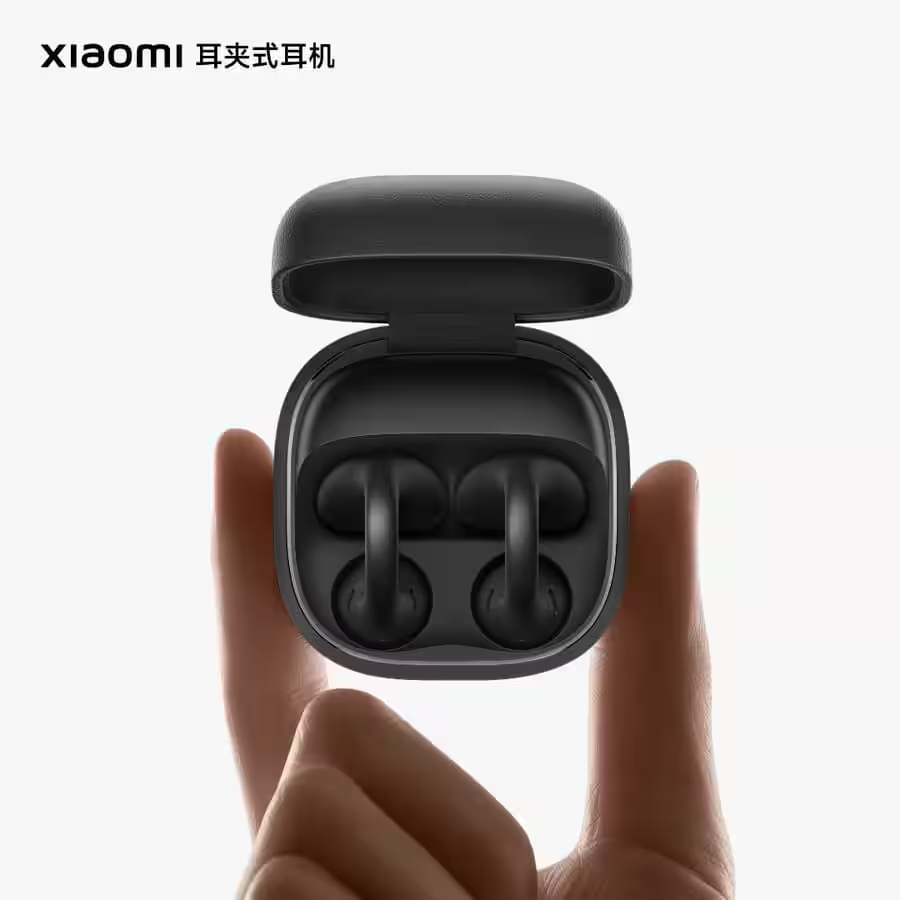
The hardware itself follows the now-familiar open-ear clip format: nothing goes into the ear canal, and the bud grips the cartilage instead. Xiaomi says the body is smooth and integrated, with what it calls a ”transparent sound sphere” design element. That’s a lot of branding for a tiny object, but it also signals where the company wants to compete: style, comfort, and software smarts rather than brute-force audio specs.
Xiaomi clip-on earbuds add Xiao Ai assistant features
According to Xiaomi, the bigger draw is Xiao Ai integration. The assistant is supposed to make conversations feel more natural, add a layer of ”emotional support”, and handle the translation and transcription tricks that usually live in separate apps. That bundling matters because the next wave of earbuds is increasingly defined by software, not drivers and codecs alone.
Real-time translation for 21 languages is the headline feature, but the more practical one may be conversation recording with one-tap summaries. Travelers, meeting-heavy users, and anyone trying to keep track of fast-moving bilingual chats will care more about that than the marketing gloss. Apple, Samsung, and smaller audio brands have all pushed headphones toward assistant-driven use cases; Xiaomi is simply being more aggressive about folding the whole stack into one product.
Open-ear clip-on earbuds are becoming a software race
Open-ear products have been gaining ground because they solve a simple problem: people want to hear their music without fully shutting out the world. The downside is obvious too – less isolation, less privacy, and audio quality that usually has to work harder to impress. Xiaomi’s answer is to lean into AI features so the earbuds feel less like a compromise and more like a multifunction device.
A full presentation is expected this month, which should answer the annoying questions Xiaomi has left hanging: battery life, launch price, and whether the translation feature works well outside a demo room. If the company gets those details right, these clip-ons could be one of the more interesting wearables in Xiaomi’s lineup. If not, they’ll be another pair of earbuds with a very busy spec sheet.