

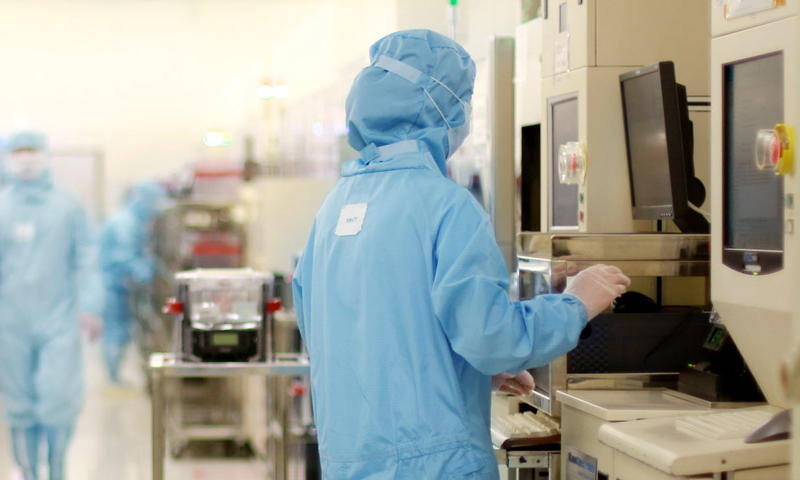
China’s biggest contract chipmaker is turning a global shortage into a very local advantage. SMIC says more overseas customers are shifting orders to its fabs as rival foundries get squeezed by the AI boom, and the company is benefiting most where others are already booked solid.
That is not a story about bleeding-edge silicon. It is about mature process nodes, industrial capacity, and the unglamorous chips that keep phones, gadgets, and the AI supply chain moving. While headlines chase the newest accelerators, SMIC is making money from the parts of the market that still need steady, high-volume production.
Foreign orders are moving to China
SMIC chief executive Zhao Haijun said the company is seeing more foreign clients redirect manufacturing to China because other contractors are running out of room. He described the shift as broad-based, with capacity tightening across AI-related products, memory, and other high-speed components. In plain English: if your preferred foundry is full, you go where the machines are idle.
That dynamic gives SMIC a clear advantage. It has room to absorb work, and it is one of the few big players still adding production capacity while much of the industry is prioritizing premium AI chips. Taiwan Semiconductor Manufacturing Co. and Samsung are still the heavyweights at the top end, but the volume business around older nodes is where a lot of the immediate cash is now flowing.
SMIC production capacity and shipments
SMIC said depreciation expenses are expected to rise by 30% compared with last year, after already climbing 26% in the first quarter from a year earlier. It also added 9,000 equivalent 12-inch wafers, a sign that the company is building for demand that it expects to last rather than spike and fade.
- Production capacity utilisation: 93%
- Quarterly shipments: 2.5 million equivalent 8-inch wafers
- China’s share of revenue: 89%
- U.S. share of revenue: 9%
The 93% utilisation rate dipped slightly from the previous quarter, but that does not look like weakness so much as timing. SMIC said new fabs came online during the first quarter, which lifted total capacity and made utilisation appear a little softer. Smartphones also cut orders in the fourth quarter after concerns about shortages of supporting memory chips, and some of that carried into the next quarter.
Older nodes are getting hotter
The interesting part is where the growth is happening. SMIC expects Chinese makers to take a 37% share this year in the 22 to 40 nm segment, up from 32% in 2024, and to reach 41% in 2027. That is not flashy technology, but it is the backbone of a lot of consumer electronics and industrial gear, and it is exactly the sort of space that gets ignored until capacity disappears.
As AI-related chips and edge applications keep expanding, SMIC’s read is that non-AI capacity will tighten even further next year. That sounds less like a temporary blip than a structural shift: the industry keeps chasing the newest thing, while the most boring fabs quietly become the bottleneck everyone needs.