

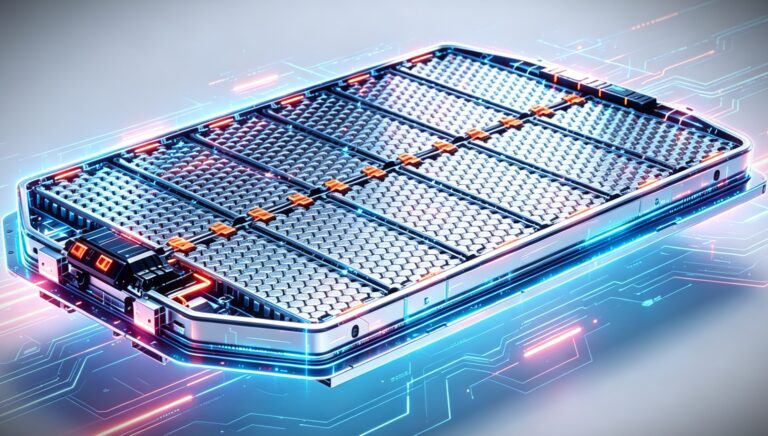
Pure Lithium New Energy says its solid-state lithium-ion batteries are now rolling off a 500 MWh production line in Lan’kao, Henan, a milestone that puts the Beijing startup into the awkwardly exclusive club of companies trying to turn lab-grade battery promises into industrial output. The company is backed by Yizhuang State Investment and is already talking about a larger plant measured in several GWh, planned for 2026.
From pilot line to mass production
The company was founded in May 2022 and moved fast by battery-industry standards: a 10 Ah pilot line in Beijing’s Yizhuang district was completed in April 2023, construction of the Henan line began a month later, and in October 2024 Pure Lithium said it had started mass production of 50 Ah solid-state cells. That kind of timeline matters because most solid-state hopefuls are still stuck in presentation decks while rivals such as Toyota, QuantumScape, and a long list of Chinese startups keep chasing the same prize: safer cells with higher energy density and longer life.
What Pure Lithium’s first-generation cells can do
Pure Lithium says its first-generation products passed GB/T36276-2018 testing certified by CNAS, with an average weight loss of 0.023%. The company also demonstrated a cut-test at CIBF 2026 in Shenzhen, where the cells kept powering external devices after being physically sliced, a neat party trick that doubles as a safety pitch.
- Energy density: 180-190 Wh/kg
- Cycle life: 6000 to 8000 charge-discharge cycles
- Next target: above 200 Wh/kg
Materials are the real battleground
The company says its cells use lithium iron phosphate cathodes and graphite anodes, while its own organic-inorganic composite electrolytes and supercritical coating process are meant to improve conductivity and interface stability. Pure Lithium’s founder, Yang Fan, says the team has also developed ternary copolymer materials and new oxide materials for that same job, which is the part of solid-state battery development that usually decides whether the whole thing is a product or just an expensive experiment.
If the 500 MWh line really is at full output, the next test is scale: can Pure Lithium keep those cycle-life and safety claims intact while moving to a multi-GWh factory? That is where a lot of battery startups hit the wall, and where the winners start looking less like demo stars and more like suppliers.