

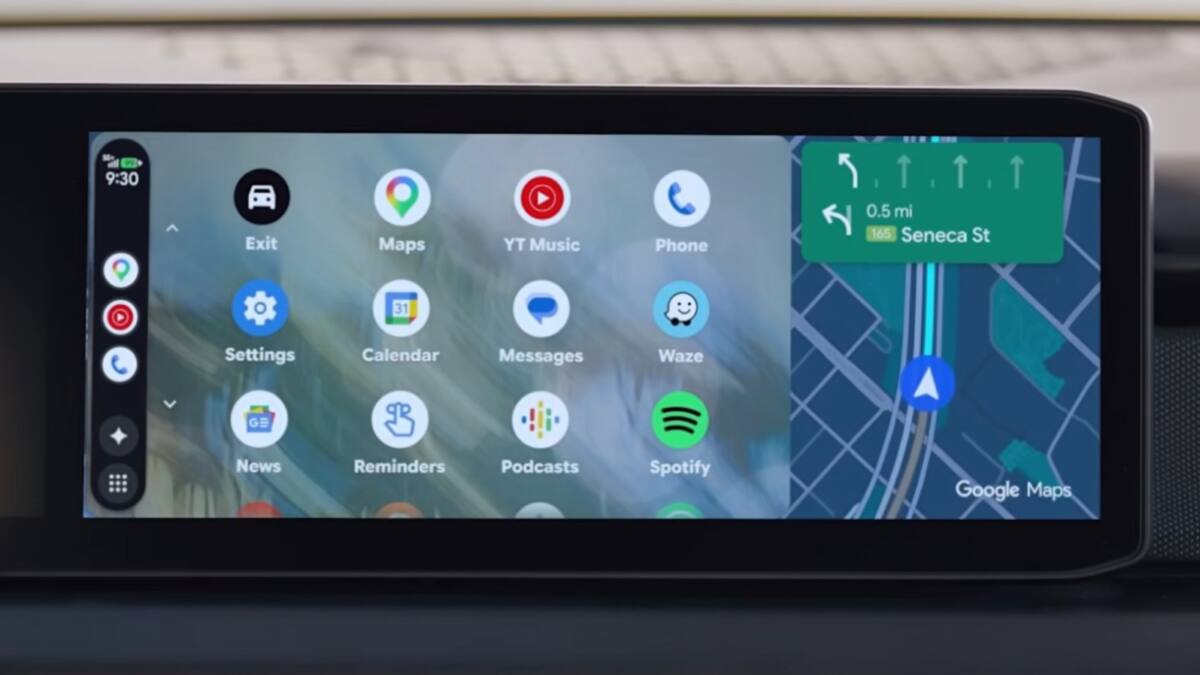
Android Auto is getting a fairly ambitious reset in 2026, with Google folding in a cleaner interface, dashboard widgets, immersive navigation, video playback, and deeper Gemini integration. The pitch is simple: make the car screen feel less like a mirrored phone and more like a smart, customized control center.
That is a smart move, and overdue. Android Auto is already in over 250 million cars, so even small design changes can have an enormous ripple effect; the trick for Google is improving the experience without making drivers hunt through yet another layer of menus.
Android Auto’s visual refresh
The headline change is a full redesign built around Google’s Material 3 Expressive system. That means more colorful styling, new fonts, fresh wallpapers, and motion-heavy transitions that should make the interface feel more fluid.
Google is also pushing Maps farther across the display, which should help on awkward screen shapes that leave dead space today. Ultra-wide, circular, and unusual dashboards are getting attention here, and that alone should make Android Auto look less like a compromise on modern infotainment hardware.
Widgets on the Android Auto dashboard
Widgets are coming to the car screen too. Google has shown shortcuts for favorite contacts, garage door controls, weather, clock access, Google Home, and photos, with the widgets sitting above the map in a scrollable stack.
That sounds minor until you remember what widgets are for: fewer taps, less distraction, faster access to the stuff people actually use. The unanswered question is scope – whether Android Auto will support a broad widget catalog or just a curated handful of Google’s favorites.
Immersive navigation on Google Maps
Google is also adding what it calls immersive navigation, a more 3D, isometric version of Maps that shows buildings, bridges, overpasses, lane markings, traffic lights, stop signs, turns, and merges in a far more visual way than a flat map.
That could be a real help in dense city driving, where split-second decisions are often harder than the route itself. Google calls it the biggest update to Google Maps in over a decade, which is a bold claim, but the practical goal is clear: give drivers more information earlier, with less squinting.
Video, audio, and Gemini on the road
Android Auto is finally getting official video support, starting with YouTube in supported cars later this year and, according to Google, in crisp 60fps full HD on BMW, Ford, Genesis, Hyundai, Kia, Mahindra, Mercedes-Benz, Renault, Škoda, Tata, and Volvo models. When the car leaves Park, playback shifts into audio-only mode, which is the sort of safety workaround that should have existed from the start.
Gemini is being threaded in as well, bringing context-aware replies, voice actions, and a feature Google calls Magic Cue. It can pull information from messages, email, or calendar to help answer a text, and it can also handle tasks such as ordering food through DoorDash without opening the app.
There is also a more ambitious angle here: in cars with Google built-in, Gemini can interpret dashboard symbols, estimate trunk storage space, and even use cameras to help with lane guidance in Google Maps. If Google gets this right, Android Auto stops being just a dashboard companion and becomes the front door to the whole in-car experience. The bigger test is whether drivers trust it enough to use it without second-guessing every suggestion.