

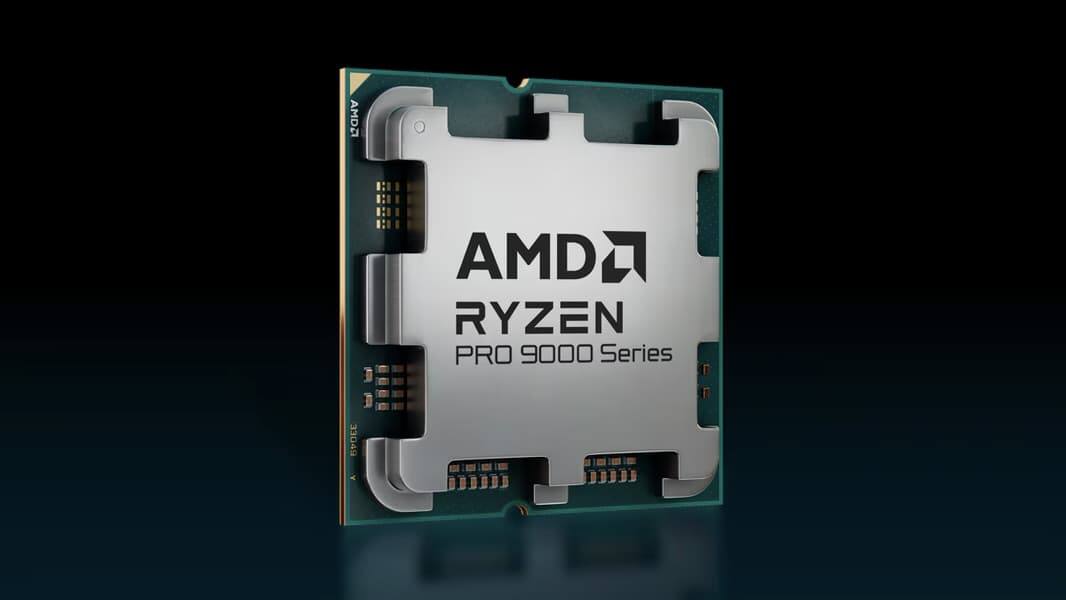
AMD has pushed its large-cache trick far beyond gaming desktops. The company has added six new Ryzen PRO 9000 processors, headlined by the 16-core Ryzen 9 PRO 9965X3D and the 8-core Ryzen 7 PRO 9755X3D, aimed at workstations and corporate PCs rather than the usual retail shelf. That does not stop them from looking very tempting for anyone who wants serious thread count and a ridiculous amount of L3 cache in the same box.
The flagship Ryzen 9 PRO 9965X3D pairs 16 cores and 32 threads with a 4.3GHz base clock, 5.5GHz boost, and a 170W power rating. Its main party trick is 128MB of L3 cache on a single CCD, plus integrated RDNA 2 graphics. In practice, that makes it a workstation chip with the kind of memory behavior that used to be reserved for gaming headlines.
Ryzen 7 PRO 9755X3D specs
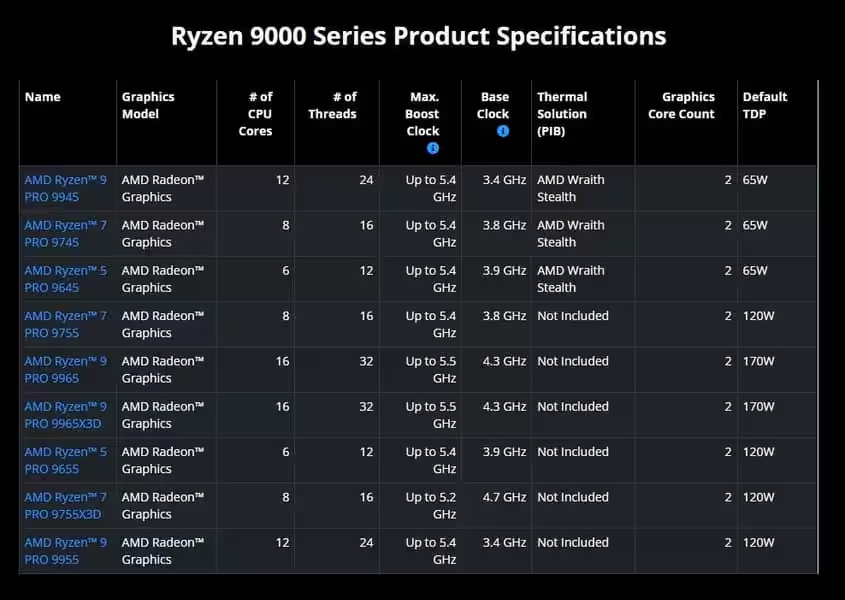
The smaller X3D model, Ryzen 7 PRO 9755X3D, is an 8-core, 16-thread part with boost clocks up to 5.2GHz, 96MB of L3 cache, and a 120W TDP. That puts it very close on paper to the consumer Ryzen 7 9800X3D, which is exactly the kind of comparison AMD probably does not mind people making.
The rest of the Ryzen PRO 9000 refresh
The other four newcomers are the Ryzen 9 PRO 9955, Ryzen 9 PRO 9965, Ryzen 7 PRO 9755, and Ryzen 5 PRO 9655. AMD says these range from 16 cores down to 6, with boost clocks up to 5.5GHz, 64MB to 32MB of L3 cache, and 120W to 170W TDP.
This is a familiar move with a fresh twist. AMD has already used X3D cache to dominate the enthusiast conversation, while Intel has spent the same period leaning on hybrid-core counts and platform features for business buyers. Bringing the cache-heavy formula into PRO parts gives AMD a cleaner pitch for professional systems that still need strong single-thread performance, not just fleet management checkboxes.
What AMD is really selling here
The obvious winner is anyone building a workstation that also does heavy compute, rendering, or occasional gaming without wanting to pick a side. The less excited crowd may be OEMs and IT departments, because ”PRO” usually means stability, remote management, and long-term support first, with flashy cache numbers as a bonus. AMD has simply decided those two audiences can be merged into one chip family.
Expect the usual question to surface fast: if these chips are so good, why keep them inside business channels? Because that is how AMD protects pricing and positioning. The real test is whether workstation vendors treat X3D as a premium differentiator or just another bullet point buried in an enterprise spec sheet.