

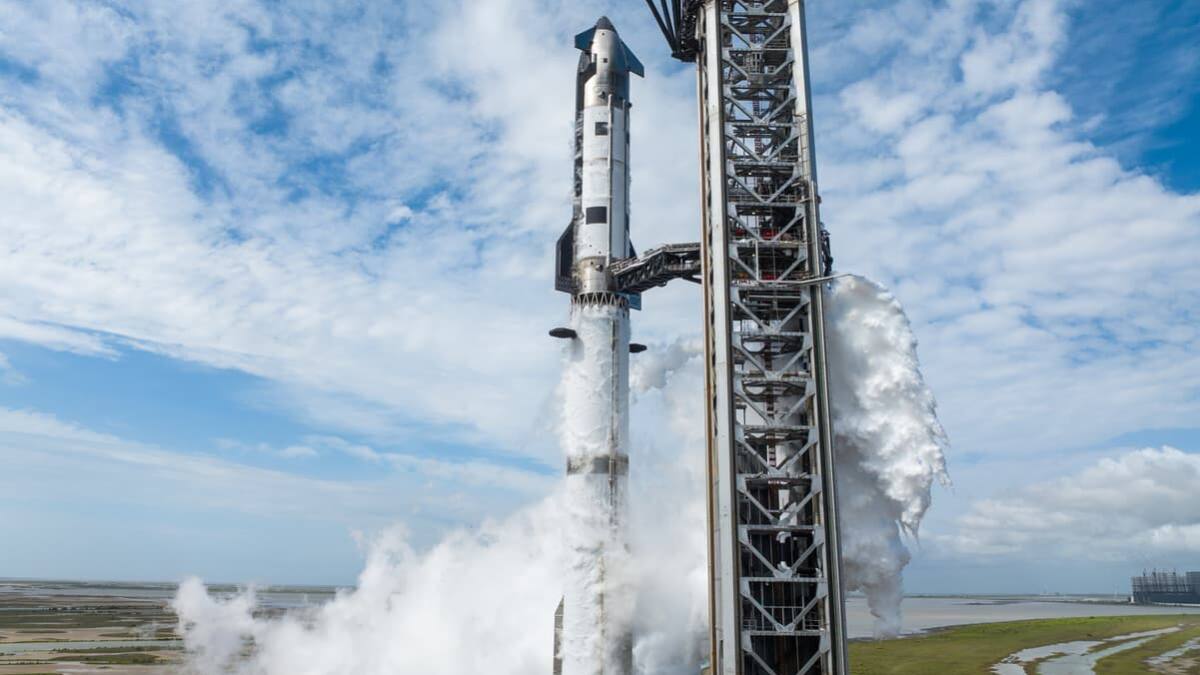
SpaceX is already thinking beyond Starship V3. Elon Musk says Starship V4 could end up 15% to 20% taller than the current 124-meter version, which would put the next booster-and-ship stack at roughly 145 to 150 meters and make it the tallest spacecraft ever built. That is not just vanity project territory; extra height usually means more room for propellant, more payload headroom, and more complexity to pay for all of it.
The Starship V4 size increase would also come while SpaceX keeps pushing hardware and infrastructure in parallel, which is exactly how a system like this has to be built if it is ever going to leave the prototype phase for good. SpaceX has already been testing the third-generation rocket, while Starbase continues to serve as the proving ground for the next steps.
Starship V4 would be a bigger leap than a tune-up
The jump from 124 meters to around 145 to 150 meters is a serious redesign, not a cosmetic stretch. SpaceX has already framed Starship V3 as a major overhaul rather than a round of small fixes, so V4 looks like the continuation of a build-everything-better philosophy that has become the company’s trademark and its headache.
There is precedent for this kind of escalation in launch systems, but usually the pain shows up on the ground first: taller vehicles demand tougher integration hardware, more demanding transport logistics, and launch infrastructure that can handle the extra scale without turning every rollout into a physics lecture.
Starbase, the barge, and the next launch cycle
SpaceX’s support chain is being upgraded at the same time. The company has finished modernizing the Marmac 31 barge, now fitted with full protective covering, and the vessel will carry Super Heavy boosters between Starbase and the launch site at Cape Canaveral. That kind of logistics work rarely gets headlines, but it is the unglamorous part of making a giant reusable rocket feel less like a stunt.
On the test side, SpaceX has completed a wet dress rehearsal for Starship Flight 12 at Pad 2 on Starbase, including filling the tanks and simulating the countdown. Booster 19 and Ship 39 were reportedly loaded in just 30 minutes, and the company also carried out a successful 33-engine Super Heavy static fire. If that pace keeps up, the next question is not whether Starship gets bigger, but whether the rest of the system can keep scaling without tripping over its own ambition.