

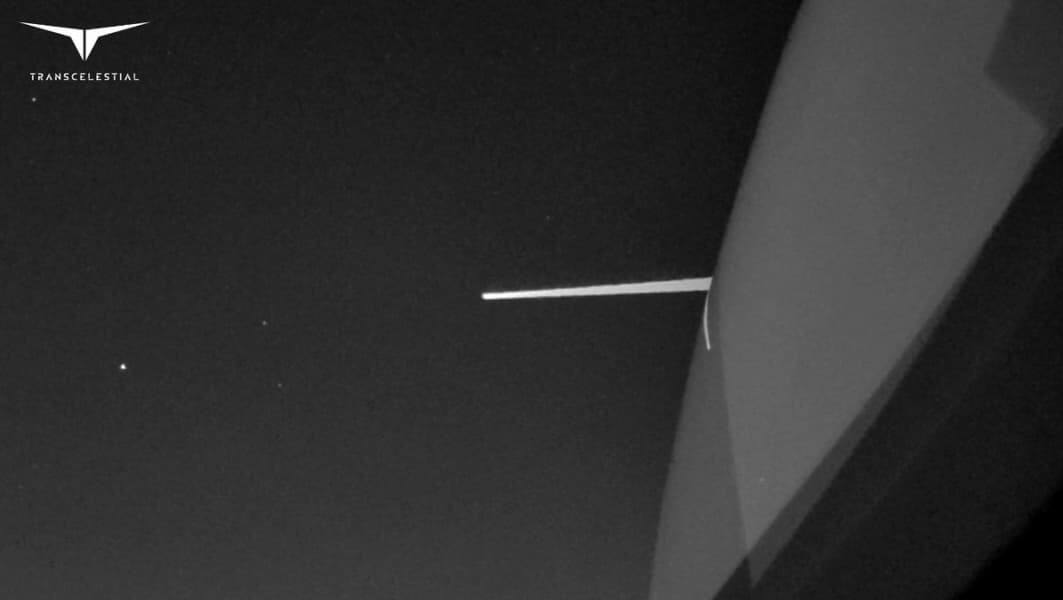
Transcelestial says it has successfully tested laser communications between a satellite and ground stations, a small but meaningful step toward replacing some radio links with optical ones. During the trial, stations in Singapore and Spain were able to detect and track laser signals from an Open Cosmos satellite launched last year, showing that a satellite-to-Earth laser link can be acquired in the real world.
The bigger prize is not the demo itself but what comes after it: real data transmission from orbit through an optical channel. That is where the industry wants to go, because radio is reliable and familiar, but laser communications promise far more bandwidth when the pointing, tracking, and weather problems behave themselves.
How Transcelestial locks onto a satellite beam
Getting a laser from space to stay on target sounds easy until you remember the beam has to survive clouds, atmospheric distortion, and city lights. Transcelestial chief executive Rohit Jha says those are the real headaches, because the system has to identify the signal against a noisy sky and keep it locked in place long enough to be useful.
To do that, the company uses optical filters that admit only the relevant wavelengths, plus a blinking pattern that helps the receiver distinguish the laser from everything else overhead. Once the signal is acquired, computer vision algorithms take over and hold the link automatically. That kind of hybrid approach is becoming standard across the sector, because no one is shipping a ”point and pray” space network.
What comes after the satellite laser test
Next up is high-speed data transfer, the part that will tell everyone whether this is a lab win or a product roadmap. Transcelestial is also building new optical ground stations near Austin, Texas, and in Australia, which suggests the company is preparing for a broader service footprint rather than a one-off experiment.
The move is smart for another reason: Transcelestial started with terrestrial laser communications, but satellite operators are now demanding optical links for both satellite-to-satellite and satellite-to-Earth traffic. That demand has only grown as NASA’s Artemis 2 work put laser-based image and video transmission into the spotlight, showing the technology can outpace traditional Deep Space Network radio systems by a wide margin.
Who wants laser links first
Transcelestial says it already supplies optical terminals to several satellite makers and is planning its own network of relay satellites with laser connections. That is the real strategic play: if optical links become a baseline requirement, the winners will be the companies that can offer terminals, ground infrastructure, and orbital relays as one package.
The near-term question is whether customers will pay to solve the last stubborn problems, especially in cities where light pollution and weather can still ruin a clean lock. If they do, laser communications could move from a specialist feature to a default checkbox on new satellites far faster than the old radio crowd would like.