

DJI has pushed its home-cleaning lineup into much more ambitious territory with the Romo 2 series, a pair of robot vacuums that borrow the company’s drone-style sensing stack and pack up to 36,000 Pa of suction. The pitch is obvious: less babysitting, fewer hair tangles, and a base station that does almost everything except walk the dog.
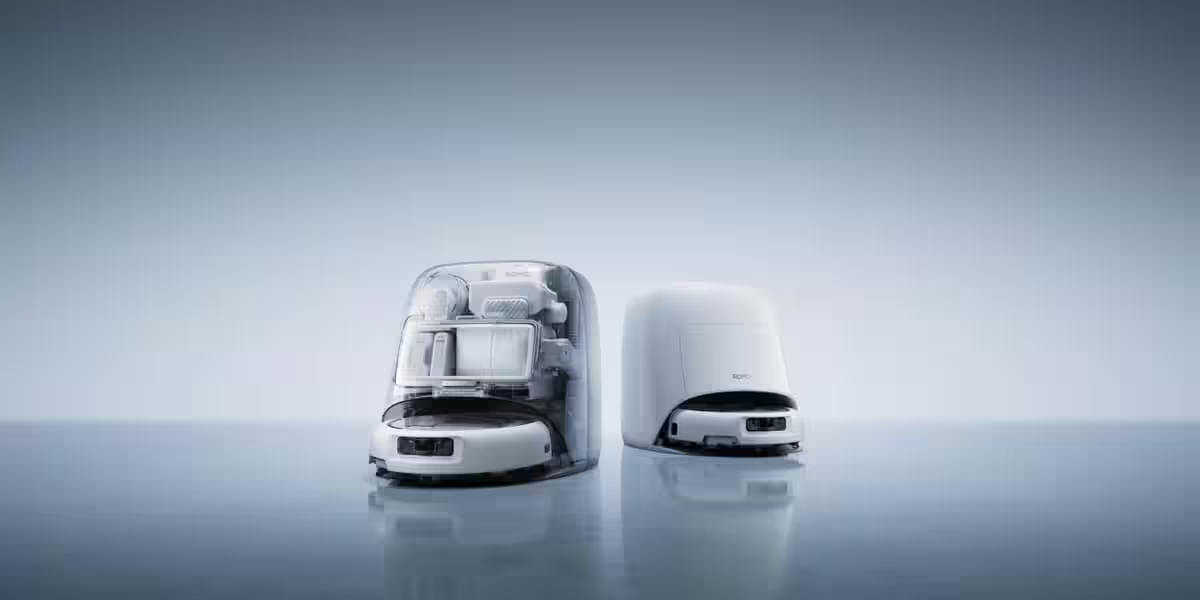
The DJI Romo 2 robot vacuum lineup includes two models, Romo P2 and Romo A2, and each can be bought either with a standard water tank or with a more advanced station that automatically supplies and drains water. Preorders are already open, while sales start on 11 June at 20:00. That puts DJI squarely into a crowded premium category where the real battle is no longer basic cleaning, but how much maintenance the machine can remove from your life.
DJI Romo 2 drone-style sensing for floor clutter
DJI says the Romo 2 uses lidar, binocular vision, a time-of-flight camera, and extra sensors around the manipulator area to map rooms with millimetre-level precision. In plain English, that means better odds of spotting the usual household traps: cables, thin rugs, and furniture that looks invisible to cheaper robots because glass and mirrors exist to ruin everyone’s day.
That sensor-heavy approach is not a gimmick. Roborock, Ecovacs, and Dreame have all spent the last few product cycles turning robot vacuums into roving perception labs, and DJI is now clearly using the same playbook it perfected in drones. The difference is that on a floor, the payoff is less cinematic and more practical: fewer stuck robots and fewer rescue missions from the sofa.
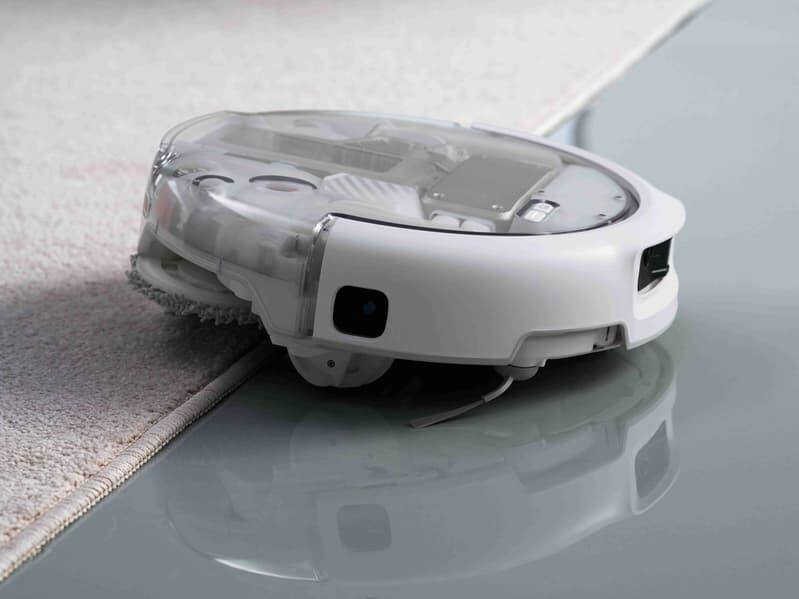
36,000 Pa suction and anti-tangle brushes
Cleaning hardware gets the same high-end treatment. DJI lists suction of up to 36,000 Pa, side and main brushes with anti-hair-tangle protection, and a side mechanism that swings out to 123 degrees for corners and along walls. The vacuum also boosts power automatically on carpets, while the microfiber pad can lift during wet cleaning so it does not soak surfaces that should stay dry.
- Maximum suction: 36,000 Pa
- Obstacle crossing: up to 8.5 cm in a two-step mode
- Brushes: side and central, with anti-hair-tangle design
- Wet cleaning: liftable microfiber pad
One of the more eye-catching claims is the ability to step over thresholds up to 8.5 cm in a two-stage motion by lifting the wheel system. That is a very specific answer to a very annoying problem, and it matters because apartments are full of tiny obstacles that can make otherwise expensive robot vacuums behave like confused luggage.
A station that does nearly everything
The more advanced dock is where DJI really leans into the ”hands-off” promise. It handles self-cleaning, hot-water microfiber washing, drying, automatic dirty-water draining, and antibacterial plus deodorizing treatment, with additional protection against odors and bacteria. That kind of automation is becoming the new premium line in robot vacuums, because nobody dreams of paying four figures just to empty a dirty tank twice a week.

Control happens through DJI Home, where users can view dirt maps, set cleaning zones, use voice control, access the robot remotely, and even make video calls through it. The company also says fast charging is supported at 55 W. Prices start at 5,500 yuan, or $810, for the Romo A2 with the standard water tank and rise to 6,500 yuan, or $955, for the Romo P2 with the automatic station.
The open question is whether DJI can translate drone credibility into a home appliance people trust to do real work every day, without drama. If the sensors are as good as advertised, the brand may have arrived late to the robot-vacuum party but with the kind of engineering that forces everyone else to keep up.