

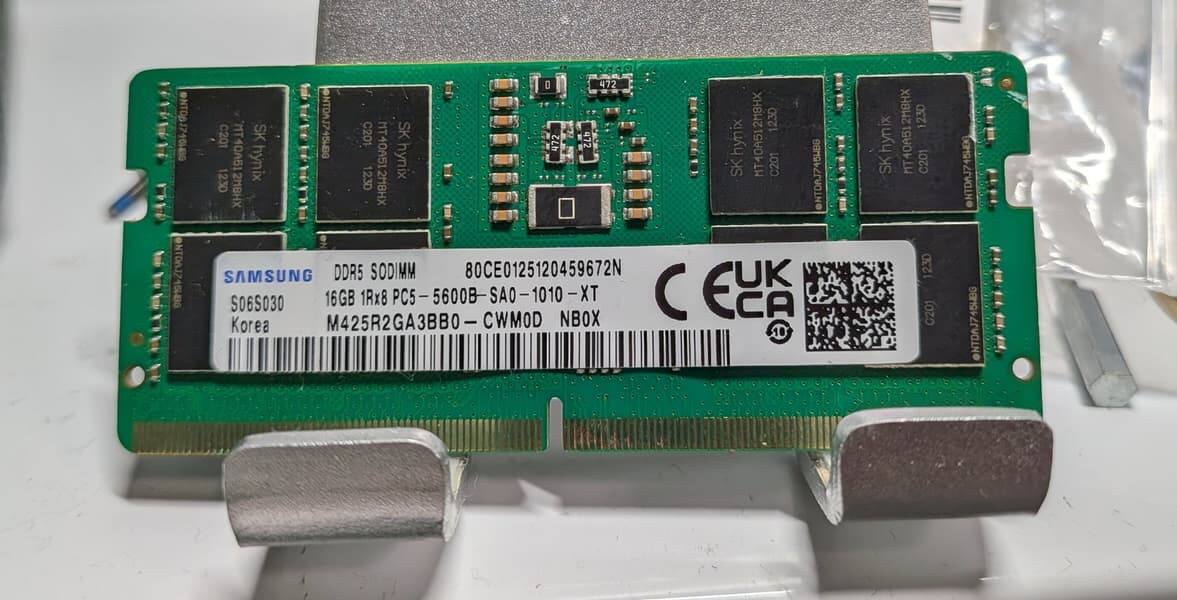
A new kind of DDR5 memory scam is creeping through online marketplaces: modules that look legitimate at a glance but turn out to have plastic placeholders where actual memory chips should be. The fake sticks are appearing as memory prices keep climbing in Asia, and the obvious problem is the point – some buyers will still trust the brand label long enough to click ”buy.”
One example circulating online shows a 16GB DDR5 module sold as Samsung, even though the ”chips” on top are labeled SK hynix. In other words, the part that should hold memory is just decorative plastic – a neat little fraud wrapped in familiar branding. That kind of mismatch is exactly what makes the scam so crude and so effective.
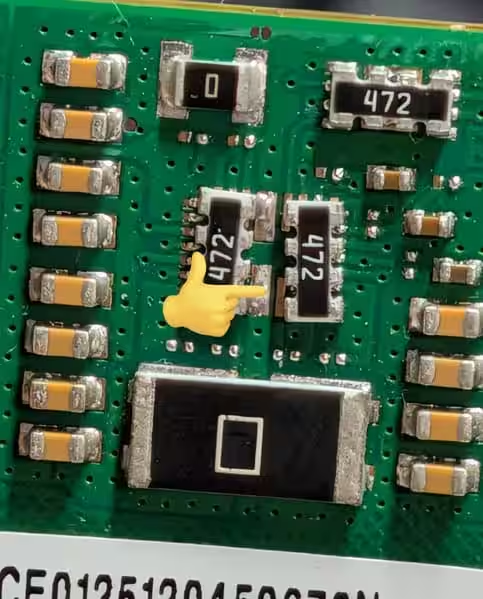
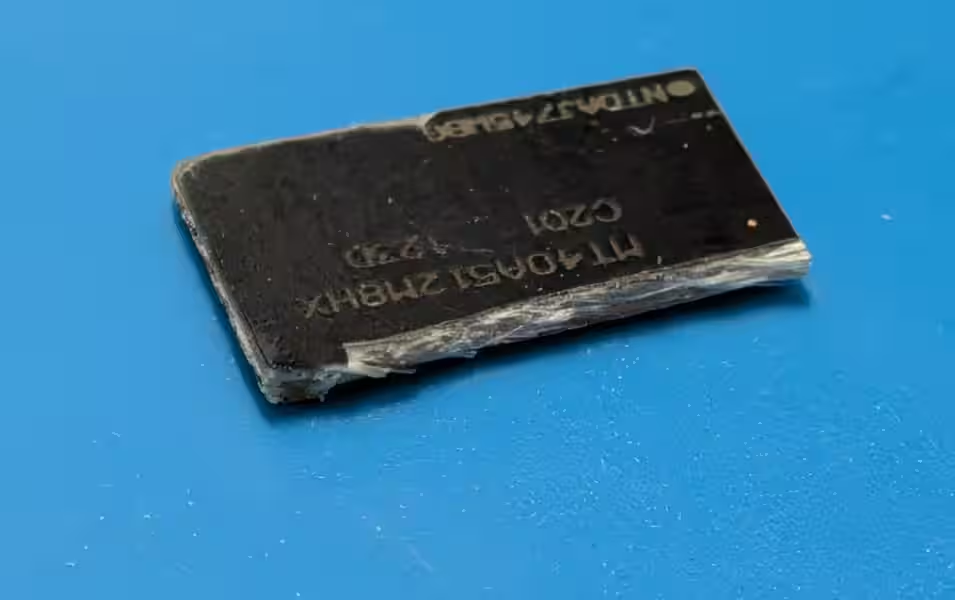
Where the fake DDR5 modules are showing up
The modules are already being sold on online platforms and in physical retail, with listings on sites such as Yahoo Japan reportedly offering them as non-returnable, no-warranty goods. That fine print matters because it gives sellers just enough cover to move junk inventory while leaving buyers to discover the truth the hard way.
The timing is no accident. When memory gets expensive and component supply tightens, counterfeiters move in fast, and they rarely bother making the fakery subtle. The current wave of bad DDR5 also echoes older component scams that popped up whenever demand outran supply – from fake storage drives to re-labeled chips – except this time the shell is even more hollow.
How to spot a fake DDR5 stick
- Check for obvious branding mismatches, such as one brand name on the sticker and another on the ”chips.”
- Be skeptical of unusually cheap modules sold with no warranty or return policy.
- Avoid memory sold with unverified working status if the seller cannot prove it functions properly.
What happens next is predictable: more listings, more cautionary posts, and probably more buyers learning that a polished label is not the same thing as a working module. In a market this overheated, the safest advice is boring but useful – buy from sellers who can prove the RAM is real because plastic does not run benchmarks.