

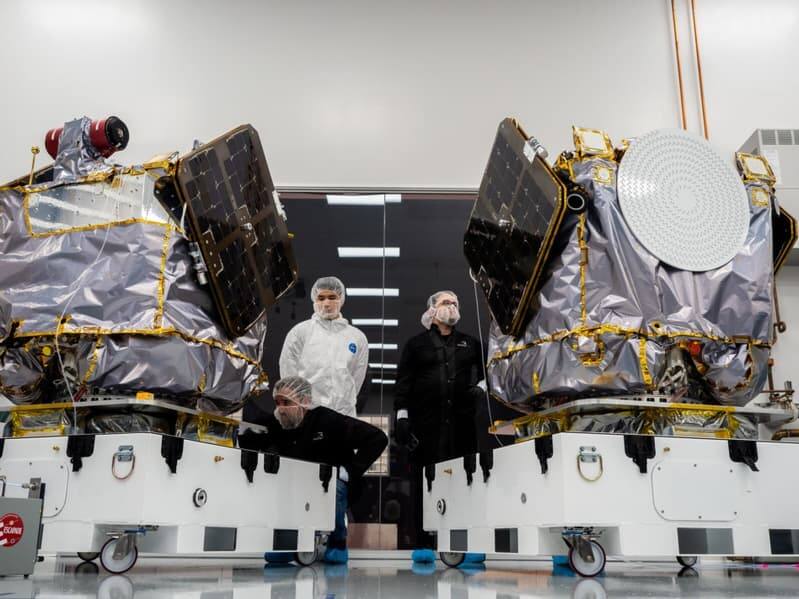
Rocket Lab is buying Motiv Space Systems and folding it into a bigger push to own more of the space stack, just as the company posted record quarterly revenue and lined up fresh launch work for defense and commercial customers. The deal gives Rocket Lab robotics know-how, more internal control over satellite hardware, and another reason to talk about vertical integration without sounding like it is just reciting a boardroom buzzword.
Motiv Space Systems, based in California, builds space robotics, control systems, and precision mechanisms for spacecraft. Once the acquisition closes in the second quarter of 2026, it will be renamed Rocket Lab Robotics. That is a neat branding move, but the bigger point is practical: Rocket Lab is pulling components such as solar array drives and motion-control systems in-house, reducing dependence on outside suppliers that can slow satellite production when volumes rise.
Motiv brings Mars-era robotics inside Rocket Lab
The attraction here is not just a few mechanical parts. Rocket Lab is also getting technology used in Martian robotics, which broadens the company’s reach beyond launch vehicles and into the sort of systems that matter for future planetary missions. Space groups are increasingly chasing this kind of internal capability because margins are thinner, timelines are tighter, and relying on a supplier chain you do not fully control is a fine way to discover pain in public.
Rocket Lab is hardly alone in that thinking. Larger aerospace players have spent years tightening the loop between design, manufacturing, and mission services, while newer rivals are trying to do the same without the luxury of a long industrial base. The difference is that Rocket Lab is moving from a launch specialist toward something more like a full-service spacecraft manufacturer with defense credentials attached.
Rocket Lab contracts push backlog past 70 missions
The acquisition landed alongside a fresh batch of business. Rocket Lab said it won a $30 million contract from Anduril Industries for three HASTE hypersonic test launches, and it also disclosed an agreement for eight dedicated launches for an unnamed customer. Five of those flights are set for Neutron and three for Electron between 2026 and 2029, pushing the company’s total backlog to more than 70 missions.

That is not a small pile of work for a company still in the process of scaling its next-generation launch hardware. The HASTE business also matters because hypersonic test services have become a lively corner of the defense market, and Rocket Lab is clearly trying to make Electron do more than one thing while Neutron ramps up in the background.
Rocket Lab first-quarter revenue reaches $200.3 million
Rocket Lab’s first quarter brought in $200.3 million in revenue, a record and a 63.5% increase from a year earlier. The company said it signed 36 new launch contracts in the quarter alone, more than it had booked across all of 2025, while contracted but not yet recognized revenue rose to $2.2 billion, up about 20% from the end of 2025.
- Quarterly revenue: $200.3 million
- Year-over-year growth: 63.5%
- New launch contracts in the quarter: 36
- Backlog: more than 70 missions
- Contracted but unrecognized revenue: $2.2 billion
The story is less about one acquisition than about a company assembling a tighter machine around launch, components, and defense demand. If Rocket Lab keeps converting that backlog into actual missions while bringing more hardware inside the tent, the real question is not whether it can scale. It is how quickly rivals will feel forced to copy the playbook.