

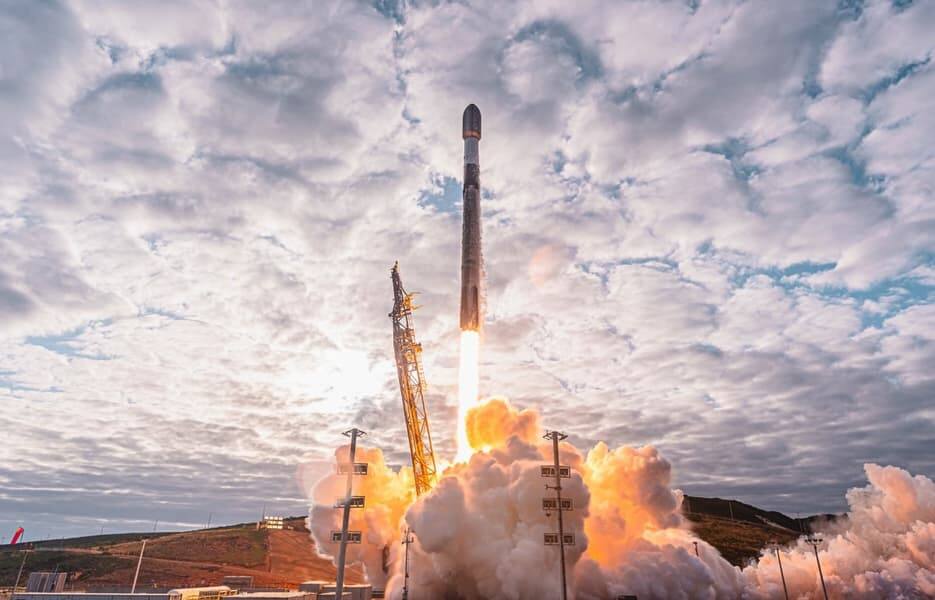
The Federal Aviation Administration is about to do something the space industry has been circling for years: charge launch fees for the launches and reentries it licenses. Starting in 2026, commercial operators will pay fees tied to payload mass, with a capped bill per mission and a funding model designed to help pay for the FAA’s growing role in managing space traffic alongside air traffic.
The new FAA launch fees will hit high-frequency operators hardest, especially SpaceX, whose Starlink missions dominate the launch cadence and make the pricing model look less like a symbolic tweak and more like a small but steady tax on scale.
How the FAA launch fee is calculated
The agency says the base rate in 2026 will be $0.25 per 0.45 kg of payload, capped at $30,000 for each launch or return. Operators must provide mission data at least 60 days ahead of time, including payload mass, and the FAA will then issue an invoice due within 30 days. The charge applies to licensed commercial launch and return activity handled by the FAA Office of Commercial Space Transportation.
- 2026 base rate: $0.25 per 0.45 kg
- Per-mission cap: $30,000
- Payment deadline: 30 days after invoicing
- Data submission window: at least 60 days before mission
The rule also reaches back to already active licenses, including launches carried out since the start of the year. The notice does not spell out what happens if operators miss the payment deadline, which is a curious omission for a system that is supposed to be doing the administrative heavy lifting.
SpaceX and Starlink are the obvious target
FAA’s own math shows where the money is likely to come from. In 2025, the agency says it recorded 199 licensed launches and 7 reentries, and much of that activity came from SpaceX. For a typical Starlink mission carrying about 25 to 29 satellites with a total mass of roughly 14 to 17 tonnes, the fee works out to around $8,000 to $9,000 per launch.
That is not enough to change SpaceX’s business model, but it is enough to matter when launches come this often. Based on current activity, the FAA says the program could bring in millions of dollars a year, and the Starlink cadence alone could generate about $1 million annually under the new schedule.
The FAA launch fees rise sharply by 2033
This is not a static levy. The rate is scheduled to climb to $1.50 per 0.45 kg by 2033, with the cap rising to $200,000 per mission, after which inflation adjustments kick in. That gives the industry years to complain, plan, or quietly pass the cost along in a way that customers probably will not notice.
The timing also lines up with a broader expansion inside the FAA. The agency says its commercial space office budget is $39.6 million in the 2026 fiscal year, with a proposed jump to $56.8 million in 2027 and staffing growth from 136 to 206 employees. The workload has risen more than 50% since 2023, which is what happens when commercial spaceflight stops being a novelty and starts behaving like infrastructure.
The bigger shift is philosophical as much as financial: the FAA is moving from a light-touch licensing role toward a more automated, scalable system under Part 450. The fee structure is part of that transition, and it hints at a future where every reusable booster, cargo capsule, and satellite stack helps pay for the bureaucracy that keeps the system moving. The open question is whether this becomes a routine line item for launch providers – or the first of several costs as regulators try to keep pace with a busier orbit.