

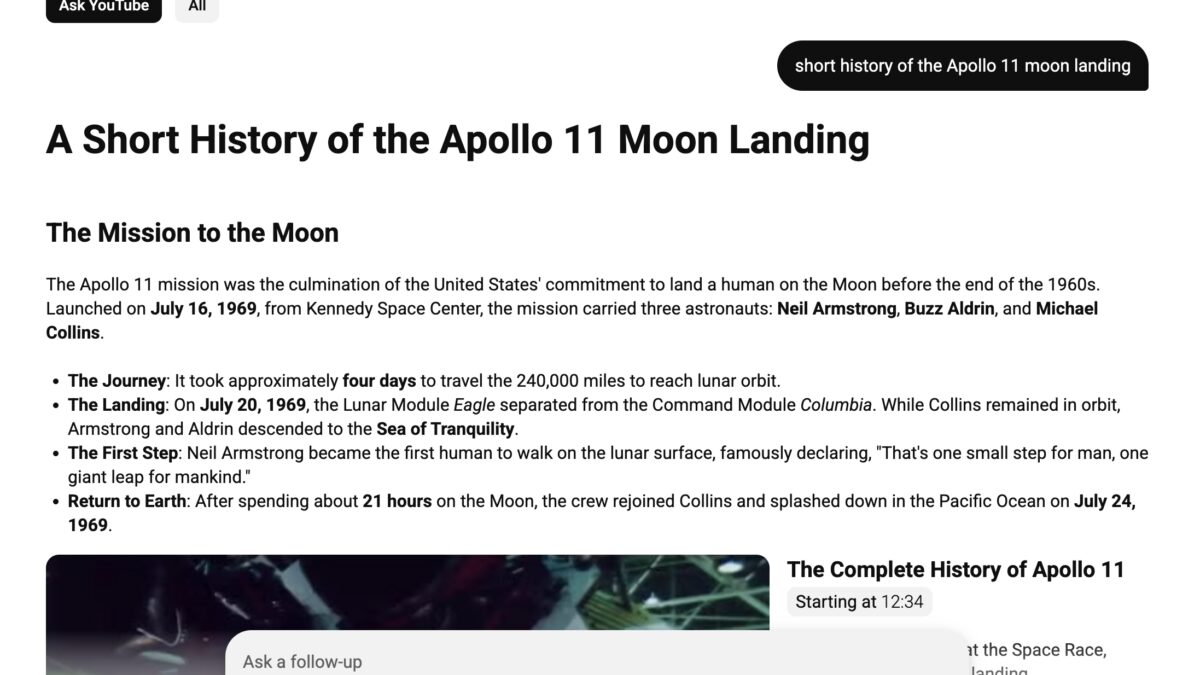
Google is testing a conversational search experience inside YouTube, and the pitch is familiar: type a question, get a blended answer made from videos, Shorts, and text instead of the usual wall of blue-video thumbnails. The experiment is live for YouTube Premium subscribers in the US who are 18 or older, and it looks a lot like Google’s broader AI Mode push, just pointed at the world’s biggest video archive. In other words, Google is testing AI search prompts inside YouTube as a new way to surface answers from the platform.
Inside the search bar, users get an ”Ask YouTube” button and a set of suggested queries, from ”funny baby elephant playing clips” to ”summary of the rules of volleyball.” Tap the button without entering anything, and YouTube opens a dedicated page with more prompts and a text box, which is exactly the sort of interface Google hopes people will use instead of traditional search.
What Ask YouTube returns
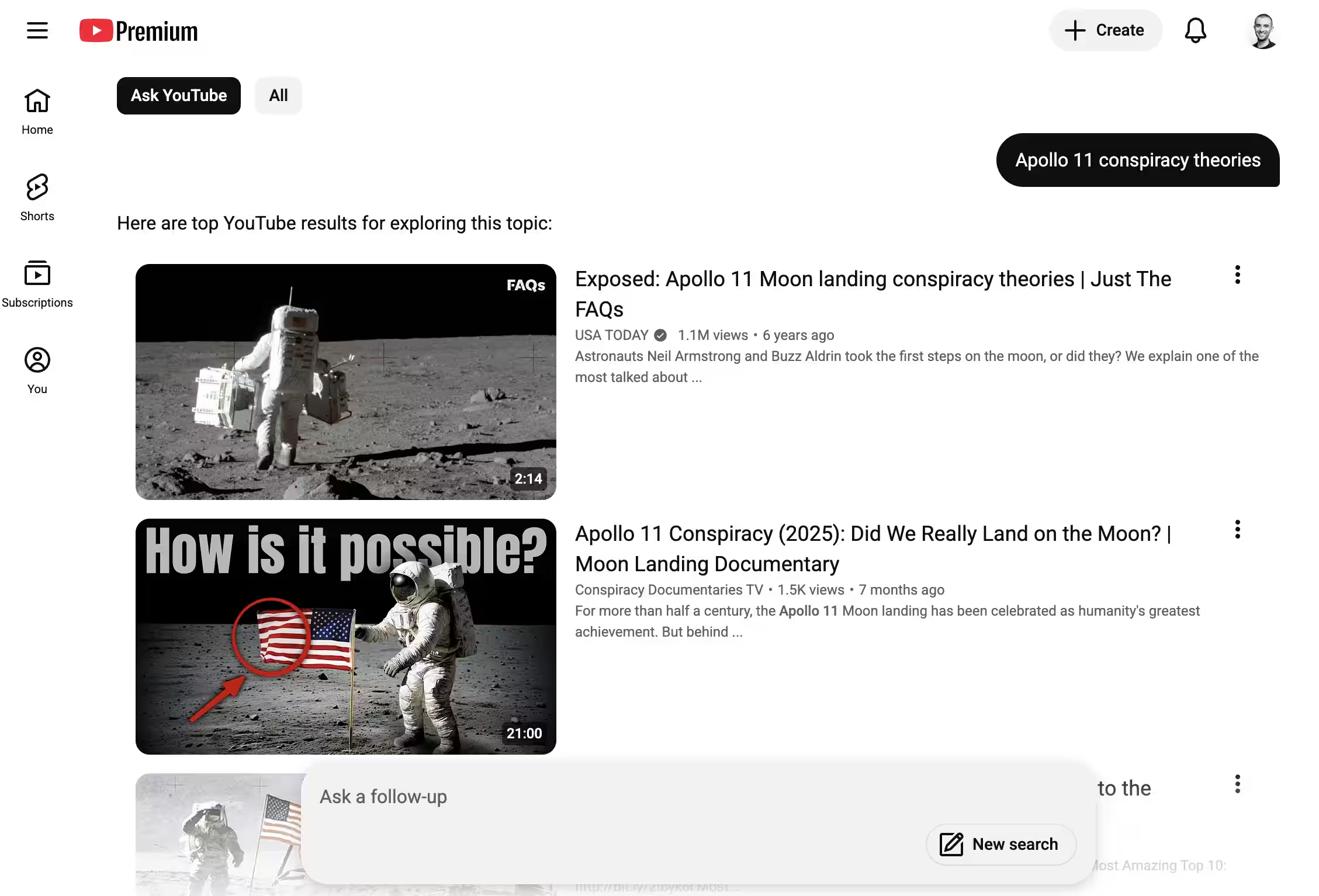
In testing, YouTube first shows a loading screen, then assembles a response that mixes a short written summary with video modules and themed sections. A search for the Apollo 11 moon landing surfaced milestone bullets, a launch video, and grouped clips such as ”From Launch to Splashdown” and ”Moments on the Surface.” That is useful, but it also quietly shifts YouTube from a search engine into a guided editorial layer, which is great right up until the machine starts getting confident about the wrong thing.
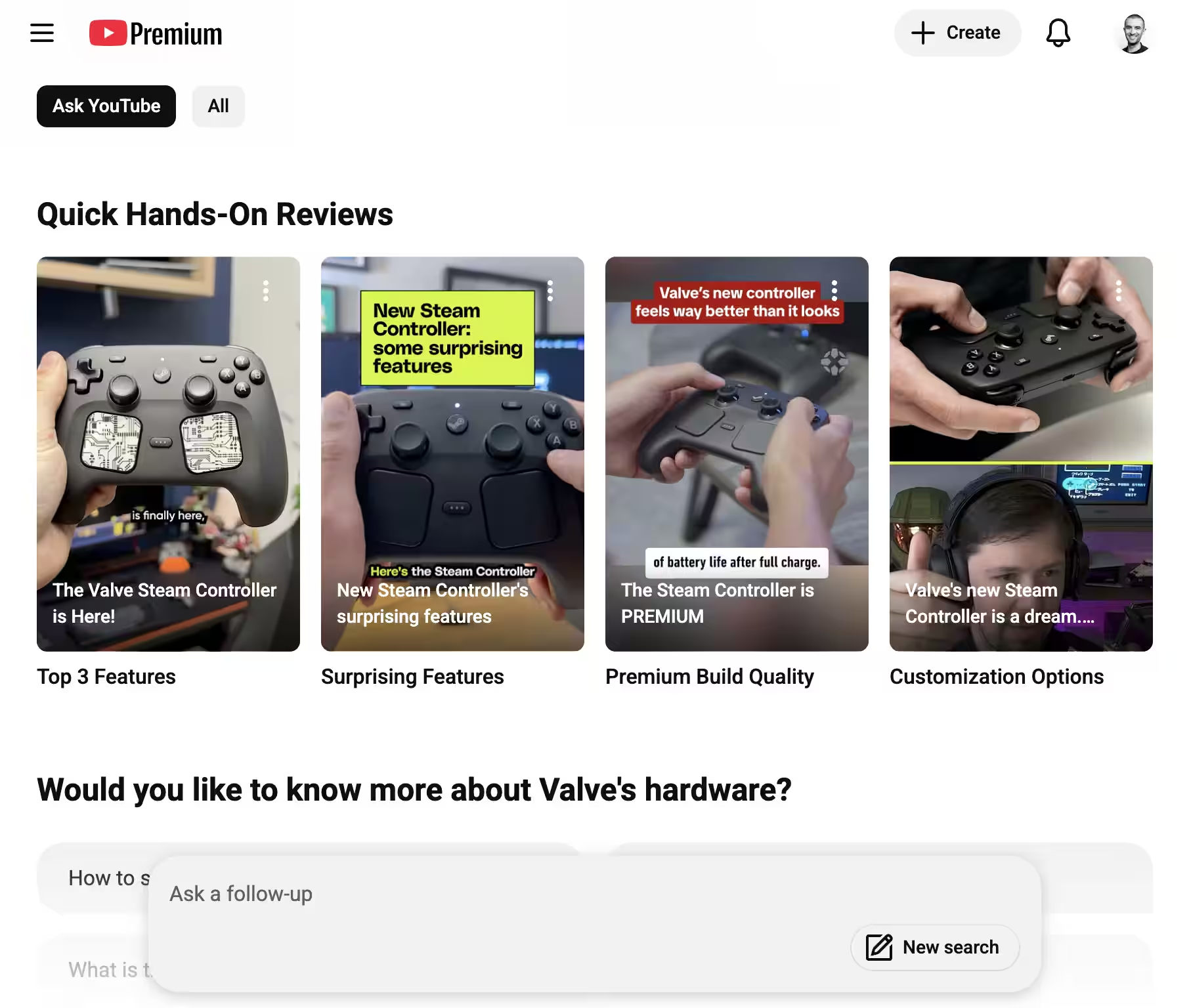
The model is not perfect, which is the least surprising thing in this story. A test query about Valve’s Steam Controller produced a decent overview and surfaced relevant videos, but it also got one basic hardware fact wrong. Google’s AI products keep selling convenience and occasionally delivering a reminder that verification still exists for a reason.
Why Google is pushing AI deeper into search
This fits a pattern across Google’s products: keep folding AI into places people already use, then hope the habit changes before users get bored of the old interface. YouTube is a smart target because it already holds how-to explainers, reviews, and short-form snippets that can be reorganized into an answer page. If Google later opens this beyond Premium, it will be testing whether people want fewer choices and more synthesis from the biggest video platform on the internet.
The bigger question is whether creators benefit from a smarter front end or get squeezed by it. YouTube says the experiment is expanding, and if Google keeps polishing the summaries while fixing the factual misses, Ask YouTube could become the default way to search for anything visual, instructional, or vaguely historical. If it doesn’t, it will just be another AI feature that sounds better than the results it serves.