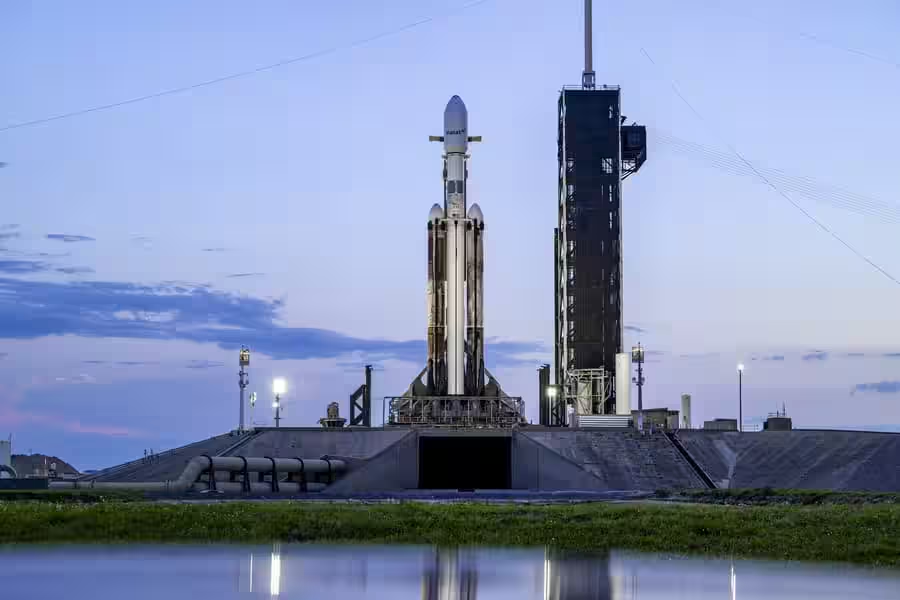
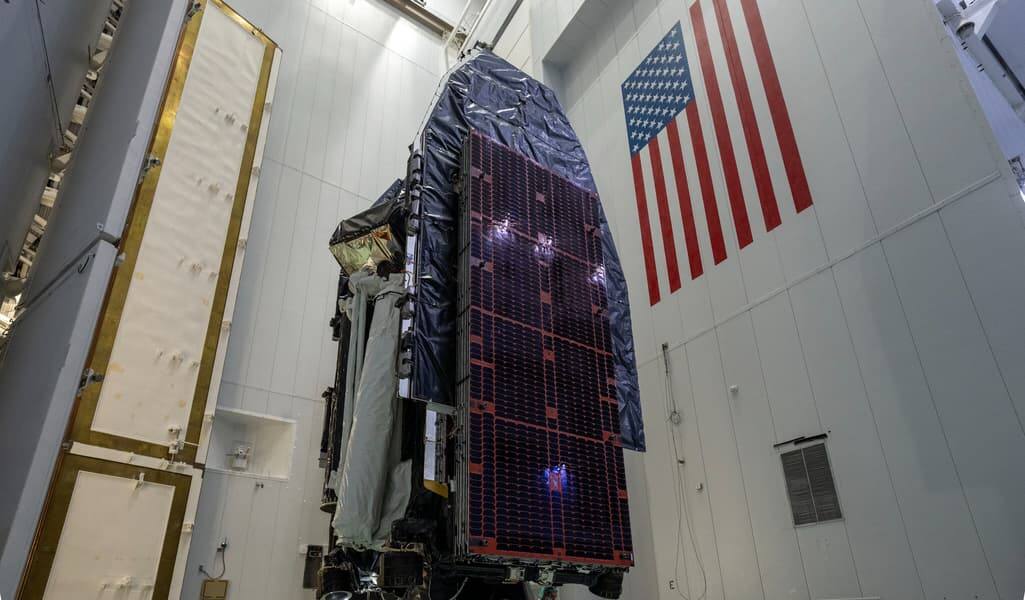
SpaceX is about to put Falcon Heavy back on the pad after a long silence, and the payload is ViaSat-3 APAC, a 6.4-ton communications satellite built to extend internet coverage across the Asia-Pacific region. The mission is scheduled to send the satellite to geostationary orbit and complete the ViaSat-3 constellation, while also marking Falcon Heavy’s first flight since October 2024.
That return matters because heavy-lift rockets tend to go quiet for a reason: demand is irregular, payloads are rare, and every mission has to be worth the logistics. Falcon Heavy has managed to stay relevant by serving the jobs that are too big, too heavy, or too awkward for a single Falcon 9 to handle. This one is textbook ”big satellite, big rocket” stuff.
Why ViaSat-3 APAC is riding Falcon Heavy
SpaceX originally planned to launch the satellite on Ariane 6, but delays to Europe’s launcher pushed the mission onto Falcon Heavy instead. That switch is a tidy reminder of how commercial launch contracts really work: when one rocket slips, another provider gets the call, and the customer mostly cares about getting to orbit on time.
ViaSat-3 APAC is based on Boeing’s 702MP+ platform, and at 6.4 tons it is the kind of spacecraft that gives heavy-lift rockets a reason to exist. Once on station, it will expand broadband coverage across the Asia-Pacific region and finish the ViaSat-3 network buildout.
Falcon Heavy’s first flight since October 2024
The launch was delayed by bad weather, but the next attempt is expected on 28 April. If that date holds, it will be the 12th flight in Falcon Heavy’s history and the first in roughly a year and a half, which is a long nap for a rocket that still gets treated like a marquee system.
SpaceX also says two more Falcon Heavy launches are planned before the end of the year. That suggests the vehicle is not being retired into museum-piece status just yet, even if its cadence will always look modest next to Falcon 9’s assembly-line pace.
What SpaceX expects from the boosters
The mission will fly in a partially reusable configuration. The center core, B1098, is expected to be lost, while the side boosters B1075 and B1072 are scheduled to land on LZ-2 and LZ-40 at the same time, because apparently even rocket landings like symmetry.