

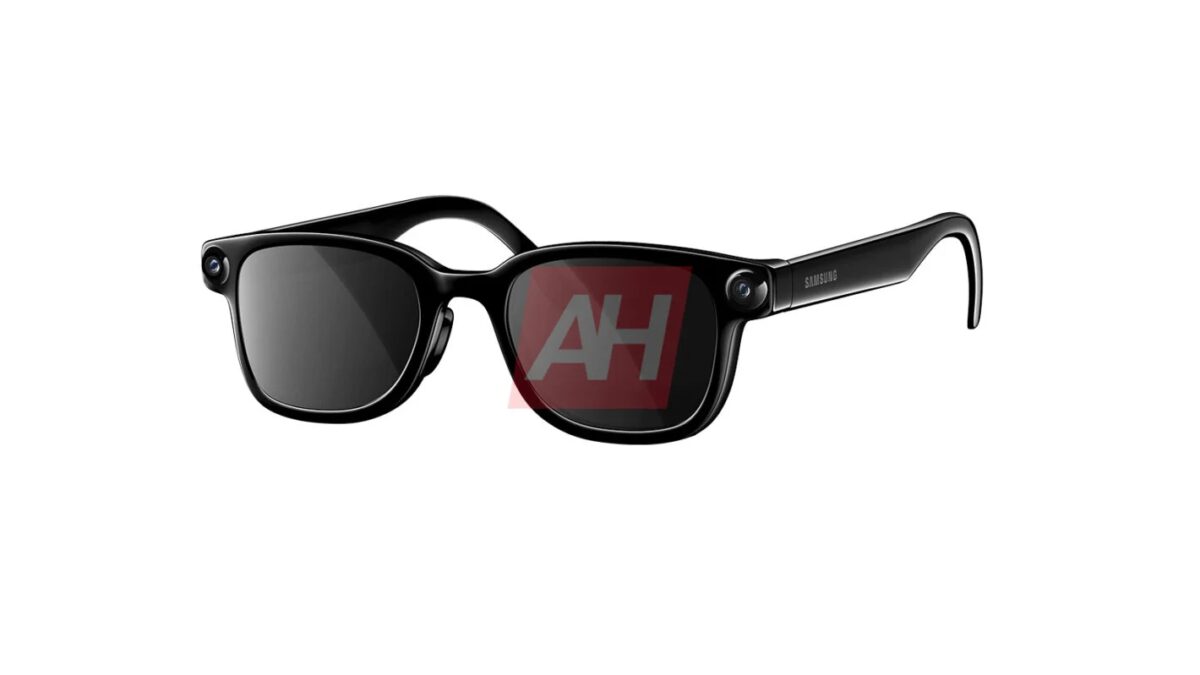
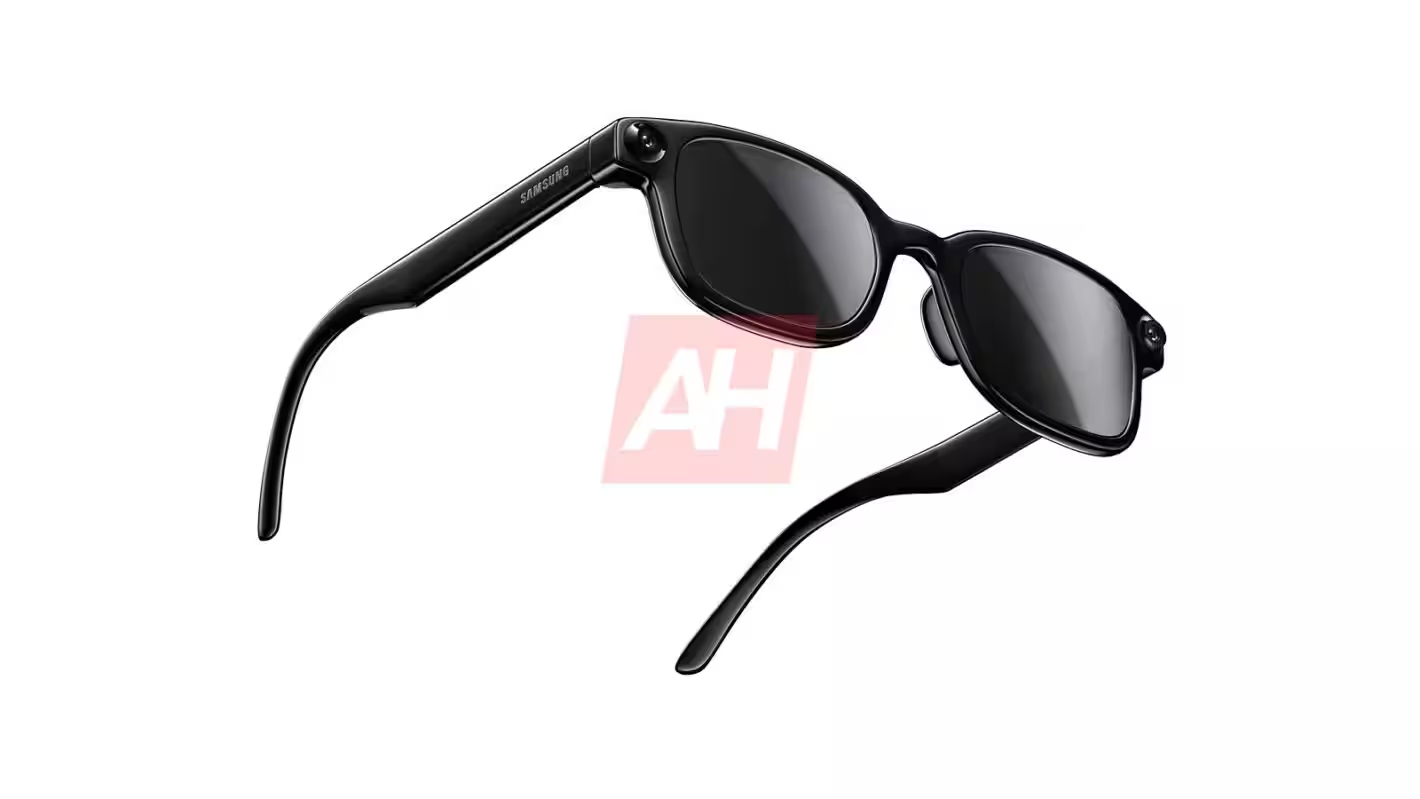
Samsung’s first proper look at its display-less smart glasses, the Galaxy Glasses, makes one thing clear: the company is not trying to win this category by being the weirdest pair on the shelf. The leaked Galaxy Glasses look close to ordinary frames, with two front cameras, thin temples, and just enough Samsung branding to remind you they are, in fact, computers for your face.
That is probably the right move for Samsung smart glasses. Smart glasses still live in the awkward middle ground between useful and embarrassing, and the most successful early designs have leaned heavily on looking like eyewear first and gadget second. Samsung seems to have read the room, even if the room is still mostly empty.
Galaxy Glasses look closer to normal frames than a headset
According to the leaked marketing images, the glasses keep the form factor restrained rather than bulky. The temples are thinner than many rivals, while the visible hardware is limited to the camera lenses and a small amount of branding. In a category where most products still shout ”tech demo,” that is a sensible choice.
Samsung is reportedly pairing that understated design with Android XR, the same platform used by its Galaxy XR headset. That means voice-first control is likely to do most of the heavy lifting, with Gemini handling commands and the cameras feeding it context from the real world. For a display-less product, that is pretty much the whole trick.
Samsung Galaxy Glasses specs point to a Meta-style formula
The early spec sheet is not especially exotic, but it does look credible for this class of device. The Galaxy Glasses are said to use Qualcomm’s Snapdragon AR1, a 12MP Sony sensor, a 155mAh battery, bone-conduction speakers, and a weight of roughly 50 grams. That lines up neatly with what Meta has done with its own display-less glasses, which is hardly a coincidence in a market that loves copying the least awkward idea available.
- Chipset: Qualcomm Snapdragon AR1
- Camera: 12MP Sony sensor
- Battery: 155mAh
- Audio: bone-conduction speakers
- Weight: roughly 50 grams
There is also a useful bit of product-line housekeeping here. An earlier One UI 9 build reportedly surfaced three different smart glasses projects, with ”Jinju” matching this display-less model and ”Haean” appearing to be Samsung’s more ambitious pair with a micro-LED screen. That helps explain why one battery rumor from March may have belonged to the screen-equipped version instead of this one.
Samsung Galaxy Glasses price window is wide, but the target is obvious
Pricing leaks are slippery in a year when even mainstream hardware can jump by hundreds overnight, but the reported range here is still revealing. Samsung Galaxy Glasses are said to land somewhere between $379 and $499, which would put Samsung in direct competition with the more accessible end of the smart glasses market rather than the premium headset tier. If Samsung wants actual adoption, the lower end of that range is where the story gets interesting.
The timing may matter as much as the sticker. The glasses are expected to arrive in the next few months, possibly around Google I/O, before a fuller reveal at Samsung’s summer Galaxy Unpacked event. That would let Samsung ride the same wave it has used before with wearables alongside foldables, only this time the gamble is whether consumers are ready to buy camera-equipped glasses that do a lot less than a headset but look a lot less ridiculous than one.
Samsung’s smart glasses split is getting clearer
The real story is not just that Samsung has glasses coming. It is that the company now seems to be building a ladder: a display-less pair for the near term, a screen-equipped model for later, and enough Android XR plumbing underneath to keep both tied to Google’s ecosystem. That gives Samsung a cleaner path into the category than companies trying to force one do-everything device onto faces that mostly just want lighter sunglasses with benefits.
The open question is whether ”almost ordinary” is enough. If Samsung gets the controls, battery life, and price right, these could become the first smart glasses people buy without feeling like beta testers. If not, they will join the long list of futuristic gadgets that looked sleek in a leak and disappeared the moment the bill arrived.